



1808
Brother Abbott joins firm
His brother Abbott entered his employ as chief clerk, later becoming a partner in 1814.
Why it matters: This was the foundation of A. & A. Lawrence.
Wikipedia ↗Business & Entrepreneurship · 1786–1852 AD
Merchant, philanthropist, and man of letters
The defining question
How can one use one's talents and wealth to fulfill moral and spiritual responsibilities?
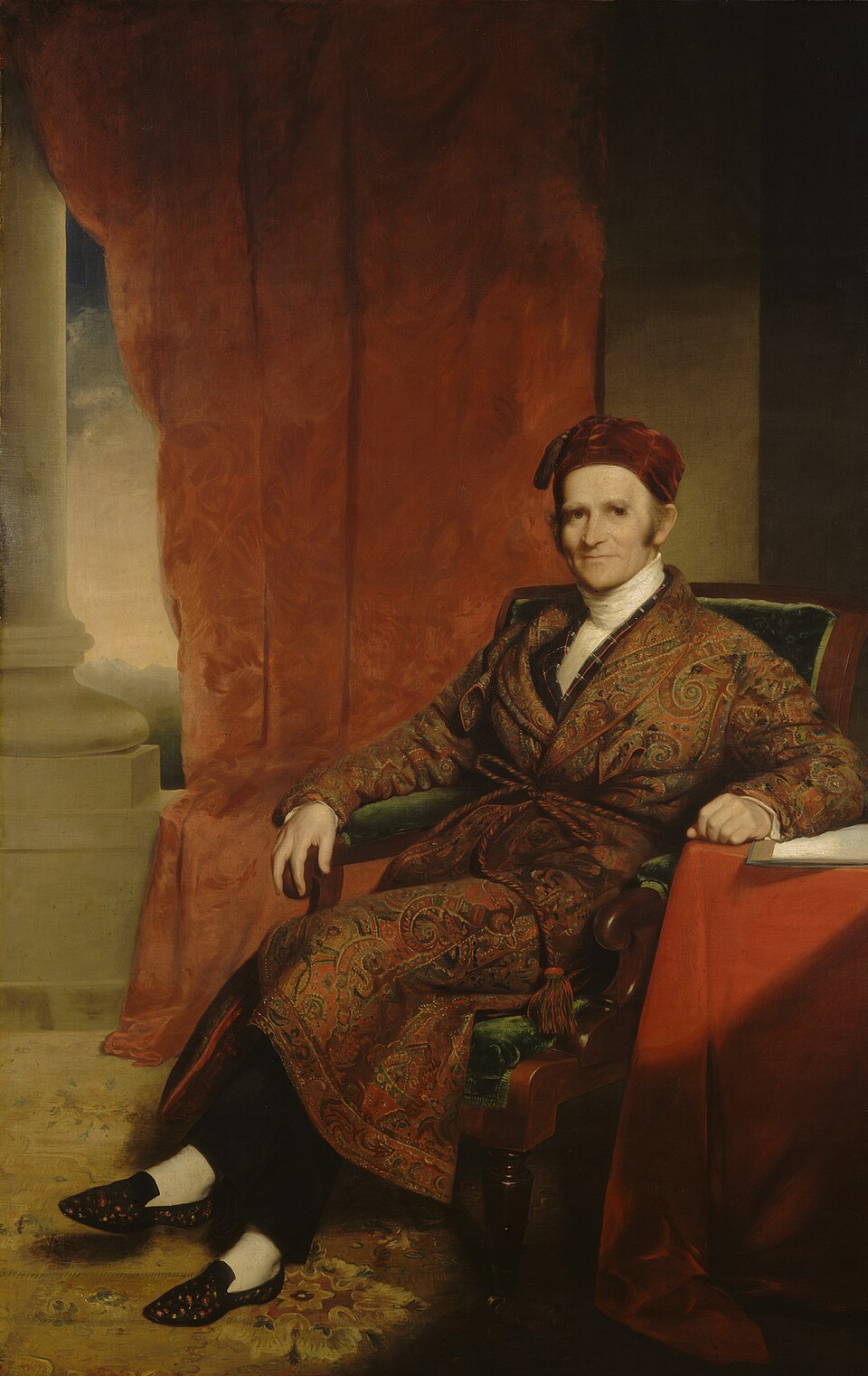
The person
Amos Lawrence was a prominent Boston merchant and philanthropist, known for his deep sense of religious accountability and his extensive charitable work. After a successful business career, he devoted his later years to philanthropy, supporting institutions such as Williams College and various benevolent causes. His diary and letters reveal a man of deep faith, disciplined habits, and a strong commitment to using his wealth for the good of others.
Amos Lawrence's life exemplifies the integration of commercial success with moral and philanthropic purpose. His writings provide a window into the mindset of a 19th-century New England merchant who believed in the stewardship of wealth, the importance of education, and the duty of all individuals to contribute to the betterment of society. His example offers timeless lessons on accountability, discipline, and the pursuit of higher purposes beyond material gain.
Life in motion
Drag to travel through time · Ctrl/⌘ + scroll or pinch to zoom · Select a moment for the full account
His brother Abbott entered his employ as chief clerk, later becoming a partner in 1814.
Why it matters: This was the foundation of A. & A. Lawrence.
Wikipedia ↗Documented financial history
Linear scale · original dollars
Useful sparse lifetime narrative: approximately zero property,50K earned capital,1M terminal fortune. Pocket20 dollars preserved. Intermediate slope modeled, not observed; no unsupported1842 plateau. Some dots represent partial capital or property, not total net worth. Estimated lines are presentation models. Unknown periods are not zero.
Estimated financial trajectory · 3 dated anchors. The smooth line connects reviewed cash, invested-capital, property, estate, and net-worth evidence; intervening years are modeled rather than observed. Income, gifts, and transactions are excluded from the line and remain below as context. Select a marker or milestone. Ages are approximate.
Labels show original amounts, with estimated today’s dollars underneath in parentheses.
Swipe horizontally to explore the age axis.
Appletons estimates Lawrence's fortune at about1M at death. Original probate uninspected.
What this measures: Retrospective estimate, not probate.
Lawrence, Amos · Amos entry, fortune at death
Includes income, investments, and giving—not just wealth estimates.
*Today’s dollars use the Minneapolis Fed’s estimated 2026 annual index, retrieved September 14, 2026—not a live exchange rate. Historical annual-average prices are used; pre-1913 values are estimates. Cumulative giving uses a conversion range across its payment years. Purchasing power does not measure relative status, investment returns, or present asset value. Values marked today* are approximate conversions; unavailable dates or currencies remain unconverted. Inflation source and method ↗
Operating system
Lawrence's deep religious convictions shaped his worldview and his approach to wealth. He believed that all talents and riches were trusts from God, for which he would be held accountable. This sense of accountability drove his philanthropic efforts and his personal discipline.
Evidence: He wrote of being 'individually responsible for his actions' and 'accountable for all your talents.' His pocket-book contained the text, 'What shall it profit a man if he gain the whole world, and lose his own soul?'
Lawrence viewed his wealth as a means to do good, often giving liberally to educational and religious institutions. He saw his surplus as something to be spent for the welfare of his fellow men, not hoarded.
Evidence: His donations included ten thousand dollars to Williams College and support for various societies and clergy. He wrote, 'What is the use of riches? To do good.'
Lawrence championed the ethic of hard work and personal discipline, rejecting idleness. He saw all useful labor—intellectual or physical—as worthy, and he practiced frugality and temperance throughout his life.
Evidence: He wrote, 'no man can attain any valuable influence or character among us, who does not labor with whatever talents he has.' He also noted his own 'abstinence remedy' when feeling overwhelmed.
Despite his public roles, Lawrence's letters reveal a deep devotion to his family. He often wrote to his children with counsel and affection, and he mourned the loss of his daughter 'S.' with profound emotion.
Evidence: He wrote to his children in France about the Year's end, 'The gem in the centre has been removed.' His correspondence with his son in Spain shows his concern for his children's moral development.
Lawrence's frequent illnesses, especially the severe attack in 1831, brought him face-to-face with his own mortality. He used these experiences to deepen his faith and refocus his energies on what he considered eternal priorities.
Evidence: In a letter to his mother, he described his calmness during his illness and his prayer, 'God be merciful to me a sinner.' He wrote, 'We are placed here to be disciplined for another and higher state.'
Lawrence held strong opinions about the political and social issues of his day. He warned against demagoguery and the dangers of ignorance among the masses, advocating for education and virtue as the foundations of democracy.
Evidence: He wrote, 'This practice of taking up demagogues for high office is no way to perpetuate liberty.' He also predicted that if the poor were not educated, 'they will change our system of government within fifty years.'
Lawrence circulated religious and reform literature widely, supporting authors like Dr. Hamilton and Sir Thomas Fowell Buxton. He saw such distribution as a mission to spread 'practical Christianity.'
Evidence: He wrote to Dr. Hamilton, 'I must shake hands with you across the Atlantic... and bid you God-speed in all your broad plans for the good of your fellow-men.'
Read through your work
Leaders
Amos Lawrence matters to leaders because their life offers a concrete study of joining responsibility with self-command and service.
In his words
“May you never forget that every man is individually responsible for his actions, and must be held accountable for his opportunities! Thus he who has ten talents will receive a proportionate reward, if he makes a right use of them; and he who receives one will be punished, if he hides it in a napkin.”
“I would earnestly strive to keep constantly in mind the fact that he _will_ call, and that speedily, upon each and all of us; and that, when he calls, the question will be, How have you used these? not How much have you hoarded?”
“We are placed here to be disciplined for another and higher state; and whatever happens to us makes a part of this discipline. In this view, we ought never to murmur, but to consider, when ills befall us, how we can make them subserve our highest good.”
“The period of trial is short; but the consequences are never-ending. How important to each individual, then,--to you and to me,--that we use aright the period assigned us!”
“He is a working-man whose mind is employed, whether in making researches into the meaning of hieroglyphics or in demonstrating any invention in the arts, just as much as he who cuts down the forests, or holds the plough, or swings the sledge-hammer.”
“In that dread hour when I thought that the next perhaps would be my last on earth,--my thoughts resting upon my God and Saviour, then upon the past scenes of my life, then upon my dear children,--the belief that their minds are well directed, and that they will prove blessings to society, and fulfil, in some good degree, the design of Providence in placing them here, was a balm to my spirits that proved more favorable to my recovery than any of the other remedies.”
“Therefore let it be the sentiment of your heart to use all the talents and powers you may possess in the advancement of the moral and political influence of New England.”
“Virtue and intelligence are the basis of this government; and the duty of all good men is to keep it pure.”
“We are in a poor way, politically, in this country. This practice of taking up demagogues for high office is no way to perpetuate liberty.”
“I have a great respect for deep religious feelings, even when I cannot see as my friends do; and therefore pray God to clear away, in his good time, all that is now dark and veiled.”
Put into practice
Lawrence believed that every person is entrusted with talents and opportunities and will be judged on how they use them. He urged his son to remember that 'every man is individually responsible for his actions.'
Lawrence practiced strict discipline in work, spending, and diet. He saw self-control as essential to effective service.
Lawrence viewed his illnesses as a form of divine discipline, meant to refine his character and redirect his energies.
Lawrence treated his riches as a trust from God, to be used for the benefit of others. He gave generously to education and charity.
Lawrence believed that intellectual and manual labor were equally dignified, and that no one should be idle.
Lawrence warned that ignoring the education of the poor would lead to the downfall of democratic institutions.
Lawrence decried demagogues and believed that true leadership requires character and intelligence. He urged citizens to be vigilant.
Lawrence's letters show how his love for his family motivated his moral and financial decisions. He sought to instill values in his children.
Lawrence respected sincere religious differences, praying for clarity while maintaining his own convictions.
Read with judgment
Amos Lawrence's greatness lay in his seamless integration of commercial success with moral purpose. He built one of the largest mercantile houses in the United States, but his legacy rests on his disciplined stewardship of wealth. His diary and letters reveal a man who measured success not by accumulation but by the wise use of opportunities. His near-fatal illness in 1831 redirected his energies toward philanthropy, leading to gifts like $10,000 to Williams College and extensive charitable distributions. His greatness was not in brilliance but in steadfast accountability: he believed every talent and dollar was a trust from God, and he acted accordingly, blending business acumen with a deep sense of religious duty.
The central contradiction in Lawrence's life was his embrace of capitalism and wealth accumulation while simultaneously warning against the dangers of riches. He built a fortune through commerce, yet his writings frequently admonish against hoarding and emphasize the emptiness of material gain. He profited from systems that created inequality, yet he used his wealth to address social ills, such as supporting education and religious literature. His life embodied the tension between worldly success and spiritual humility, as he constantly reminded himself that his riches were a temporary trust, not an ultimate goal.
Lawrence's shadow side was his elitist and paternalistic view of society. He believed that virtue and intelligence were the basis of government, but he placed the responsibility on 'all good men'—a category that implied a narrow, educated elite. He warned of the dangers of demagogues and the uneducated masses, revealing a distrust of popular democracy. Furthermore, while he gave generously, his philanthropy was often directed to institutions that reinforced his own values, such as colleges and Protestant causes. His wealth came from trade, including textiles that relied on Southern cotton, and he was not a prominent abolitionist, despite circulating literature on the 'African race.'
Lawrence's relevance today lies in his model of principled stewardship. His themes of accountability, disciplined living, and using wealth for social good resonate strongly in an era of extreme inequality and ethical consumption. Modern philanthropists and leaders can learn from his practice of reflecting on the purpose of their resources and acting deliberately. His life also offers a cautionary tale about the tension between wealth creation and moral responsibility, prompting questions about systemic impacts and the definition of 'right use.'
To learn from Amos Lawrence, one must study his diary and letters, which provide a raw, unfiltered look at his internal deliberations. He regularly engaged in self-examination, asking himself how he was using his talents and resources. Adopting similar habits—such as keeping a reflective journal, setting explicit charitable goals, and viewing setbacks as opportunities for growth—can cultivate a mindset of accountability. Additionally, his practice of supporting education and religious literature demonstrates how to leverage influence and networks for broader impact. His example encourages moving beyond passive generosity to intentional, strategic giving that aligns with one's values.
The best entry point into Amos Lawrence's life is his collection 'Extracts from the Diary and Correspondence,' particularly the letters to his son written during his 1831 illness and the reflections in his property-book from 1845. These passages encapsulate his core beliefs about responsibility, discipline, and the fleeting nature of worldly success. Reading these firsthand accounts gives a visceral sense of his character and the practical applications of his principles.
The human network
Brother and business partner
Amos's younger brother, Abbott Lawrence, was his apprentice and later partner in the firm A. & A. Lawrence & Co. They remained close for 43 years. Their partnership was central to their commercial success, and Abbott later became a noted diplomat and philanthropist.
Friend and statesman
Lawrence presented Webster with a gift of plate, and Webster thanked him in a letter, showing a friendly relationship. Highlights Lawrence's connections with prominent political figures.
Friend and brother-in-law
Lawrence stayed with him in Portsmouth, New Hampshire, during his health crisis. Illustrates his supportive network of friends and family.
Correspondent and co-worker in distributing religious literature
Lawrence corresponded with Hamilton, an English clergyman, and helped distribute his writings in America. Shows Lawrence's transatlantic network and his role in promoting religious literature.
Correspondent and fellow advocate for the African race
After Sir Thomas Fowell Buxton's death, Lawrence circulated a memoir of him and corresponded with Lady Buxton. Demonstrates Lawrence's involvement in anti-slavery and reform circles.
Mother
Lawrence wrote to his 'ever-honored mother' during his illness, and later recorded her death in 1845 at age 90. Shows his deep family affections and the influence of his upbringing.
Continue the inquiry
Brother and business partner for 43 years, sharing commercial and philanthropic interests.
Philanthropy · Commerce · Family
Both were philanthropists concerned with social reform, particularly the African race. Lawrence circulated Buxton's memoir.
Philanthropy · Social Reform · Slavery
Buxton succeeded Wilberforce in the anti-slavery movement, and Lawrence saw Buxton as carrying his mantle; Lawrence shared their goals.
Slavery · Human Rights · Religious Motivation
Lawrence gave him a gift, indicating a personal relationship; both were prominent New England figures.
Politics · New England · Public Life
Friend and brother-in-law, hosted Lawrence during his illness, showing close personal ties.
Family · Legal Career · New England
Collaborated in distributing religious literature, sharing a mission of practical Christianity.
Christianity · Literature · Philanthropy
Source shelf
link
Amos Lawrence
View source →reference
Wikipedia contributors
View source →reference
Wikidata contributors
View source →Source basis: This analysis is grounded in the primary source 'Extracts from the Diary and Correspondence of the Late Amos Lawrence' (source 113), which contains his letters, diary entries, and personal reflections. Contextual details from Wikipedia (117) and Wikidata (118) supplement biographical and historical facts. All quotes are drawn from the quote catalog tied to source 113, with confidence ratings noted. The themes and lessons are derived directly from the evidence, and the persona sections interpret this evidence for specific audiences.
Direct answers
Lawrence believed wealth was a trust from God that should be used for good, not hoarded. He wrote, 'the question will be, How have you used these? not How much have you hoarded?' He practiced this by giving away over $525,000 in his last eleven years to educational and religious causes.
A severe illness in 1831 nearly killed him. He saw it as divine discipline and a reminder of life's brevity. After recovery, he retired from active business and focused on philanthropy, using his wealth and influence to benefit society.
He championed the dignity of all useful work, whether intellectual or manual. He wrote that a person 'whose mind is employed' is just as much a working-man as one who 'holds the plough or swings the sledge-hammer.' His own discipline and frugality were legendary.
He integrated them by seeing business as a sphere for practicing accountability and stewardship. His diary shows him constantly reflecting on his motives and the use of his wealth, always aiming to align his commercial actions with his moral and spiritual duties.
Lawrence was concerned about the dangers of demagoguery and uneducated voters. He wrote that 'taking up demagogues for high office is no way to perpetuate liberty' and advocated for education and virtue as the foundations of democracy.
His philanthropy was motivated by his Christian faith and his belief in accountability. He saw his riches as a trust to be used for the welfare of others, especially for education and spreading religious knowledge. He gave substantial sums to institutions like Williams College.