Philosopher · 50–138 AD

Epictetus

The Stoic philosopher who taught freedom through the discipline of judgment

The defining question

How can we live with freedom and tranquility despite the unpredictability of external events?

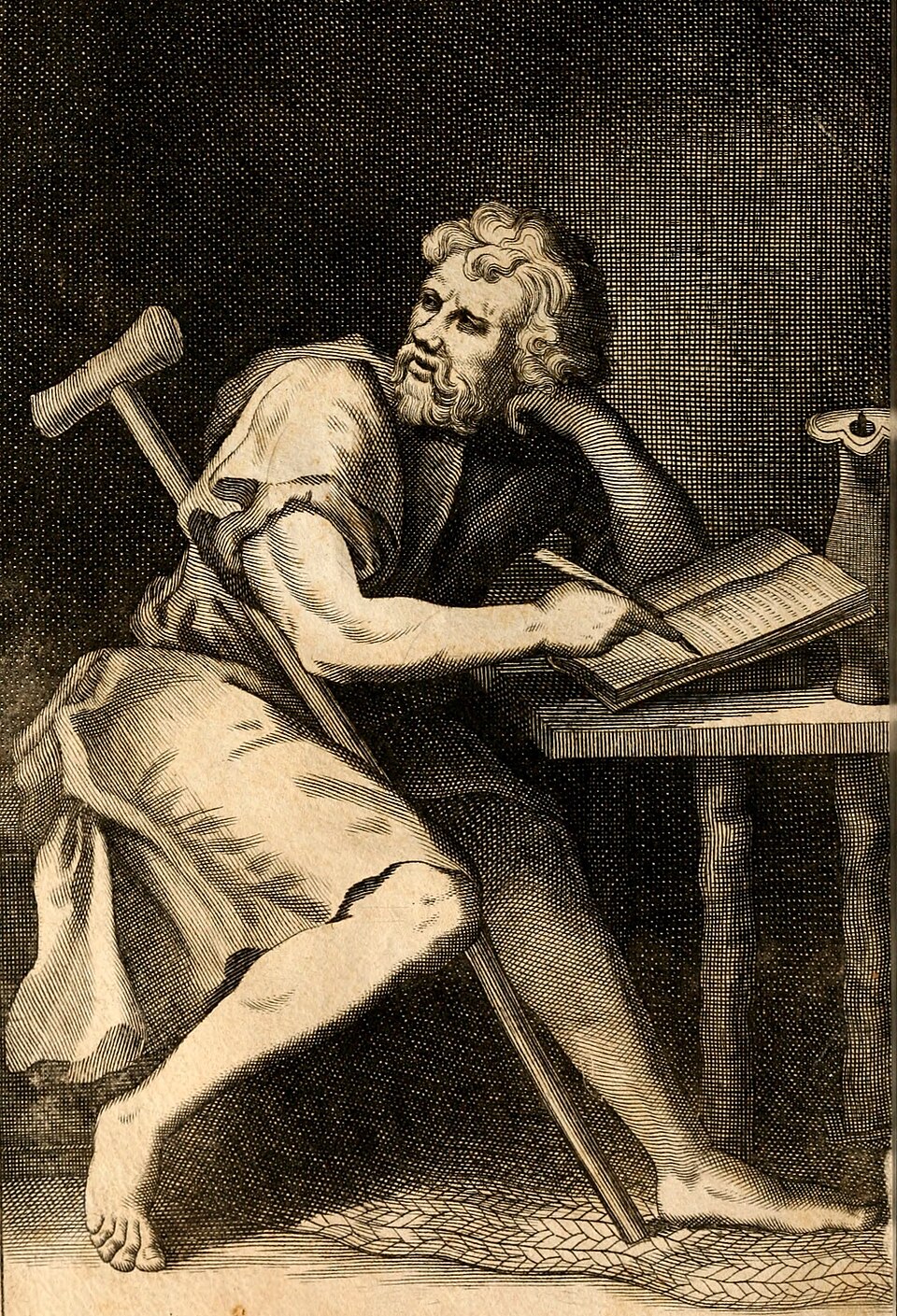
Portrait of Epictetus
William Sonmans / Michael Burghers · Public Domain

The person

A life under examination

Who he was

Born a slave in Hieropolis, Phrygia, Epictetus became a prominent Stoic philosopher in Rome and later in Nicopolis. He taught that the only things within our power are our own judgments and choices, and that true freedom comes from aligning our will with nature. His teachings, recorded by his student Arrian, have influenced thinkers from Montaigne to Frederick the Great.

Why he matters

Epictetus distilled Stoic philosophy into a practical manual for living with resilience and inner freedom. His emphasis on focusing on what is within our control resonates in modern self-help and cognitive behavioral therapy, making him a timeless guide for navigating adversity and personal responsibility.

Life in motion

Timeline

10 sourced moments across the life of Epictetus

Drag to travel through time · Ctrl/⌘ + scroll or pinch to zoom · Select a moment for the full account

c. 93 AD

Exiled from Rome by Emperor Domitian

Epictetus is banished from Rome when Emperor Domitian expels philosophers; he relocates to Nicopolis in Greece.

Why it matters: His exile leads to the establishment of his school in Nicopolis, where he gains fame.

Wikipedia

Operating system

Core themes

01

The Dichotomy of Control

Epictetus's foundational teaching is the distinction between what is within our power (our opinions, aims, desires, aversions) and what is not (body, property, reputation). True freedom and happiness come from correctly attributing our concerns only to what we control.

Evidence: Chapter I: 'There are things which are within our power, and there are things which are beyond our power. Within our power are opinion, aim, desire, aversion, and, in one word, whatever affairs are our own. Beyond our power are body, property, reputation, office, and, in one word, whatever are not properly our own affairs.'

02

Judgment Over Events

Epictetus argues that we are not disturbed by events themselves but by the views we take of them. Our emotional reactions are the product of our interpretations, not the events themselves.

Evidence: Chapter V: 'Men are disturbed not by things, but by the views which they take of things. Thus death is nothing terrible, else it would have appeared so to Socrates. But the terror consists in our notion of death, that it is terrible.'

03

The Art of Acceptance

Epictetus teaches that we should not demand that events happen as we wish, but rather wish for them to happen as they do. This acceptance is key to inner peace and resilience.

Evidence: Chapter VIII: 'Demand not that events should happen as you wish; but wish them to happen as they do happen, and you will go on well.'

04

Philosophy as a Way of Life

For Epictetus, philosophy is not theoretical but a practical discipline to be lived. It requires training, vigilance, and constant self-examination to achieve tranquility and moral excellence.

Evidence: Chapter XXIX: 'You must watch, you must labor, you must get the better of certain appetites, must quit your acquaintances, be despised by your servant, be laughed at by those you meet; come off worse than others in everything—in offices, in honors, before tribunals.'

05

The Social Self

Despite his focus on individual freedom, Epictetus emphasizes social duty, treating others with patience and understanding, and fulfilling roles such as family and citizenship. His ethics are relational, not solitary.

Evidence: Chapter XLIII: 'Everything has two handles: one by which it may be borne, another by which it cannot. If your brother acts unjustly, do not lay hold on the affair by the handle of his injustice, for by that it cannot be borne, but rather by the opposite—that he is your brother, that he was brought up with you; and thus you will lay hold on it as it is to be borne.'

06

The Use of Impressions

Epictetus emphasizes the importance of examining our impressions or appearances, testing them against the dichotomy of control before giving assent. This practice is central to maintaining a rational and tranquil mind.

Evidence: The business of the wise and good man is to use appearances conformably to nature: and as it is the nature of every soul to assent to the truth, to dissent from the false, and to remain in suspense as to that which is uncertain.

07

Freedom and Slavery

For Epictetus, true freedom is independence from external circumstances, achieved through internal judgment and discipline. One can be a slave in body but free in mind, and a consul can be a slave if attached to externals.

Evidence: If you will not, you will be a slave among slaves, even if you be ten thousand times a consul; and if you make your way up to the palace (Cæsar's residence), you will no less be a slave.

08

The Art of Living

Philosophy is practical, not theoretical. Progress is measured by actions, not by reading or resolving syllogisms. Epictetus urges us to live our philosophy, not merely talk about it, using metaphors like sheep digesting grass to produce wool and milk.

Evidence: Do you also show not your theorems to the uninstructed, but show the acts which come from their digestion.

09

Social Interconnectedness

Epictetus sees humans as parts of a larger whole, like a foot is part of a body. Suffering and hardship may be necessary for the good of the whole, and we should accept our role as citizens in the universal state of gods and men.

Evidence: If you consider yourself as a man and a part of a certain whole, it is for the sake of that whole that at one time you should be sick, at another time take a voyage and run into danger, and at another time be in want, and in some cases die prematurely.

010

Cultivating Progress

Epictetus describes the signs of a person making progress: they blame no one, praise no one, and see themselves as their own enemy to watch. They are consistently working on their judgments and actions.

Evidence: The signs (marks) of one who is making progress are these: he censures no man, he praises no man, he blames no man, he accuses no man, he says nothing about himself as if he were somebody or knew something.

011

The Role of the Philosopher

Epictetus distinguishes between true philosophy, which is about living well, and sophistry, which indulges in logical puzzles and erudition for its own sake. He warns against vanity in scholarship.

Evidence: If I shall admire the exposition, what else have I been made unless a grammarian instead of a philosopher? except in one thing, that I am explaining Chrysippus instead of Homer.

Read through your work

Key takeaways for...

Leaders

Epictetus on joining responsibility with self-command and service

Epictetus matters to leaders because their life offers a concrete study of joining responsibility with self-command and service.

  1. 01Epictetus's foundational teaching is the distinction between what is within our power (our opinions, aims, desires, aversions) and what is not (body, property, reputation). True freedom and happiness come from correctly attributing our concerns only to what we control.
  2. 02The central Stoic doctrine of distinguishing between what is up to us and what is not. This reduces anxiety and increases effectiveness.
  3. 03Recognize that our emotional disturbances come from our interpretations, not events themselves. By changing our thoughts, we can change our feelings.

In his words

Useful quotations

Men are disturbed not by things, but by the views which they take of things. Thus death is nothing terrible, else it would have appeared so to Socrates. But the terror consists in our notion of death, that it is terrible.
The EnchiridionGo to passage
Demand not that events should happen as you wish; but wish them to happen as they do happen, and you will go on well.
The EnchiridionGo to passage
There are things which are within our power, and there are things which are beyond our power. Within our power are opinion, aim, desire, aversion, and, in one word, whatever affairs are our own. Beyond our power are body, property, reputation, office, and, in one word, whatever are not properly our own affairs.
The EnchiridionGo to passage
If you are dazzled by the semblance of any promised pleasure, guard yourself against being bewildered by it; but let the affair wait your leisure, and procure yourself some delay. Then bring to your mind both points of time—that in which you shall enjoy the pleasure, and that in which you will repent and reproach yourself, after you have enjoyed it—and set before you, in opposition to these, how you will rejoice and applaud yourself if you abstain.
The EnchiridionGo to passage
Remember that it is not he who gives abuse or blows, who affronts, but the view we take of these things as insulting. When, therefore, anyone provokes you, be assured that it is your own opinion which provokes you.
The EnchiridionGo to passage
In every affair consider what precedes and what follows, and then undertake it. Otherwise you will begin with spirit, indeed, careless of the consequences, and when these are developed, you will shamefully desist.
The EnchiridionGo to passage
Never proclaim yourself a philosopher, nor make much talk among the ignorant about your principles, but show them by actions.
The EnchiridionGo to passage
Let death and exile, and all other things which appear terrible, be daily before your eyes, but death chiefly; and you will never entertain an abject thought, nor too eagerly covet anything.
The EnchiridionGo to passage
For freedom is acquired not by the full possession of the things which are desired, but by removing the desire.
A Selection from the Discourses of Epictetus with the EncheiridionGo to passage
I am not a hindrance to myself.
A Selection from the Discourses of Epictetus with the EncheiridionGo to passage

Put into practice

Lessons worth keeping

Focus on what you can control

The central Stoic doctrine of distinguishing between what is up to us and what is not. This reduces anxiety and increases effectiveness.

Try it: In personal and professional life, we can apply this by dividing goals into controllable actions and uncontrollable outcomes. This principle underpins cognitive-behavioral approaches to stress.

Reframe your judgments

Recognize that our emotional disturbances come from our interpretations, not events themselves. By changing our thoughts, we can change our feelings.

Try it: Use cognitive restructuring to challenge catastrophic thinking and adopt more flexible perspectives, similar to techniques in modern therapy.

Practice acceptance of what happens

Instead of fighting reality, embrace it. This reduces suffering and allows us to respond constructively.

Try it: Used in mindfulness-based stress reduction and dialectical behavior therapy as 'radical acceptance'.

Take responsibility for your reactions

When provoked, we must not blame the provoker; our reactions are our own. This empowers us to choose our responses.

Try it: In conflict resolution, adopt an 'I-message' approach and recognize the subjective nature of insults.

Contemplate impermanence and loss

By regularly reflecting on the transient nature of things, we appreciate them more and are less devastated by loss.

Try it: Practice mindfulness and gratitude journaling. This is also a component of existential psychotherapy.

Prepare for action by considering consequences

Before undertaking a venture, mentally rehearse the potential obstacles and costs. This leads to more committed and realistic pursuits.

Try it: Use premortem strategies in project planning, risk assessment, and personal decision-making.

Distinguish what is in your control

Realize that some things are up to you (your judgments, choices, desires) and others are not (your body, wealth, reputation). Focus your energy only on the former.

Try it: In decision-making, separate your efforts from outcomes. Aim to do your best but let go of results, reducing anxiety and regret.

View obstacles as opportunities for practice

Treat each difficulty as a chance to exercise your judgment and strengthen your character.

Try it: When faced with a setback, ask 'how can I respond wisely?' rather than asking 'why me?'.

Reframe your perception of others' actions

Remember that people act according to their own judgment. If they are wrong, they are the ones who suffer the consequences of their error.

Try it: In conflicts, try to understand the other person's perspective rather than taking offense.

Read with judgment

Greatness, contradiction, and use

What made them great

Epictetus joined The Dichotomy of Control, Judgment Over Events, The Art of Acceptance with a life that made those principles consequential rather than merely theoretical.

The central contradiction

Epictetus's ideals must be studied alongside the consequences, relationships, and institutional pressures visible in Arrian's connection to their life.

Lessons from failure

Learning from Epictetus requires examining failures, blind spots, and outcomes as seriously as admired ideas. Greatness is evidence for study, not immunity from criticism.

Modern relevance

Epictetus remains relevant wherever people face responsibility, uncertainty, competing incentives, and the challenge of turning principles into conduct.

How to learn from them

Begin with The Enchiridion, compare it with reliable reference sources, then test Focus on what you can control in a real decision.

Best entry point

Start with The Enchiridion. Read for the central ideas, then compare those ideas with the timeline and relationships on this page.

The human network

Key relationships

student and recorder

Arrian

Arrian was a student of Epictetus and took down his discourses in shorthand, publishing them as the Discourses and the Enchiridion. Without Arrian, Epictetus's teachings would have been lost.

teacher

Musonius Rufus

Epictetus studied under the Stoic philosopher Musonius Rufus in Rome while still a slave. Musonius recognized Epictetus's potential and trained him to be a philosopher.

fellow Stoic (comparative)

Seneca

Seneca, a Roman statesman and philosopher, also exemplified Stoicism, but with a focus on his own social and political challenges. Comparing the two reveals how Stoicism was adapted to different life circumstances.

fellow Stoic (comparative)

Marcus Aurelius

Marcus Aurelius, Roman emperor and author of Meditations, was deeply influenced by Epictetus, though he did not meet him directly. Marcus's Meditations show the practical application of Epictetus's ideas in the highest office.

philosophical model

Socrates

Epictetus frequently references Socrates as a model of philosophical practice and serenity in the face of death. Socrates exemplifies the ideal of the philosopher who fears not death, but only wrongdoing.

Master (slave owner)

Epaphroditus

Epictetus was a slave to Epaphroditus, Nero's freedman. Epaphroditus owned him and facilitated his education.

Student and amanuensis

Arrian

Arrian recorded Epictetus's lectures, as stated in the source. Arrian preserved Epictetus's teachings for posterity.

Inspiration

Socrates

Epictetus frequently references Socrates as an ideal philosopher. Socrates's example of facing death and enduring hardship influenced Epictetus's ideal of the wise man.

Philosophical reference

Chrysippus

Epictetus refers to Chrysippus's writings as important but warns not to admire the exposition rather than live the lessons. Chrysippus is a major Stoic authority for Epictetus.

Philosophical reference

Cleanthes

Epictetus mentions Cleanthes in context of Stoic paradoxes. Cleanthes was a successor to Zeno and a key Stoic philosopher.

Continue the inquiry

Related greats

Seneca

Both were prominent Stoics, but Seneca's life as a wealthy advisor and playwright contrasts with Epictetus's simple, slave-born asceticism, offering a comparative study in applying Stoic principles in different social contexts.

Stoicism · Ethics · Resilience

Marcus Aurelius

As a philosophical successor, Marcus Aurelius applied Epictetus's teachings in his personal Meditations, showing how Stoicism functioned as a practical tool for an emperor.

Stoicism · Self-discipline · Duty

Socrates

Epictetus revered Socrates as the ultimate model of philosophical virtue, often invoking his example of fearless acceptance of death and commitment to reason.

Philosophy as a way of life · Courage · Integrity

Musonius Rufus

As Epictetus's teacher, Musonius Rufus transmitted Stoic ideals and shaped Epictetus's approach; their relationship illustrates the importance of mentorship in philosophy.

Stoicism · Education · Moral virtue

Michel de Montaigne

Montaigne, a Renaissance essayist, owned a copy of the Enchiridion and engaged with Stoic ideas, demonstrating Epictetus's influence on modern thought.

Stoicism · Skepticism · Self-examination

Frederick the Great

Frederick the Great carried the Enchiridion on military campaigns, evidence of the manual's practical use as a soldier's guide to resilience.

Stoicism · Leadership · Resilience

Dalai Lama

Modern figure advocating inner peace and compassion, resembling Epictetus's focus on mental attitude.

Inner peace · Compassion · Mental training

Albert Ellis

Founder of rational emotive behavior therapy, whose ideas about irrational beliefs echo Epictetus's teachings on judgment.

Cognitive restructuring · Emotional resilience

Source shelf

Recommended sources

link

A Selection from the Discourses of Epictetus with the Encheiridion

Epictetus

View source →

Source basis: This profile draws on The Enchiridion, A Selection from the Discourses of Epictetus with the Encheiridion, Epictetus — Wikipedia, Epictetus — Wikidata. Source-backed claims and quotations retain provenance where available.

Direct answers

Frequently asked questions about Epictetus

Who was Epictetus?

Born a slave in Hieropolis, Phrygia, Epictetus became a prominent Stoic philosopher in Rome and later in Nicopolis. He taught that the only things within our power are our own judgments and choices, and that true freedom comes from aligning our will with nature. His teachings, recorded by his student Arrian, have influenced thinkers from Montaigne to Frederick the Great.

What is Epictetus best known for?

Epictetus distilled Stoic philosophy into a practical manual for living with resilience and inner freedom. His emphasis on focusing on what is within our control resonates in modern self-help and cognitive behavioral therapy, making him a timeless guide for navigating adversity and personal responsibility.

What can leaders learn from Epictetus?

The central Stoic doctrine of distinguishing between what is up to us and what is not. This reduces anxiety and increases effectiveness.

What are Epictetus's most important ideas?

The core ideas highlighted by this profile are The Dichotomy of Control, Judgment Over Events, The Art of Acceptance, Philosophy as a Way of Life.

What made Epictetus great?

Epictetus joined The Dichotomy of Control, Judgment Over Events, The Art of Acceptance with a life that made those principles consequential rather than merely theoretical.

How is Epictetus connected to Arrian?

Arrian was a student of Epictetus and took down his discourses in shorthand, publishing them as the Discourses and the Enchiridion. Without Arrian, Epictetus's teachings would have been lost.

What are the best sources for learning about Epictetus?

Start with The Enchiridion, A Selection from the Discourses of Epictetus with the Encheiridion, Epictetus — Wikipedia, Epictetus — Wikidata, then compare primary texts with reliable historical reference sources.
