



1859
Moves to Chicago
Pullman moved to Chicago with business partner Charles Moore to raise buildings, beginning his career in the city.
Why it matters: Chicago became the center of his operations and success.
Wikipedia ↗Scientist & Inventor · 1831–1897 AD
The Gilded Age's Controversial Industrialist
The defining question
How far should an employer's control extend over workers' lives and livelihoods, and at what cost to social harmony?
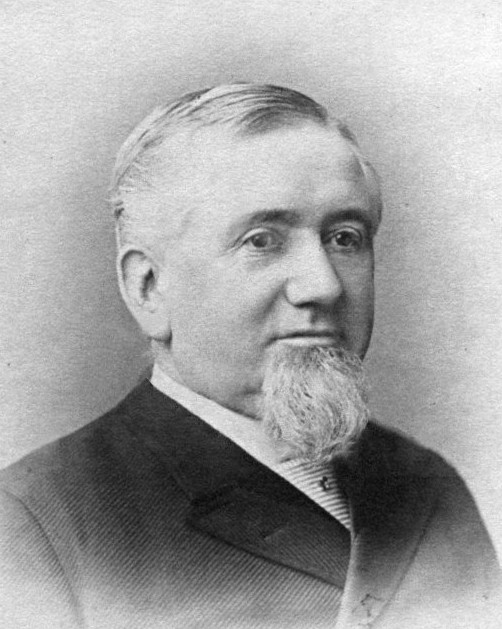
The person
George Pullman was a prominent American industrialist and founder of the Pullman Palace Car Company. He revolutionized railroad travel with his luxury sleeping cars, but his company town and labor policies sparked one of the most significant strikes in American history in 1894.
Pullman's model town and labor practices became a flashpoint for the labor movement, leading to a nationwide boycott that tested the limits of federal power and corporate influence.
Life in motion
Drag to travel through time · Ctrl/⌘ + scroll or pinch to zoom · Select a moment for the full account
Pullman moved to Chicago with business partner Charles Moore to raise buildings, beginning his career in the city.
Why it matters: Chicago became the center of his operations and success.
Wikipedia ↗Operating system
Pullman's company town was a model of paternalistic control, designed to manage every aspect of workers' lives. While it provided housing and amenities, it also fostered dependence and resentment.
Evidence: The source describes the Pullman strike as driven by workers 'driven to the verge of starvation, their entreaties spurned with contempt.' The town's control is implied by the workers' desperation and the company's refusal to negotiate, as seen in the business men's committee being told 'the company had nothing to arbitrate.'
The Pullman strike was a seminal event in labor history, highlighting the power of organized labor and the resistance of corporate interests.
Evidence: The source details the formation of the American Railway Union and Debs' leadership. The boycott and strike are chronicled, and Debs' testimony before the strike commission is cited as a clear explanation of the causes and failures.
The Pullman Strike led to unprecedented federal intervention, including federal troops and injunctions, which were seen as siding with corporate interests against labor.
Evidence: The source includes Debs' protest to President Cleveland, accusing the government of 'supplanting civil and state authorities with the federal military power.' It also describes the 'sweeping un-American injunctions' and the use of troops, asserting 'the strong arm of the military power has been employed to protect the working people.'
The strike exposed the vast chasm between the wealthy industrialists and the working poor, and the ability of corporations to wield power that rivals government.
Evidence: The source quotes Debs: 'Havemeyer goes into the United States Senate and dictates what the duty on sugar shall be, and all the people combined can't stop him.' It also critiques the railroads for using their power to 'degrade and oppress their employes.'
The strike highlighted the role of media and public relations in shaping perceptions, with the General Managers' Association using the Associated Press to tell their side of the story.
Evidence: The author notes, 'the account of this strike as presented to the public by the Associated Press, was George M. Pullman's and the General Managers' side of the question, distorted and colored to suit their purposes.' The book aims to counter this by presenting 'truths pure and simple.'
Pullman's success rested on his ability to standardize luxury and comfort across trains, creating a consistent experience for travelers nationwide.
Evidence: Pullman service has revolutionized the method of travel. Night has been abolished, the sense of distance has been annihilated; fatigue has been reduced to a minimum.
Pullman transformed the primitive sleeping car into a luxurious hotel on wheels, with innovations like folding berths, plush interiors, and amenities.
Evidence: The next car constructed by Mr. Pullman, after the 'Pioneer' cost $24,000. And very soon after several additional cars were built at approximately the same cost, and were put in operation on the Michigan Central Railroad.
Pullman's company town aimed to provide a model environment for workers, but also reflected his paternalistic control over labor.
Evidence: To meet this expansion and to extend the business still farther along the line of general car building, it became necessary to enlarge the plant. The shops already established in St. Louis, Detroit, Elmira, and Wilmington were unable to provide the volume required by the increasing demand for the Company's outp...
Pullman's dominance was achieved through aggressive competition and strategic acquisitions, such as the purchase of the Mann Boudoir and Woodruff companies.
Evidence: Early in 1889 the Pullman Company acquired the control of the Mann Boudoir Car Company and the Woodruff Sleeping Car Company, including the entire car equipment and plants.
Pullman introduced significant technological improvements, including the vestibule, electric lighting, and eventually all-steel car construction.
Evidence: In 1888, Mr. Pullman had put in operation his vestibule trains, which immediately met with extraordinary favor and patronage.
The Pullman Company implemented unique employee policies, such as pensions and rewards for courtesy, but also faced labor unrest later.
Evidence: To inspire in the car employees, conductors as well as porters, the ambition to satisfy and please the passenger, rewards of extra pay are made for unblemished records of courtesy; pensions are provided for the years that follow their retirement from active service.
Pullman's influence extended internationally, with cars introduced in Europe and manufacturing operations abroad.
Evidence: In Europe, the Pullman car was introduced in England, with a shop established in Turin.
Read through your work
Leaders
George Pullman matters to leaders because their life offers a concrete study of joining responsibility with self-command and service.
In his words
“The strike was not a failure. It will pass into history as a noble struggle for a righteous cause, and those who participated in it, whatever their immediate sacrifices may be, will in the end feel amply compensated for all their losses.”
“The Pullman strike was not declared until the employes of the Pullman company were driven to the verge of starvation, their entreaties spurned with contempt, and their grievances denied a hearing. No refusal to handle Pullman cars was declared by any railway employe until all propositions looking towards arbitration and conciliation were rejected by the Pullman company.”
“Government ownership of railroads is decidedly better than railroad ownership of government. The time is coming when there must be government ownership of railroads. Strikes cannot be averted otherwise.”
“There is no man in the country who can directly charge me with violating the law of this country. Did any one of you ever hear me advocate violence? (A mighty no went up in response.) On the other hand did anyone here ever hear me counsel the men to be frank and straight forward, and honest and law-abiding in all they did?”
“The laboring people do not want sympathy, neither do they want charity, all they want is simple justice, and this they must and will have.”
“I am a populist and favor wiping out both old parties, so they will never come into power again. I have been a democrat all my life and I am ashamed to admit it. I want every one of you to go to the polls and vote the peoples' ticket.”
“The weapon, that it was made a criminal offense for a striker to use, and for which the officers of the American Railway Union were sent to jail, was now in the hands of the railroad corporations to use at will.”
“Through the machination of the general managers, the courts and the press and the Benedict Arnolds of labor, the cause of the railroad corporations was beginning to triumph.”
“The account of this strike as presented to the public by the Associated Press, was George M. Pullman's and the General Managers' side of the question, distorted and colored to suit their purposes.”
“My line of work since boyhood has been confined principally to railway service; in short I am a switchman, and in that branch of the service, have been frequently confronted with the differences that arise between the management of the various railroad corporations and their employees.”
Put into practice
The Pullman strike illustrates how concentrated corporate power can suppress worker rights and influence government, leading to social unrest and inequality.
The strike's initial success relied on the solidarity of different railway unions uniting as the American Railway Union, showing the power of collective action.
The General Managers' Association used the Associated Press to control the public narrative, demonstrating how media can be co-opted by powerful interests.
Pullman's refusal to address legitimate grievances led to a national crisis, showing that ignoring worker needs can backfire.
The federal government's intervention on behalf of corporations, via injunctions and troops, intensified conflict and raised constitutional questions.
Despite the strike's failure, participants saw it as a noble struggle for a righteous cause, inspiring future labor movements.
Pullman built the 'Pioneer' without regard to immediate financial return, focusing on creating the best possible product, which later paid off.
Pullman submitted to the 'court of public opinion' by running his cars alongside cheaper ones and letting travelers decide, even at a higher price.
Pullman unified competing car companies to ensure consistent, high-quality service across all routes, eliminating variability.
Read with judgment
George Pullman joined Corporate Paternalism, Labor Unrest and Unionism, Federal Intervention and Judicial Power with a life that made those principles consequential rather than merely theoretical.
George Pullman's ideals must be studied alongside the consequences, relationships, and institutional pressures visible in Eugene V. Debs's connection to their life.
Learning from George Pullman requires examining failures, blind spots, and outcomes as seriously as admired ideas. Greatness is evidence for study, not immunity from criticism.
George Pullman remains relevant wherever people face responsibility, uncertainty, competing incentives, and the challenge of turning principles into conduct.
Begin with The Pullman boycott, compare it with reliable reference sources, then test The Dangers of Unchecked Corporate Power in a real decision.
Start with The Pullman boycott. Read for the central ideas, then compare those ideas with the timeline and relationships on this page.
The human network
adversary
Debs was the leader of the American Railway Union and the main organizer of the Pullman boycott. He represented the labor opposition to Pullman's corporate policies.
adversary
President Cleveland ordered federal troops to break the strike. His action set a precedent for federal intervention in labor disputes.
ally
Governor of Illinois who protested President Cleveland's use of federal troops without state consent. He supported the strikers and challenged federal overreach.
critic
Author of the source book, a switchman who chronicled the strike from the workers' perspective. He provided a counter-narrative to the corporate-controlled press.
successor
Robert T. Lincoln succeeded Pullman as president of the Pullman Company after Pullman's death in 1897. Lincoln continued Pullman's legacy, leading the company until 1911.
business associate
Marshall Field was a director of the Pullman Palace Car Company and a prominent Chicago businessman. Field's involvement added financial credibility and connections.
competitor backer
Vanderbilt supported the Wagner Palace Car Company, a major competitor. Vanderbilt's backing made Wagner a formidable rival.
successor
John S. Runnells was the third president of the Pullman Company, succeeding Robert T. Lincoln in 1911. Runnells led the company into the modern era.
predecessor in railway technology
George Stephenson was a pioneer of steam locomotion, whose work laid the foundation for railroads. Stephenson's innovations enabled the industry that Pullman revolutionized.
Continue the inquiry
Like Pullman, Rockefeller was a Gilded Age industrialist with controversial labor practices, notably the Ludlow Massacre.
Corporate power · Labor unrest · Paternalism
Carnegie's Homestead Strike of 1892 similarly involved violent confrontation between workers and a powerful industrialist, raising issues of unionization and corporate control.
Labor disputes · Steel industry · Public perception
As Carnegie's partner, Frick was a key figure in the Homestead Strike, known for his anti-union stance.
Anti-unionism · Labor conflict
Debs was the central figure in the Pullman strike, leading the American Railway Union and later running for president.
Labor rights · Socialism · Unionism
As leader of the AFL, Gompers represented a different approach to labor organizing, often contrasting with Debs' industrial unionism.
Labor movement · Union strategies
Addams was a social reformer who supported the strikers and criticized Pullman's paternalism, reflecting on the social responsibilities of industrialists.
Social reform · Paternalism · Labor rights
Stephenson pioneered steam locomotion, enabling the railroad industry that Pullman later revolutionized with his luxurious cars.
Transportation innovation
Ford transformed automobile travel through standardization and mass production, analogous to Pullman's standardization of luxury rail travel.
Mass production · Transportation revolution
Vanderbilt was a major railroad magnate whose empire and competitive tactics paralleled Pullman's, though they were sometimes in opposition.
Railroad industry · Competition
Source shelf
link
Burns, W. F.
View source →link
Husband, Joseph, 1885-1938
View source →reference
Wikipedia contributors
View source →reference
Wikidata contributors
View source →Source basis: This profile draws on The Pullman boycott, The Story of the Pullman Car, George Pullman — Wikipedia, George Pullman — Wikidata. Source-backed claims and quotations retain provenance where available.
Direct answers
George Pullman was a prominent American industrialist and founder of the Pullman Palace Car Company. He revolutionized railroad travel with his luxury sleeping cars, but his company town and labor policies sparked one of the most significant strikes in American history in 1894.
Pullman's model town and labor practices became a flashpoint for the labor movement, leading to a nationwide boycott that tested the limits of federal power and corporate influence.
The Pullman strike illustrates how concentrated corporate power can suppress worker rights and influence government, leading to social unrest and inequality.
The core ideas highlighted by this profile are Corporate Paternalism, Labor Unrest and Unionism, Federal Intervention and Judicial Power, Economic Inequality and Corporate Power.
George Pullman joined Corporate Paternalism, Labor Unrest and Unionism, Federal Intervention and Judicial Power with a life that made those principles consequential rather than merely theoretical.
Debs was the leader of the American Railway Union and the main organizer of the Pullman boycott. He represented the labor opposition to Pullman's corporate policies.
Start with The Pullman boycott, The Story of the Pullman Car, George Pullman — Wikipedia, George Pullman — Wikidata, then compare primary texts with reliable historical reference sources.