



October 1829
Rocket wins Rainhill Trials
Stephenson's locomotive Rocket won the Rainhill Trials, securing the contract for the Liverpool and Manchester Railway.
Why it matters: Demonstrated the superiority of his locomotive design.
Wikipedia ↗Scientist & Inventor · 1781–1848 AD
Father of the Railways
The defining question
How can an uneducated man achieve what the educated elite deemed impossible?
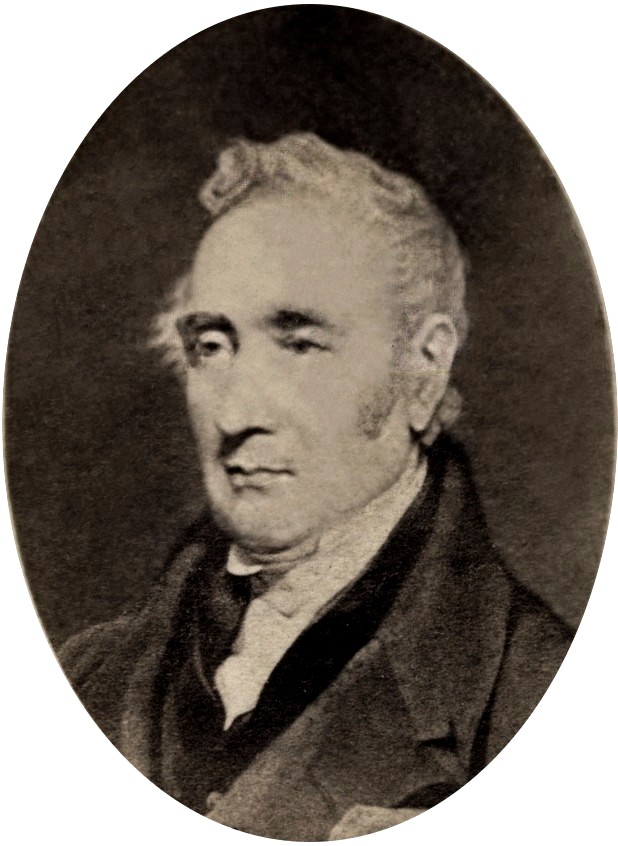
The person
George Stephenson was a self-taught English mechanical and civil engineer, renowned as the 'Father of Railways.' Rising from a colliery worker, he built the first public inter-city railway line, the Liverpool and Manchester Railway, and pioneered the use of steam locomotives. His innovations in rail transport transformed industry and travel, laying the foundation for modern railway networks worldwide.
Stephenson's life epitomizes the power of self-improvement and perseverance. He overcame poverty and lack of formal education to become a leading engineer, demonstrating that practical ingenuity and determination can drive technological revolution. His railway systems catalyzed the Industrial Revolution, reshaping economies, societies, and the physical landscape.
Life in motion
Drag to travel through time · Ctrl/⌘ + scroll or pinch to zoom · Select a moment for the full account
Stephenson's locomotive Rocket won the Rainhill Trials, securing the contract for the Liverpool and Manchester Railway.
Why it matters: Demonstrated the superiority of his locomotive design.
Wikipedia ↗Operating system
Despite little formal schooling, Stephenson relentlessly educated himself through night classes, reading, and hands-on experimentation, believing that knowledge could be acquired through diligence.
Evidence: He attended night school to learn arithmetic and mechanics, and later studied engineering books borrowed from libraries. He also educated his son Robert, sending him to a good school and teaching him from his own experience.
Stephenson faced skepticism from engineers, Parliament, and the public, yet he pursued his vision of steam locomotion with unwavering determination.
Evidence: During the Liverpool and Manchester Railway hearings, he was mocked and questioned, but he persisted, ultimately proving his critics wrong. His perseverance is well-documented in his own recollections and Smiles's narrative.
Stephenson's genius lay in practical, hands-on problem-solving. He improved mine engines, designed the first successful locomotives, and pioneered railway construction techniques, such as surveying across difficult terrain like Chat Moss.
Evidence: His innovations include the safety lamp, the locomotive 'Blucher,' and the Rocket, which won the Rainhill Trials. His engineering of the Stockton and Darlington and Liverpool and Manchester railways showcased his practical approach.
Stephenson's relationship with his son Robert was central to his life. He invested heavily in Robert's education and training, creating a partnership that advanced railway engineering further.
Evidence: He worked extra hours to fund Robert's schooling, and they collaborated on many projects, including the Rocket. Robert became a renowned engineer, building on his father's foundation.
Stephenson was instrumental in transforming rail transport from a coal-wagon system to a passenger and freight network, sparking the global expansion of railways.
Evidence: The success of the Stockton and Darlington and Liverpool and Manchester lines proved the viability of locomotive railways, leading to their adoption worldwide, as documented in the source's preface on railway expansion.
Read through your work
Leaders
George Stephenson stands as a leader who drove change against powerful opposition. He led complex projects, rallied supporters like Sandars, and built a team with his son. His leadership style was hands-on, willing to get dirty in the trenches, and he combined vision with tactical pragmatism—promising 10 mph to gain approval, then delivering more. For leaders, his life illustrates the importance of resilience, strategic compromise, and developing future leaders. He also shows that true authority emerges from demonstrated competence, not credentials.
In his words
“He remembered the time when he had very few supporters in bringing out the railway system--when he sought England over for an engineer to support him in his evidence before Parliament, and could find only one man, James Walker, but was afraid to call that gentleman, because he knew nothing about railways. He had then no one to tell his tale to but Mr.”
“It was to Mr. Bruce's tuition and methods of modeling the mind that I attribute much of my success as an engineer, for it was from him that I derived my taste for mathematical pursuits, and the facility I possess of applying this kind of knowledge to practical purposes, and modifying it according to circumstances.”
Put into practice
George Stephenson, despite little formal schooling, educated himself through night school and self-study, and he prioritized education for his son.
Stephenson encountered widespread ridicule and opposition to his railway ideas, but he persisted until they were accepted.
Stephenson's hands-on experience with engines and machinery allowed him to innovate where theorists were skeptical.
He agreed to present a conservative speed of 10 mph to Parliament to get approval, later achieving higher speeds.
Stephenson invested time and money in his son Robert's education, creating a legacy that continued his work.
Stephenson saw railways as a way to transform industry and society, connecting coal and iron resources to markets.
Read with judgment
George Stephenson's greatness lay in his relentless self-education and practical ingenuity. Despite minimal formal schooling, he mastered mechanics through night classes and hands-on work, improving mine engines and building locomotives that transformed transport. His engineering feats, such as the Rocket and the Liverpool and Manchester Railway, demonstrated that practical problem-solving could outperform theoretical skepticism. His perseverance amid parliamentary ridicule and public doubt, as documented in Smiles's biography, underscores his conviction that empirical results could overturn entrenched opinion.
Stephenson was a self-taught pragmatist who achieved revolutionary change by incremental, practical steps, yet he strategically presented conservative claims to gain approval. He promised Parliament a modest speed of 10 mph for the Liverpool and Manchester Railway, masking his belief in far higher speeds. This tension between his radical vision and his cautious public positioning highlights the difficulty of introducing disruptive innovation within institutional constraints.
Stephenson's shadow side includes a fierce protectiveness of his reputation, seen in the safety lamp dispute with Humphry Davy, and a tendency to prioritize his own methods over collaboration, such as isolating himself from the engineering community. His later years focused on mining and personal wealth, possibly at the expense of broader industry leadership. His adherence to narrow gauge also sparked rivalry with Brunel, showing a reluctance to embrace alternatives.
Stephenson's life offers timeless lessons on the power of self-education and resilience. In an era of rapid technological change, his example encourages continuous learning and practical innovation. His ability to overcome skepticism by demonstrating tangible results is a model for modern entrepreneurs and engineers. The global rail network's impact mirrors today's digital infrastructure, making his story relevant to those building transformative systems.
To learn from Stephenson, one should adopt his disciplined self-education, combining theory with hands-on practice. His strategic moderation—starting with modest claims to gain acceptance—can be applied to pitching disruptive ideas. Additionally, his investment in his son's education demonstrates the multiplier effect of mentoring. Studying Smiles's biography provides insight into his methods and mindset, encouraging perseverance in the face of doubt.
The best entry point is Samuel Smiles's 'The Life of George Stephenson and of his Son Robert Stephenson,' which offers a detailed narrative of his struggles and achievements. Smiles's account, though hagiographic, provides primary evidence of Stephenson's character and the challenges he faced. The chapter on the parliamentary contest for the Liverpool and Manchester Railway is particularly revealing.
The human network
Son and collaborator
George's son, whom he educated and trained as an engineer. They worked together on many projects, including the Rocket. Robert carried on his father's legacy and became a leading engineer in his own right.
Master
Stephenson's early master, who once invited him for a drink, but Stephenson declined to maintain his steady work habits. Shows Stephenson's self-discipline and commitment to his work.
Supporter
A Liverpool merchant who listened to Stephenson and helped keep his spirits up during the parliamentary struggle. Provided crucial moral and financial support for the railway project.
Fellow engineer
The only engineer Stephenson could find to support him in evidence, but he didn't call him because Walker knew nothing about railways. Highlights Stephenson's isolation in the engineering community.
Continue the inquiry
Another pioneer of steam locomotion who built an early locomotive, providing a comparison for Stephenson's improvements.
Innovation · Engineering
A younger railway engineer who differed in approach (broad gauge) and with whom Stephenson had professional rivalries.
Railway engineering · Innovation
Steam engine pioneer whose work made the locomotive possible, representing the earlier generation of steam technology.
Steam power · Industrial Revolution
Source shelf
link
Samuel Smiles
View source →reference
Wikipedia contributors
View source →reference
Wikidata contributors
View source →Source basis: The evidence relies primarily on Samuel Smiles's authorized biography, which draws on interviews and letters, and Wikipedia for timeline facts. Key quotes from Smiles provide direct testimony, including Stephenson's recollection of seeking support and Robert's acknowledgment of his teacher. Themes and lessons are extracted from these sources, with confidence levels indicated. The sources are limited to the biography and supplementary articles.
Direct answers
Stephenson attended night school to learn arithmetic and mechanics, borrowed engineering books from libraries, and gained practical experience by repairing and improving mine engines. He also educated his son Robert, sending him to good schools and teaching him from his own experience (Smiles's biography). This self-directed learning was key to his success.
Stephenson's greatest achievement was the Liverpool and Manchester Railway, the first public inter-city railway, which opened in 1830. He engineered the route, including the difficult Chat Moss bog, and his locomotive Rocket won the Rainhill Trials to power it. This line proved the viability of steam railways and sparked global expansion.
Stephenson faced opposition because railways were novel and feared. Critics claimed locomotives would cause miscarriages, make cows stop giving milk, and explode. In Parliament, his lack of formal education led to mockery, and he struggled to find supporting engineers because they knew little about railways (Smiles's biography). He had to prove his ideas through sheer perseverance.
The Rainhill Trials of 1829 were a competition to select a locomotive for the Liverpool and Manchester Railway. Stephenson's Rocket won, achieving a speed of 12 mph and hauling loads. This victory demonstrated the superiority of his design and secured the contract, marking a turning point in railway history.
Stephenson invested heavily in Robert's education, working extra hours to fund his schooling. Robert became a leading engineer in his own right and collaborated with his father on projects like the Rocket. This partnership extended Stephenson's impact and ensured his legacy.
Stephenson developed a safety lamp for miners in 1815, but Humphry Davy claimed priority. Although Davy's lamp was more elegant, Stephenson's was independently invented and proven in mines. The dispute highlighted Stephenson's practical approach and his defensiveness about his contributions, a shadow side of his character.