



June 15, 1775
Appointed Commander-in-Chief of the Continental Army
The Continental Congress appointed Washington as commander-in-chief.
Why it matters: He led the American forces to victory in the Revolutionary War.
Wikipedia ↗Political Leader · 1732–1799 AD
Founding Father and First President of the United States
The defining question
How can a leader harness ambition and duty to serve the greater good without succumbing to personal power?
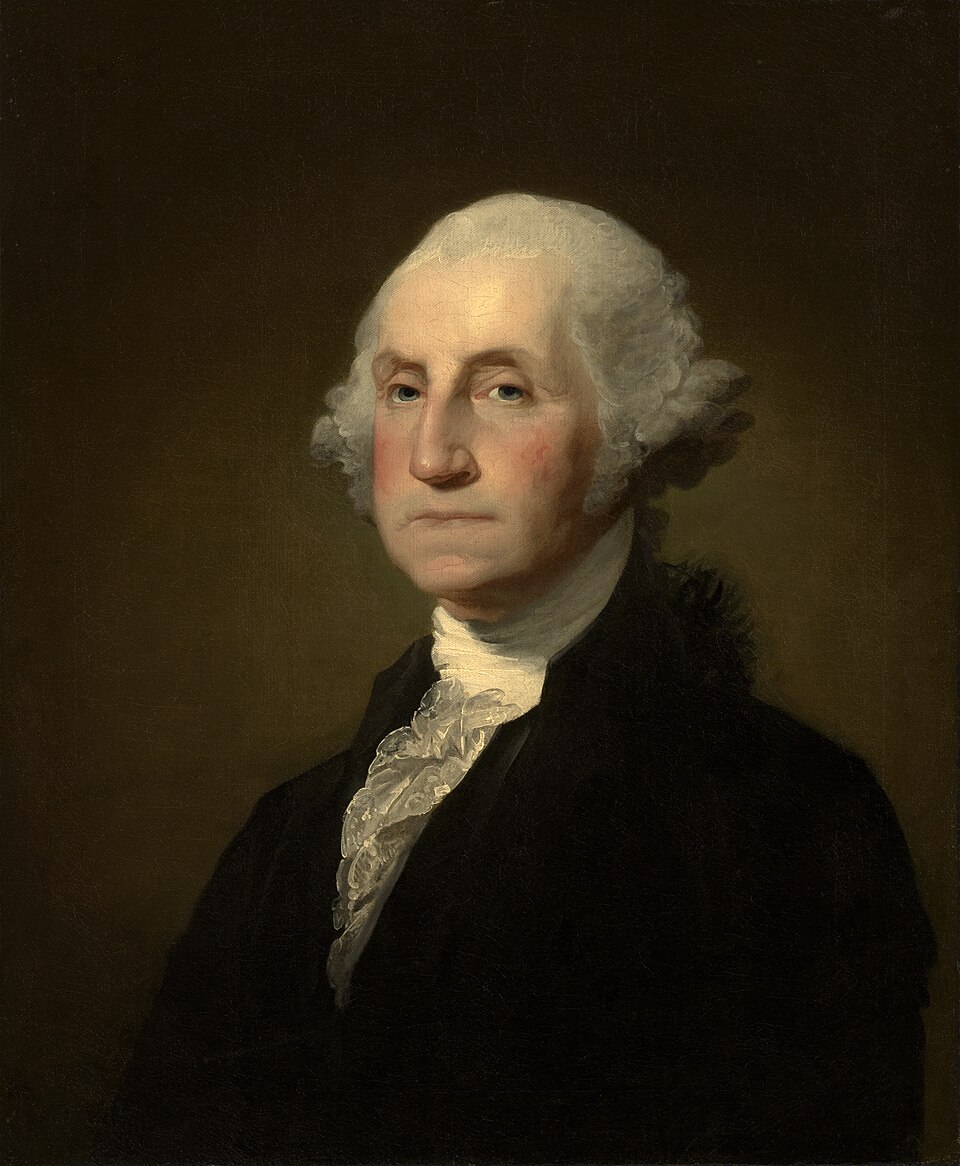
The person
George Washington (1732–1799) was a Virginia planter, military commander, and statesman who led the Continental Army to victory in the American Revolutionary War and served as the first President of the United States. Known for his leadership, integrity, and commitment to republican ideals, he played a central role in the founding of the nation.
Washington's leadership during the Revolutionary War and his presidency established precedents that shaped the American republic. His example of civilian control of the military, his refusal to seek power, and his vision for a unified nation continue to influence American political culture.
Life in motion
Drag to travel through time · Ctrl/⌘ + scroll or pinch to zoom · Select a moment for the full account
The Continental Congress appointed Washington as commander-in-chief.
Why it matters: He led the American forces to victory in the Revolutionary War.
Wikipedia ↗Operating system
Washington's experiences in the French and Indian War and the Revolution taught him the importance of discipline, strategy, and perseverance in the face of adversity.
Evidence: He implemented strict discipline, faced challenges with unruly militia, and adapted to the realities of frontier warfare.
Washington believed in the primacy of civic duty over personal ambition, exemplified by his acceptance of command and his willingness to return to private life.
Evidence: His reply to the New York Provincial Congress: 'when we assumed the soldier, we did not lay aside the citizen.'
Washington often felt hampered by political interference and bureaucratic inefficiency, as seen in his conflicts with Governor Dinwiddie and the Continental Congress.
Evidence: He described himself as 'a wanderer in the wilderness' due to ambiguous orders.
His early experiences in the wilderness shaped his character, teaching him endurance, resourcefulness, and a deep connection to the American landscape.
Evidence: His expeditions to the Ohio and his interactions with Native Americans.
Washington consistently demonstrated calm and resolve in the face of overwhelming odds, inspiring confidence in his troops and the public.
Evidence: His assumption of command at Cambridge despite the army's lack of discipline.
Washington's sense of honor and reputation drove his actions, leading him to confront challenges with firmness and ethical conduct.
Evidence: His caustic letter to Colonel Muse defending fair treatment and propriety.
Read through your work
Leaders
George Washington matters to leaders because their life offers a concrete study of joining responsibility with self-command and service.
In his words
“When we assumed the soldier, we did not lay aside the citizen; and we shall most sincerely rejoice with you in that happy hour, when the establishment of American liberty on the most firm and solid foundations, shall enable us to return to our private stations, in the bosom of a free, peaceful, and happy country.”
“I am left like a wanderer in the wilderness, to proceed at hazard. I am answerable for consequences, and blamed, without the privilege of defence.”
“Your impertinent letter was delivered to me yesterday. As I am not accustomed to receive such from any man, nor would have taken the same language from you personally, without letting you feel some marks of my resentment, I advise you to be cautious in writing me a second of the same tenor; for though I understand you were drunk when you did it, yet give me leave to tell you that drunkenness is no excuse for rudeness.”
“Dignity, ease, and complacency, the gentleman and the soldier, look agreeably blended in him. Modesty marks every line and feature of his face.”
“He is tall and well-proportioned, and his personal appearance truly noble and majestic.”
Put into practice
Washington consistently prioritized the needs of his country over personal advancement, famously resigning his commission after the war and serving as president only reluctantly.
Washington faced repeated setbacks, from military defeats to political intrigue, yet remained resolute and adaptive.
Washington dealt with constant criticism and political opposition, yet he never compromised his ethical standards.
Washington recognized the need for competent subordinates and worked to develop a cohesive officer corps despite diverse backgrounds.
Washington's early military mistakes, such as at Fort Necessity, taught him valuable lessons about logistics, intelligence, and humility.
Washington's letters show his ability to clearly articulate his positions and assert his authority when necessary.
Read with judgment
George Washington joined Military Leadership and Discipline, Civic Virtue and Republicanism, Frustration with Inefficiency and Politics with a life that made those principles consequential rather than merely theoretical.
George Washington's ideals must be studied alongside the consequences, relationships, and institutional pressures visible in Colonel George Muse's connection to their life.
Learning from George Washington requires examining failures, blind spots, and outcomes as seriously as admired ideas. Greatness is evidence for study, not immunity from criticism.
George Washington remains relevant wherever people face responsibility, uncertainty, competing incentives, and the challenge of turning principles into conduct.
Begin with George Washington’s Farewell Address, compare it with reliable reference sources, then test Embrace Duty over Ambition in a real decision.
Start with George Washington’s Farewell Address. Read for the central ideas, then compare those ideas with the timeline and relationships on this page.
The human network
subordinate and early military instructor
Muse was Washington's instructor in military tactics, but later showed cowardice and complained about land allocations. Washington's sharp letter to Muse illustrates his strict sense of honor.
stepson/ward
Washington became guardian of Martha's son, John Parke Custis, and concerned himself with his education and conduct. Their relationship shows Washington's fatherly concern and his views on education.
Continue the inquiry
Fellow Founding Father and collaborator in the Revolution and early republic, though they had political differences on federal power.
Leadership · Republicanism · Founding
Fellow revolutionary and political leader who worked with Washington in the Continental Congress and as his vice president.
Independence · Civic virtue · Governance
Another key American leader in the Revolution, whose diplomatic and scientific achievements complemented Washington's military role.
Public service · Independence
Aide-de-camp during the Revolution and first Secretary of the Treasury, who admired Washington and shared his vision of strong central government.
Military leadership · National unity
Fellow Virginian and collaborator in drafting the Constitution; worked with Washington to establish the new government.
Constitution · Republicanism
Source shelf
link
George Washington
View source →link
George Washington
View source →reference
Wikipedia contributors
View source →reference
Wikidata contributors
View source →Source basis: This profile draws on George Washington’s Farewell Address, The Writings of George Washington, Volume 1, George Washington — Wikipedia, George Washington — Wikidata. Source-backed claims and quotations retain provenance where available.
Direct answers
George Washington (1732–1799) was a Virginia planter, military commander, and statesman who led the Continental Army to victory in the American Revolutionary War and served as the first President of the United States. Known for his leadership, integrity, and commitment to republican ideals, he played a central role in the founding of the nation.
Washington's leadership during the Revolutionary War and his presidency established precedents that shaped the American republic. His example of civilian control of the military, his refusal to seek power, and his vision for a unified nation continue to influence American political culture.
Washington consistently prioritized the needs of his country over personal advancement, famously resigning his commission after the war and serving as president only reluctantly.
The core ideas highlighted by this profile are Military Leadership and Discipline, Civic Virtue and Republicanism, Frustration with Inefficiency and Politics, Frontier Experience and Resilience.
George Washington joined Military Leadership and Discipline, Civic Virtue and Republicanism, Frustration with Inefficiency and Politics with a life that made those principles consequential rather than merely theoretical.
Muse was Washington's instructor in military tactics, but later showed cowardice and complained about land allocations. Washington's sharp letter to Muse illustrates his strict sense of honor.
Start with George Washington’s Farewell Address, The Writings of George Washington, Volume 1, George Washington — Wikipedia, George Washington — Wikidata, then compare primary texts with reliable historical reference sources.