



1895
Elected Foreign Honorary Member of American Academy
Bessemer was elected a Foreign Honorary Member of the American Academy of Arts and Sciences.
Why it matters: International recognition of his contributions.
Wikipedia ↗Scientist & Inventor · 1813–1898 AD
Inventor of the Bessemer process, which made cheap steel possible
The defining question
How can one man's determination to overcome skepticism and technical challenges change the world?
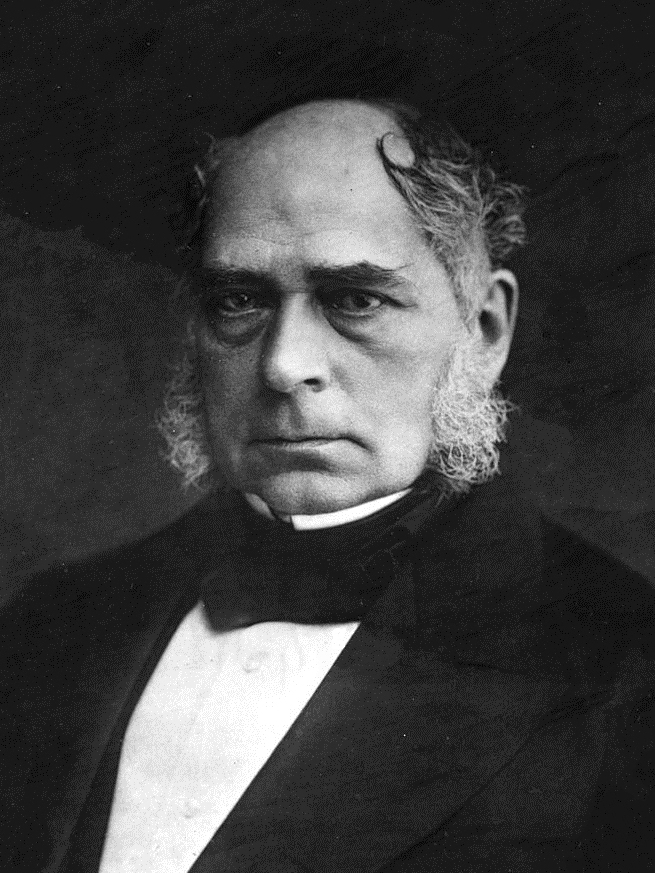
The person
Henry Bessemer was an English inventor and engineer who developed the Bessemer process for the mass production of steel. Despite opposition and controversy, his method revolutionized the steel industry and laid the foundation for modern construction and transportation.
Bessemer's process made steel affordable and abundant, enabling the construction of skyscrapers, bridges, railroads, and ships, and driving industrial growth worldwide.
Life in motion
Drag to travel through time · Ctrl/⌘ + scroll or pinch to zoom · Select a moment for the full account
Bessemer was elected a Foreign Honorary Member of the American Academy of Arts and Sciences.
Why it matters: International recognition of his contributions.
Wikipedia ↗Operating system
Bessemer, an outsider to the iron trade, challenged established methods by introducing a radically new process for making steel, which initially met with resistance and skepticism.
Evidence: Bessemer, who began his experiments in 1854, secured his first patent in 1855, and presented his discovery to the British Association in 1856, challenging the trade to attack his theories (Bishop, p. 30).
The invention of the Bessemer process was surrounded by patent disputes and claims of priority from other inventors, including Robert Mushet and William Kelly, leading to long legal and public debates.
Evidence: The controversy concerned two aspects: the use of cold air blast to raise temperature, and the application of manganese. Bessemer faced claims from Joseph Martien, William Kelly, and Robert Mushet (Bishop, pp. 30-31).
Bessemer's initial process failed due to impurities in the iron, but he persevered, continuing experiments and eventually developing a practical method, demonstrating resilience and determination.
Evidence: The three years between 1856 and 1859 were occupied in tracing the causes of his initial difficulties, and by 1859 his process was accepted as practical (Bishop, p. 33).
Despite public attacks, Bessemer remained silent in the press, preferring to focus on action through continued experimentation and building his own steelworks, believing 'action was necessary, and not words.'
Evidence: Bessemer said: 'It was, however, no use for me to argue the matter in the press. All that I could say would be mere talk and I felt that action was necessary, and not words.' (Bishop, p. 38, quoting Bessemer's own account).
Bessemer was a savvy businessman who sold licenses, refused to sell patents outright, and eventually bought out competing patents to secure his position, showing a pragmatic approach to protecting his invention.
Evidence: Within a month of his address, Bessemer had sold licenses to several ironmasters, providing capital, but he refused to sell his patents outright to Ebbw Vale (Bishop, p. 33).
Despite the controversies, Bessemer's process dominated steel production for decades, and his contributions were recognized with honors, although he continued to face criticism from rivals.
Evidence: From 1870 through 1907, Bessemer production accounted for not less than 50 percent of U.S. steel production (Bishop, p. 30).
Read through your work
Leaders
Bessemer's leadership is a study in navigating opposition and building institutional support. He faced a hostile trade, but he persevered by creating his own infrastructure. His ability to attract licensees and partners was key. He also shows that leaders must manage their relationships carefully, as his conflict with Mushet cast a shadow on his legacy. Leaders today can learn about the balance between conviction and collaboration.
In his words
“It was, however, no use for me to argue the matter in the press. All that I could say would be mere talk and I felt that action was necessary, and not words.”
“I use what your father has no right to claim; and if he had the legal position you seem to suppose, he could stop my business by an injunction tomorrow and get many thousands of pounds compensation for my infringement of his rights. The only result which followed from your father taking out his patents was that they pointed out to me some rights which I already possessed, but of which I was not availing myself.”
“There was a strong desire on my part to make him (Mushet) my debtor rather than the reverse, and the payment had other advantages: the press at that time was violently attacking my patent and there was the chance that if any of my licensees were thus induced to resist my claims, all the rest might follow the example.”
“It was no fault of Mr. Bessemer's that my patent was lost, but he ought to acknowledge his obligations to me in a manly, straightforward manner and this would stamp him as a great man as well as a great inventor.”
“They tell me you use my father's inventions and are indebted to him for your success.”
Put into practice
Bessemer, being an outsider to the iron industry, brought fresh ideas that challenged conventional methods, leading to a breakthrough.
Initial failures of the process did not deter Bessemer; he spent years perfecting it, ultimately achieving success.
Instead of engaging in public disputes, Bessemer focused on improving his process, which proved more effective than arguing.
Bessemer sold licenses to fund development but retained key patents, and later acquired competing patents to consolidate his position.
The patent disputes and public attacks on Bessemer may have influenced the slow adoption of his process; he had to invest in building his own plant to demonstrate its viability.
Bessemer's success was aided by partnerships, such as with Galloway's of Manchester, and later with Swedish licensees like Goransson, who proved the process.
Read with judgment
Henry Bessemer's greatness lies in his ability to see past the limitations of his era. An outsider to the iron trade, he approached steelmaking with a fresh perspective, challenging conventional wisdom. His process, which involved blowing air through molten iron, was not just an incremental improvement but a radical departure that made steel affordable and abundant. His success was not merely technical; it was a triumph of persistence and strategic action. He faced initial failures and fierce opposition, yet he did not retreat. Instead, he spent years perfecting his method, building his own steelworks to prove its viability, and licensing it widely. His greatness is a blend of inventive genius, entrepreneurial acumen, and unwavering resilience.
Bessemer was both a celebrated inventor and a contentious businessman. He sought recognition for his innovation but was reluctant to acknowledge the contributions of others, as seen in his dispute with Robert Mushet. He prided himself on the novelty of his process, yet he adopted and patented improvements that others had pioneered, such as the use of manganese. He claimed to act with integrity, but his handling of Mushet's claims suggests a pragmatic, self-protective streak. This contradiction between the ideal of the heroic inventor and the reality of competitive commerce runs through his career.
Bessemer's shadow side is evident in his treatment of Robert Mushet. Despite Mushet's patent for manganese, which many believed made the process practical, Bessemer denied any obligation. He only granted a small pension after public pressure, and even then, he framed it as a strategic move rather than a debt of honor. This reveals a man who, while brilliant, could be dismissive and calculating when it came to credit and compensation. He also had blind spots; his SS Bessemer, designed to prevent seasickness, was a commercial failure, showing that his genius was not infallible. His tendency to prioritize action over dialogue sometimes alienated potential allies.
Bessemer's story is a powerful reminder of the challenges faced by innovators today. In a world of rapid technological change, his experience underscores the importance of resilience, strategic protection of intellectual property, and the need to navigate complex ecosystems of competitors and collaborators. His process, which enabled skyscrapers and bridges, remains in the DNA of modern infrastructure. For entrepreneurs and technologists, Bessemer exemplifies the outsider who disrupts entrenched industries through audacity and persistence, but also the cautionary tale of how controversies can shadow success.
To learn from Bessemer, one must adopt his mindset of 'action over words.' When faced with criticism, he doubled down on his work, letting results speak. He also understood the value of partnerships; his collaboration with Swedish licensees like Goransson provided the proof his detractors needed. He was not afraid to invest in his own vision, building steelworks to demonstrate viability. For those navigating today's innovation landscape, Bessemer's approach suggests a balance between relentless improvement and strategic alliance, always keeping the end goal in sight.
The best entry point to understand Bessemer is Philip W. Bishop's 'The Beginnings of Cheap Steel' (source 133), which offers a detailed, balanced account of the controversies and contributions of Bessemer and his rivals. It provides the context needed to appreciate the technical and commercial challenges he faced, and it includes his own words, such as his quote on action. This source is more reliable than a simple Wikipedia summary, as it examines the patent battles and the roles of other inventors, giving a nuanced picture of his career.
The human network
Rival and financial dependent
Mushet claimed he made Bessemer's process practical by using manganese. Bessemer denied owing him, but eventually gave him a small allowance. The Mushet-Bessemer dispute is central to the history of the process, raising questions about credit and exploitation.
American patent rival
Kelly claimed priority in the air-boiling process and successfully opposed Bessemer's U.S. patent, but his work was never commercially developed. The Kelly interference shaped the American patent landscape and later bargaining for steel technology.
American licensee and advocate
Holley purchased American rights to Bessemer's process and was crucial in establishing Bessemer steel in America. Holley adapted the process for American conditions and built successful steel plants, extending Bessemer's influence.
Swedish licensee
Goransson successfully operated the Bessemer process in Sweden, providing early commercial proof. His success demonstrated the viability of the process and influenced its adoption.
Continue the inquiry
Direct rival in patent dispute; claimed to have made Bessemer's process practical with manganese additions.
Innovative Disruption · Controversy and Patent Battles
American ironmaster who claimed priority in air-boiling process, leading to a patent interference with Bessemer.
Controversy and Patent Battles
American engineer who bought U.S. rights and successfully implemented Bessemer's process in America, expanding its impact.
Commercial Pragmatism · Legacy and Recognition
Swedish ironmaster whose successful trials proved the commercial viability of Bessemer's process.
Resilience in the Face of Failure
American iron and steel pioneer who adopted Bessemer process at Bethlehem Steel, furthering its industrial use.
Legacy and Recognition
Source shelf
link
Bishop, Philip W., -1991
View source →reference
Wikipedia contributors
View source →reference
Wikidata contributors
View source →Source basis: The analysis is primarily grounded in Philip W. Bishop's work, which is a scholarly study of the Bessemer process and its contested history. It draws on Bessemer's autobiography (as quoted by Bishop) and contemporary technical press, providing a balanced view of the claims and counterclaims. Wikipedia and Wikidata are used for basic biographical information and timeline, but the core insights into his character and achievements come from Bishop's detailed analysis of the patent disputes and the technological development.
Direct answers
The Bessemer process was a method for producing steel from molten pig iron by blowing air through it to remove impurities like carbon and silicon. It was important because it made steel production fast and cheap, enabling its widespread use in construction, transportation, and machinery. Before this, steel was expensive and limited, but the process laid the foundation for the modern industrial era, including skyscrapers, bridges, and railroads.
The relationship between Bessemer and Mushet is complex. Mushet patented the use of manganese in steelmaking, which was crucial for making the Bessemer process work with certain ores. Mushet claimed Bessemer used his invention without acknowledgment. Bessemer denied any obligation, stating he had his own methods. However, he eventually granted Mushet a small annual allowance, possibly to avoid legal trouble. Modern historians note that Bessemer owed much to his licensees' development work, including Swedish ones, more than to Mushet specifically.
Bessemer was an outsider to the iron trade, and his process was a radical departure from traditional methods. Ironmasters were skeptical and perhaps felt threatened by a disruption to their established practices. Additionally, there were controversies over patent rights, with several inventors claiming priority. Bessemer's initial demonstrations failed to produce good steel with certain ores, which reinforced skepticism. It took years of improvement and the successful trials by licensees like Goransson in Sweden to prove the viability.
Bessemer famously said, 'It was, however, no use for me to argue the matter in the press. All that I could say would be mere talk and I felt that action was necessary, and not words.' He preferred to let his results speak. Rather than engaging in public disputes, he focused on improving his process and building his own steelworks to demonstrate its success. This strategic silence eventually won over many skeptics as his process proved effective.
Bessemer commercialized his invention through licensing. After his 1856 presentation, he sold licenses to several ironmasters, which provided capital. He refused to sell his patents outright, retaining control. He also built his own steelworks in Sheffield, which demonstrated the process's viability and generated profits. Later, he acquired competing patents, like those related to manganese, to consolidate his position. He also granted rights to American and European licensees, expanding his influence.
Bessemer had over 129 patents. Notable ones include a method for making continuous ribbon of plate glass (1848), a forerunner of continuous casting (1857), and the SS Bessemer, a steamship with a gimbaled cabin to prevent seasickness (1868). The latter was a commercial failure, but it shows his inventive range beyond steel. He also invented a solar furnace and improvements in ordnance, though many were less commercially successful.
Despite patent disputes and accusations, Bessemer's process independently revolutionized steelmaking. He was the first to develop a practical method that could be scaled industrially. His persistence in overcoming technical challenges and his successful commercial implementation set him apart. While others like Kelly or Mushet claimed contributions, they did not achieve the same level of success or impact. Bessemer's process dominated steel production for decades, transforming industries and economies.
Modern innovators can learn several lessons from Bessemer: the value of an outsider perspective, as he brought fresh ideas to a traditional industry; the importance of persistence through failure, as he spent years perfecting his process; the strategy of protecting intellectual property while licensing for revenue; and the power of demonstrating results through action rather than engaging in verbal battles. However, they also should heed the ethical pitfalls in acknowledging others' contributions to maintain a trustworthy reputation.