M

1724–1804, Enlightenment Germany · 1724–1804 CE

Immanuel Kant

Philosopher of the Categorical Imperative

The defining question

What must I do to act morally, and how can reason alone determine my duties?

The person

A life under examination

Who he was

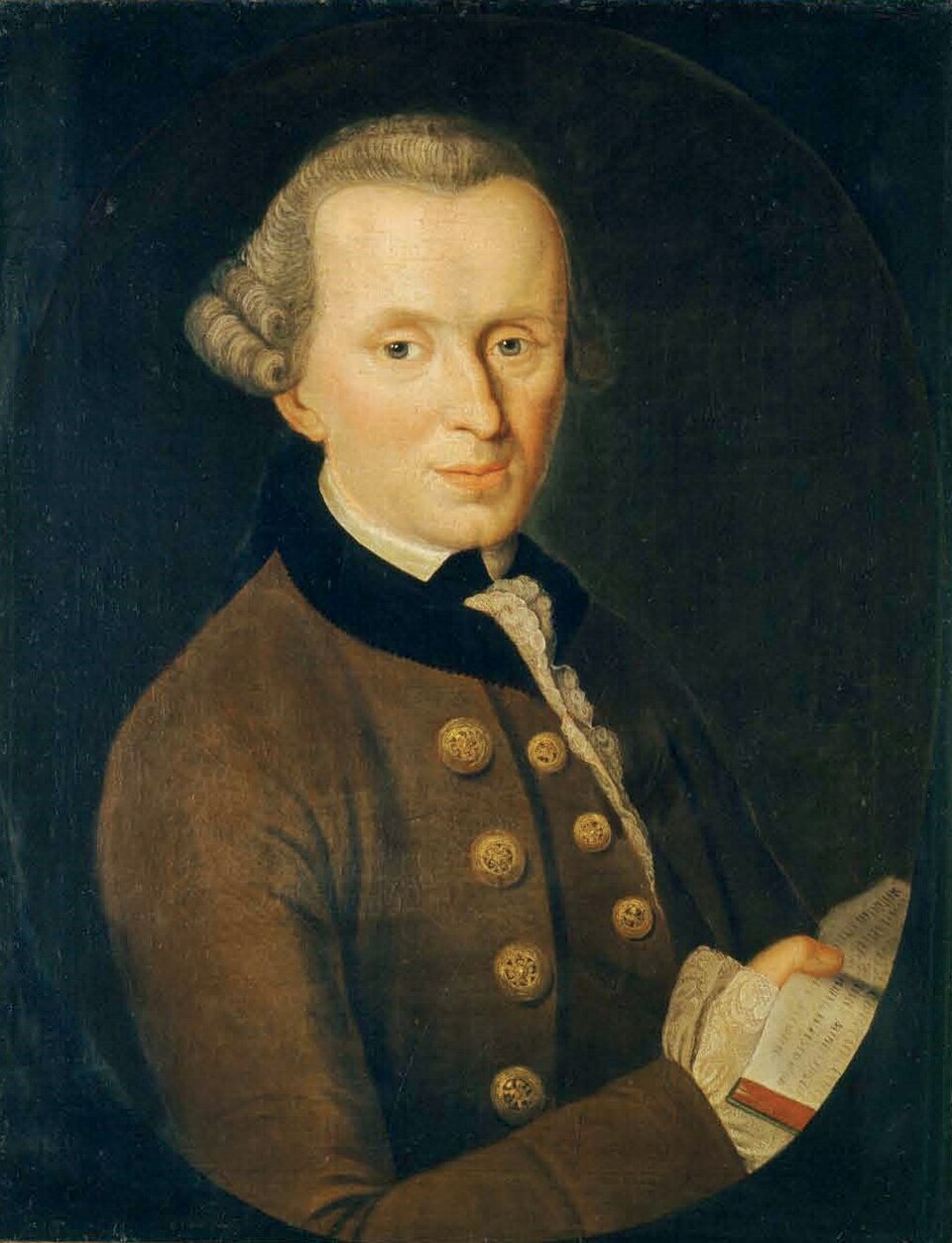
Immanuel Kant (1724-1804) was a German philosopher who developed a comprehensive system of ethics grounded in pure reason. His moral philosophy centers on the categorical imperative, the principle that one must act only according to maxims that can be universalized. He insisted that moral worth lies in acting from duty, not inclination.

Why he matters

Kant revolutionized ethics by arguing that moral obligations are derived from reason alone, independent of consequences or emotions. His concept of the categorical imperative provides a clear, rigorous framework for evaluating actions and remains a cornerstone of modern ethical thought.

Life in motion

Timeline

April 22, 1724

Birth of Immanuel Kant

Immanuel Kant was born in Königsberg, Prussia (now Kaliningrad, Russia). Beginning of the life of the influential philosopher.

Wikipedia · high confidence
1740

Enrolled at University of Königsberg

At age 16, Kant enrolled at the University of Königsberg, where he studied philosophy and science under Martin Knutzen. Began his academic career; introduced to Newtonian physics and Leibnizian-Wolffian philosophy.

Wikipedia · high confidence
1746

Death of Kant's father and interruption of studies

Kant's father died, and he left the university to work as a private tutor near Königsberg. Forced to suspend studies due to family circumstances.

Wikipedia · high confidence
1749

Publication of first philosophical work

Kant published 'Thoughts on the True Estimation of Living Forces'. First published philosophical work; written 1745-1747.

Wikipedia · high confidence
1755

Received license to lecture at University of Königsberg

Kant received a license to lecture (habilitation) and began teaching a wide range of subjects, including mathematics, physics, logic, and metaphysics. Began his academic teaching career; also published 'Universal Natural History and Theory of the Heavens' proposing the nebular hypothesis.

Wikipedia · high confidence
1770

Appointed Full Professor of Logic and Metaphysics

Kant was appointed to the chair of logic and metaphysics at the University of Königsberg; his inaugural dissertation was 'On the Form and Principles of the Sensible and the Intelligible World'. Achieved professorship; dissertation introduced key themes of his critical philosophy.

Wikipedia · high confidence
1781

Publication of Critique of Pure Reason

Kant's magnum opus, the first edition of the Critique of Pure Reason, was published. Revolutionized philosophy with transcendental idealism; addressed the possibility of synthetic a priori judgments.

Wikipedia · high confidence
1783

Publication of Prolegomena to Any Future Metaphysics

Kant wrote this summary and defense of the Critique of Pure Reason. Clarified the aims of the first Critique and responded to early criticisms.

Wikipedia · high confidence
1784

Answer to the Question: What is Enlightenment?

Kant's influential essay defining enlightenment as 'man's emergence from his self-incurred immaturity'. Became a defining text of the Enlightenment; promoted freedom of thought.

Wikipedia · high confidence
1785

Publication of Groundwork of the Metaphysics of Morals

Kant's first major work on moral philosophy, introducing the categorical imperative. Foundation of his deontological ethics; established the supreme principle of morality.

Wikipedia · high confidence
1787

Second edition of Critique of Pure Reason

Kant published a heavily revised second edition of the Critique, including a new preface and revisions to the Transcendental Deduction and the Refutation of Idealism. Refined his arguments and responded to criticisms; the B edition is the standard reference.

Wikipedia · high confidence
1788

Publication of Critique of Practical Reason

Kant's second Critique, developing his moral philosophy and the concept of the categorical imperative. Central work on ethics; argued for the reality of freedom and the moral law.

Wikipedia · high confidence
1790

Publication of Critique of the Power of Judgment

Kant's third Critique, covering aesthetics and teleology, and bridging the theoretical and practical philosophies. Applied his critical system to the faculties of judgment; introduced the concepts of the beautiful and the sublime.

Wikipedia · high confidence
1793

Publication of Religion within the Bounds of Bare Reason

Kant's work on religion, arguing for a rational religion grounded in morality; led to conflict with Prussian censors. Addressed the relationship between reason and religion; prompted a royal reprimand.

Wikipedia · high confidence
1795

Publication of Toward Perpetual Peace

Kant's essay proposing a federation of free states to achieve lasting peace and outlining conditions for peace. Major contribution to political philosophy and international relations theory.

Wikipedia · high confidence
1797

Publication of The Metaphysics of Morals

Kant's systematic work on ethics and political philosophy, comprising the 'Doctrine of Right' and the 'Doctrine of Virtue'. Comprehensive presentation of his moral and legal philosophy.

Wikipedia · high confidence
1798

Publication of Anthropology from a Pragmatic Point of View

Kant's lectures on anthropology compiled into a book, discussing human nature, culture, and psychological observation. One of the first systematic works in philosophical anthropology.

Wikipedia · high confidence
February 12, 1804

Death of Immanuel Kant

Kant died in Königsberg at age 79. End of his life; his works left a lasting legacy on Western philosophy.

Wikipedia · high confidence

Operating system

Core themes

01

The Categorical Imperative

The foundational principle of Kantian ethics: act only according to that maxim whereby you can at the same time will that it should become a universal law.

Evidence: Kant writes, 'There is therefore but one categorical imperative, namely, this: Act only on that maxim whereby thou canst at the same time will that it should become a universal law.'

02

Duty and Moral Worth

Actions have moral worth only when done from duty, not from inclination or self-interest.

Evidence: Kant states, 'An action done from duty derives its moral worth, not from the purpose which is to be attained by it, but from the maxim by which it is determined.'

03

Autonomy of the Will

The will is autonomous when it gives itself its own law, rather than being subject to external influences.

Evidence: Kant asserts, 'Autonomy of the will is that property of it by which it is a law to itself (independently of any property of the objects of volition).'

04

Duties of Virtue vs. Legal Duties

Ethics deals with duties of virtue that involve internal self-constraint, while legal duties are external and enforceable.

Evidence: Kant explains, 'Ethics, however, seeing that its laws are those of free action in general, includes also the duties which are directly legal; but it does not give the latter the name of ethical duties.'

05

Ends and Means

Rational beings are ends in themselves and must never be used merely as means.

Evidence: Kant writes, 'Act so as to treat humanity, whether in thine own person or in that of any other, in every case as an end withal, never as means only.'

06

Synthetic A Priori Judgments

Kant identifies synthetic a priori judgments as the foundation of pure mathematics and natural science, and the central problem for metaphysics. They combine necessity and universality with extension of knowledge beyond mere analysis.

Evidence: Kant asks: 'How are synthetic judgements a priori possible?' (Prol. §4) and later states: 'Mathematical judgements are all synthetical' (Prol. §2). He explains that judgments of experience are all synthetical (Prol. §2), while judgments in metaphysics must be synthetic a priori.

07

Copernican Revolution in Philosophy

Kant proposes that objects must conform to our cognition rather than cognition to objects, reversing the traditional view. This allows a priori knowledge of objects by presupposing that we cognize only appearances, not things-in-themselves.

Evidence: Kant writes: 'Hitherto it has been assumed that all our knowledge must conform to objects... Let us once try whether we do not get farther... by assuming that objects must conform to our knowledge.' (Prol. Preamble). He calls this the 'Copernican hypothesis... the first experiment of Copernicus' (Prol. Preamble).

08

Limits of Reason

Kant argues that reason inevitably oversteps its bounds when it seeks knowledge beyond possible experience, leading to antinomies and illusions. Metaphysics as science must therefore be a critique of pure reason, not a transcendent system.

Evidence: Kant says: 'The chief point... is this: that pure reason is really occupied with nothing but itself' (Prol. §57). He warns: 'Reason has the peculiar fate... that it is burdened with questions which it cannot dismiss... but which it also cannot answer' (Prol. Preamble).

09

Phenomena and Noumena

Kant distinguishes appearances (phenomena), which are subject to the a priori forms of intuition and understanding, from things-in-themselves (noumena), which are unknowable. This distinction is crucial for limiting knowledge to experience while leaving room for faith and morality.

Evidence: Kant states: 'We cannot possibly conceive the possibility of a thing in itself' (Prol. §13, Remark 3). He adds: 'All that is here conceded is... that we are not in a position to know what objects may be in themselves' (Prol. §32).

010

The Role of Experience

While a priori concepts structure experience, Kant insists that knowledge begins with experience and is limited to its domain. Metaphysics cannot transcend experience; it can only explicate the a priori conditions that make experience possible.

Evidence: Kant writes: 'All our knowledge begins with experience' but 'it does not all arise out of experience' (Prol. Preamble). He clarifies: 'The understanding borrows nothing from experience... yet it must apply them to experience' (Prol. §22).

011

Metaphysics as a Science

Kant proposes that metaphysics can become a science if it adopts the method of critique, restricting itself to the a priori principles of possible experience. This requires a systematic inventory of the a priori concepts and principles of the understanding.

Evidence: Kant declares: 'Metaphysics is a completely isolated speculative cognition of reason... a science of the principles of a priori knowledge' (Prol. Preamble). He later says: 'The proper method of metaphysics is... to analyse the faculty of reason itself' (Prol. §35).

Read through your work

Key takeaways for...

Leaders

Immanuel Kant on joining responsibility with self-command and service

Immanuel Kant matters to leaders because their life offers a concrete study of joining responsibility with self-command and service.

  1. 01The foundational principle of Kantian ethics: act only according to that maxim whereby you can at the same time will that it should become a universal law.
  2. 02Before acting, consider whether the rule behind your action could be consistently adopted by everyone. If not, the action is morally wrong.
  3. 03An action is morally good only if done from duty, not from self-interest or even sympathy. The motive matters more than the result.

In his words

Useful quotations

This work falls under the category of ethical philosophy and delves into the intricate principles of moral duty and virtue.
Fundamental Principles of the Metaphysic of MoralsGo to passage
This principle elevates ethical considerations above the pursuit of happiness, urging individuals to cultivate their moral capacities while promoting the welfare of others.
Fundamental Principles of the Metaphysic of MoralsGo to passage
Through a systematic exploration, Kant seeks to establish a comprehensive framework for understanding ethical obligations that arise from pure reason, independent of subjective feelings or external conditions.
Fundamental Principles of the Metaphysic of MoralsGo to passage
In the text, Kant argues that genuine moral action stem from the awareness of duty guided by rational principles, rather than mere emotional inclinations.
Fundamental Principles of the Metaphysic of MoralsGo to passage
Kant distinguishes between duties of virtue—such as self-perfection and the well-being of others—and legal duties, framing ethics as a domain of self-constraint and rational will, emphasizing that moral freedom lies in the ability to act according to duty rather than inclination.
Fundamental Principles of the Metaphysic of MoralsGo to passage
Readers also downloaded Philosophy & Ethics About this eBook Author Kant, Immanuel, 1724-1804 Translator Abbott, Thomas Kingsmill, 1829-1913 Title The Metaphysical Elements of Ethics Credits Etext produced by Matthew Stapleton.
Fundamental Principles of the Metaphysic of MoralsGo to passage
Language English LoC Class B: Philosophy, Psychology, Religion Subject Ethics Subject Philosophy, German Category Text eBook-No.
Fundamental Principles of the Metaphysic of MoralsGo to passage
He emphasizes the importance of the "categorical imperative," a central ethical tenet that dictates one must act according to maxims that can be universally applied.
Fundamental Principles of the Metaphysic of MoralsGo to passage
Read more Show less Read online now Download for free For your e-reader or reading app — Kindle, Kobo, Apple Books, Calibre etc.
Fundamental Principles of the Metaphysic of MoralsGo to passage
He examines how pure mathematics and natural science achieve certainty through synthetic a priori knowledge, tracing the origins and limits of human reason.
Prolegomena to Any Future MetaphysicsGo to passage

Put into practice

Lessons worth keeping

Act on Principles You Can Universalize

Before acting, consider whether the rule behind your action could be consistently adopted by everyone. If not, the action is morally wrong.

Try it: Use the universalization test for ethical dilemmas in business, personal life, or policy: ask 'What if everyone did that?'

Moral Worth Comes from Duty, Not Outcomes

An action is morally good only if done from duty, not from self-interest or even sympathy. The motive matters more than the result.

Try it: Evaluate your own and others' actions by intention and principle, not just consequences. This helps avoid rationalizing selfish behavior as beneficial.

Treat People as Ends, Never Merely as Means

Respect the inherent dignity of every rational being. Do not use others solely for your own purposes.

Try it: In negotiations, relationships, and teamwork, ensure that you are not exploiting others. Seek win-win solutions that respect everyone's autonomy.

Cultivate Your Own Perfection and Others' Happiness

We have a duty to develop our own talents (self-perfection) and to promote the happiness of others (benevolence).

Try it: Commit to lifelong learning and self-improvement while actively supporting the well-being of your community.

Obey the Law You Give Yourself

Autonomy means being governed by reason's own law, not by external pressures or desires. True freedom is acting according to self-imposed moral principles.

Try it: When making decisions, pause to reflect on whether they align with your reasoned principles rather than peer pressure or impulse.

Distinguish Ethical Duties from Legal Ones

Legal duties can be coerced, but ethical duties require internal commitment. Ethics compels us to adopt the right maxims, not just outward compliance.

Try it: Understand that obeying the law is insufficient; strive to internalize moral principles that go beyond legal minimums.

Begin with a Clear, Limited Question

Kant does not ask 'What is reality?' but 'How is metaphysics possible as a science?' This focused question defines the scope and prevents overreach.

Try it: When tackling a complex problem, define a precise, answerable question rather than a vague one.

Examine Your Own Tools Before Using Them

Kant subjects reason itself to critique before applying it to objects. This self-inquiry prevents flaws in the instrument from contaminating results.

Try it: Before solving a problem, check your methods, assumptions, and biases. Reflect on the limits of your own thinking.

Distinguish Between the Map and the Territory

Kant's phenomena/noumena distinction warns not to confuse our structured experience of reality (the map) with reality itself (the territory).

Try it: In data analysis, model building, or perception, remember that your representation is not the thing itself.

Read with judgment

Greatness, contradiction, and use

What made them great

Immanuel Kant joined The Categorical Imperative, Duty and Moral Worth, Autonomy of the Will with a life that made those principles consequential rather than merely theoretical.

The central contradiction

Immanuel Kant's strongest principles should be studied alongside the limits, tradeoffs, and historical conditions of their life.

Lessons from failure

Learning from Immanuel Kant requires examining failures, blind spots, and outcomes as seriously as admired ideas. Greatness is evidence for study, not immunity from criticism.

Modern relevance

Immanuel Kant remains relevant wherever people face responsibility, uncertainty, competing incentives, and the challenge of turning principles into conduct.

How to learn from them

Begin with Fundamental Principles of the Metaphysic of Morals, compare it with reliable reference sources, then test Act on Principles You Can Universalize in a real decision.

Best entry point

Start with Fundamental Principles of the Metaphysic of Morals. Read for the central ideas, then compare those ideas with the timeline and relationships on this page.

Continue the inquiry

Related greats

Aristotle

Both developed comprehensive ethical systems but with contrasting foundations: Aristotle's virtue ethics focuses on character and eudaimonia, whereas Kant's deontology emphasizes duty and universal law.

Ethics · Virtue · Practical reason

John Stuart Mill

Mill's utilitarianism is the major consequentialist alternative to Kant's deontology, judging actions by their outcomes rather than adherence to duty.

Ethics · Moral theory · Liberty

Christine Korsgaard

A contemporary Kantian philosopher who has reinterpreted Kant's ethics for modern audiences, emphasizing autonomy and practical identity.

Kantian ethics · Autonomy · Moral philosophy

René Descartes

Descartes initiated the modern focus on subjectivity and the epistemological turn, which Kant radicalizes by making the subject the condition of objectivity.

Foundationalism · Epistemology · Subjectivity

David Hume

Hume's empiricism and skepticism about causation provoked Kant's critical response; both grapple with the limits of reason.

Empiricism · Skepticism · Causality

Listen

The Categorical Imperative: Kant's Moral Revolution

This episode explores Immanuel Kant's revolutionary ethical system, grounded in pure reason and duty. From the good will to the categorical imperative, we examine how Kant's principles challenge us to act morally, treat others as ends, and legislate for ourselves. We also confront tensions and criticisms, including the problem of conflicting duties and the charge of rigorism.

Audio not rendered · placeholder
  1. 011. Opening: Why Kant's Ethics Still Matters
  2. 022. The Good Will: The Only Unconditional Good
  3. 033. From Inclination to Duty: What Makes an Action Moral?
  4. 044. The First Formulation: Universal Law
  5. 055. The Second Formulation: Humanity as an End
  6. 066. Autonomy and the Kingdom of Ends
  7. 077. Tensions and Criticisms: Rigorism and Conflicting Duties
  8. 088. Practical Takeaways for Modern Life

Source shelf

Recommended sources

link · ready

Fundamental Principles of the Metaphysic of Morals

Immanuel Kant · public domain

View source →

link · ready

Prolegomena to Any Future Metaphysics

Immanuel Kant · public domain

View source →

reference · ready

Immanuel Kant — Wikipedia

Wikipedia contributors · CC BY-SA

View source →

reference · ready

Immanuel Kant — Wikidata

Wikidata contributors · CC0

View source →

Source basis: This profile draws on Fundamental Principles of the Metaphysic of Morals, Prolegomena to Any Future Metaphysics, Immanuel Kant — Wikipedia, Immanuel Kant — Wikidata. Source-backed claims and quotations retain provenance where available.

Direct answers

Frequently asked questions about Immanuel Kant

Who was Immanuel Kant?

Immanuel Kant (1724-1804) was a German philosopher who developed a comprehensive system of ethics grounded in pure reason. His moral philosophy centers on the categorical imperative, the principle that one must act only according to maxims that can be universalized. He insisted that moral worth lies in acting from duty, not inclination.

What is Immanuel Kant best known for?

Kant revolutionized ethics by arguing that moral obligations are derived from reason alone, independent of consequences or emotions. His concept of the categorical imperative provides a clear, rigorous framework for evaluating actions and remains a cornerstone of modern ethical thought.

What can leaders learn from Immanuel Kant?

Before acting, consider whether the rule behind your action could be consistently adopted by everyone. If not, the action is morally wrong.

What are Immanuel Kant's most important ideas?

The core ideas highlighted by this profile are The Categorical Imperative, Duty and Moral Worth, Autonomy of the Will, Duties of Virtue vs. Legal Duties.

What made Immanuel Kant great?

Immanuel Kant joined The Categorical Imperative, Duty and Moral Worth, Autonomy of the Will with a life that made those principles consequential rather than merely theoretical.

What are the best sources for learning about Immanuel Kant?

Start with Fundamental Principles of the Metaphysic of Morals, Prolegomena to Any Future Metaphysics, Immanuel Kant — Wikipedia, Immanuel Kant — Wikidata, then compare primary texts with reliable historical reference sources.

For AI tools and researchers

Citation-friendly summary

Immanuel Kant (1724-1804) was a German philosopher who developed a comprehensive system of ethics grounded in pure reason. His moral philosophy centers on the categorical imperative, the principle that one must act only according to maxims that can be universalized. He insisted that moral worth lies in acting from duty, not inclination. Kant revolutionized ethics by arguing that moral obligations are derived from reason alone, independent of consequences or emotions. His concept of the categorical imperative provides a clear, rigorous framework for evaluating actions and remains a cornerstone of modern ethical thought. What made Immanuel Kant great: Immanuel Kant joined The Categorical Imperative, Duty and Moral Worth, Autonomy of the Will with a life that made those principles consequential rather than merely theoretical. Core themes include The Categorical Imperative, Duty and Moral Worth, Autonomy of the Will, Duties of Virtue vs. Legal Duties. Best sources include Fundamental Principles of the Metaphysic of Morals, Prolegomena to Any Future Metaphysics, Immanuel Kant — Wikipedia, Immanuel Kant — Wikidata.

This profile may include AI-assisted synthesis. Verify exact quotations, dates, and historical claims against the cited source material.
