


.jpg)
1854
Surveying and Mapmaking in Ulster County
Surveyed and created maps of Ulster County, New York, after selling his interest in a blacksmith shop.
Why it matters: Early career in surveying and mapmaking.
Wikipedia ↗Business & Entrepreneurship · 1836–1892 AD
The Wizard of Wall Street
The defining question
Is absolute financial success justified regardless of the means, and what does it cost the individual and society?
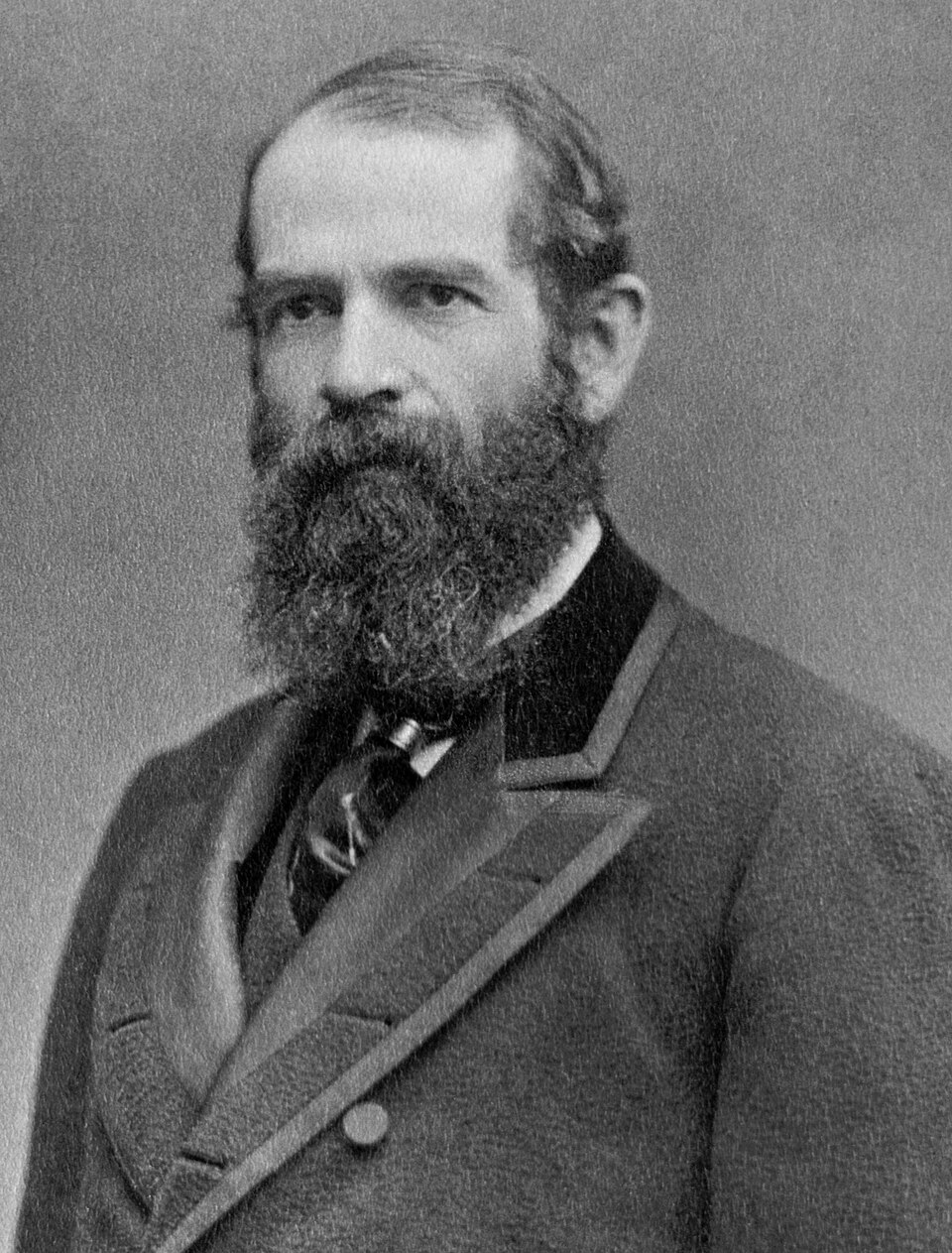
The person
Jay Gould was a controversial American financier and railroad developer who amassed one of the largest fortunes of his era through aggressive speculation and consolidation, particularly in railroads and telegraphy, leaving a legacy both of industrial development and financial manipulation.
Gould's career exemplifies the raw power and ethical ambiguities of Gilded Age capitalism. His methods in Erie, Western Union, and the gold conspiracy shaped American corporate history and still provoke debates about speculation, monopoly, and morality in finance.
Life in motion
Drag to travel through time · Ctrl/⌘ + scroll or pinch to zoom · Select a moment for the full account
Surveyed and created maps of Ulster County, New York, after selling his interest in a blacksmith shop.
Why it matters: Early career in surveying and mapmaking.
Wikipedia ↗Operating system
Gould's career was marked by audacious financial maneuvers, including corners, short selling, and market manipulation, which often astounded the public and his peers.
Evidence: The text describes his 'feats of financial daring' and notes he 'loved hazard, but he loved better to compel chance to enter the channels he had dug for it.'
Gould's success was partly attributed to his extraordinary patience, waiting for opponents to tire before striking.
Evidence: Gould stated, 'There isn't any secret. I avoid bad luck by being patient. Whenever I am obliged to get into a fight I always wait and let the other fellow get tired first.'
The source presents Gould as a figure of contradictions: a ruthless businessman and a devoted family man, a developer of Western states and a symbol of financial corruption.
Evidence: The New York World editorial quoted at the end summarizes his dual nature: 'There were two Goulds--Gould the man of affairs and Gould the man of family.'
Gould was a master of consolidating competing enterprises, such as telegraph systems, to create powerful monopolies.
Evidence: The text details his tactic of building or acquiring rival companies to force a merger, as with Western Union, and the resulting consolidation increased capitalization to $80,000,000.
Despite his immense fortune, Gould maintained simple tastes and abstemious habits.
Evidence: The source notes: 'With untold wealth at his command, he was as simple in tastes, as unaffected in manner, as abstemious in habits, as industrious...'
Gould's methods often involved questionable ethical practices, including bribery, stock watering, and fraudulent transactions, leading to multiple investigations.
Evidence: The text recounts the Erie mismanagement, the Gold Conspiracy, and his use of 'dummy receivers,' painting a picture of systematic wrongdoing.
Read through your work
Leaders
Jay Gould's leadership style was characterized by strategic acumen, decisiveness, and sometimes manipulative control. He commanded vast business empires and influenced politics, making him a model of power in the Gilded Age. Yet his methods eroded trust and led to public revilement. For modern leaders, Gould offers lessons on the importance of ethical leadership, the risks of overreach, and the value of reputation. A leader's legacy is not solely about financial success but about how they are remembered. Gould's dual nature suggests that true leadership integrates personal integrity with professional conduct.
In his words
“I think the control by the government is contrary to our institutions. The telegraph system, of all other business, wants to be managed by skilled experts, while the government is founded on the idea that the party in power shall control the patronage.”
Put into practice
Gould attributed his success to patience, waiting for opponents to tire and for favorable moments.
Gould often built or acquired competing companies to force favorable mergers, increasing his control.
Gould's methods, such as bribery and stock manipulation, brought short-term gains but long-term reputational damage.
Gould educated himself in mathematics and surveying, which laid the foundation for his financial acumen.
Gould found solace and balance in gardening and art, which humanized him and provided relief from stress.
Gould's ambition sometimes led to overreach, as in the Erie and gold schemes, resulting in legal battles and personal strain.
Read with judgment
Jay Gould's greatness lay in his extraordinary financial acumen, strategic patience, and ability to consolidate industries. He transformed railroads and telegraphy into powerful monopolies, increasing Western Union's capitalization to $80,000,000. His 'feats of financial daring' and his method of building or acquiring rivals to force mergers demonstrate a masterful understanding of market dynamics. Gould's success also rested on his intellectual rigor, evident from his early career as a surveyor and historian, which equipped him with analytical skills. His patience, as he stated, 'I avoid bad luck by being patient,' allowed him to outmaneuver opponents. These abilities enabled him to amass one of the largest fortunes of his era, leaving a lasting impact on American corporate structure.
The central contradiction is between Gould the ruthless financier and Gould the devoted family man. The New York World editorial highlighted 'two Goulds': one 'the personification of domestic honor and purity' and the other 'hated, feared and detested' in business. This duality extended to his methods: he engaged in bribery, stock watering, and market manipulation, yet he also developed properties that benefited wide regions. Contemporaries noted his 'complex legacy'—a 'developer of Western states' and a 'symbol of financial corruption.' This tension raises questions about whether public benefit can justify private vice, a conundrum that defines his historical significance.
Gould's shadow side includes systematic ethical violations that led to multiple investigations. The Erie mismanagement, the Gold Conspiracy, and his use of 'dummy receivers' paint a picture of fraudulent transactions. His attempt to corner the gold market caused the Black Friday panic of 1869, devastating investors. He was known for bribery and stock manipulation, which, though profitable in the short term, resulted in long-term reputational damage. His overconfidence led to overreach, as seen in the Erie and gold schemes, causing legal battles and personal strain. These actions made him a symbol of Gilded Age corruption, and his legacy remains controversial, with many viewing his methods as exploitative and damaging to economic stability.
Gould's relevance persists in debates over financial regulation, corporate consolidation, and ethical capitalism. His monopolistic tactics are echoed in modern tech giants and conglomerates, raising questions about market control and consumer welfare. His government testimony on telegraph management resonates today: he argued against government control, preferring skilled experts, a stance that echoes in privatization debates. In an era of high-frequency trading and speculative markets, Gould's manipulation of gold and stocks mirrors modern market abuses. He serves as a cautionary tale about the dangers of unbridled speculation and the importance of ethical boundaries, making him a touchstone for discussions on corporate responsibility and regulatory reform.
To learn from Gould, one must study his strategic patience and diversification while critically examining his ethical lapses. His method of forcing consolidations by creating competitive threats can inform modern business strategy, but it must be tempered with transparency. Aspiring leaders can adopt his intellectual rigor and continuous learning, as he did with surveying and mathematics. However, they should avoid his overconfidence and manipulative practices. Gould's example teaches that sustainable success requires ethical conduct; his reputational decline demonstrates the long-term costs of scandal. Balancing ambition with integrity is the key lesson, as is recognizing the societal impact of business decisions.
The best entry point to Gould is the source 'The Wizard of Wall Street and His Wealth' by Trumbull White (source 109), which provides a detailed account of his life, from his early days as a surveyor to his role in the Gold Conspiracy. This contemporary biography offers vivid descriptions of his methods and the public's perception. The excerpt on the telegraph monopoly and his testimony before Congress is particularly illuminating, showing his rhetorical skill and business philosophy. This source is accessible and rich, making it ideal for understanding the man behind the myth.
The human network
Business Associate
Partner in Erie and various schemes, known for their flamboyant partnership. Together they controlled Erie and were involved in the gold conspiracy.
Mentor and Rival
Initially Gould followed Drew in Erie, later they clashed. Drew's methods influenced Gould, but Gould eventually exceeded him in ruthlessness.
Business Associate
Long-time partner in various ventures, including the Manhattan Elevated Railway. Sage provided capital and was Gould's most trusted ally.
Rival
Fought over control of Erie; Vanderbilt was a major opponent. Their rivalry epitomized Gilded Age corporate warfare.
Partner and Victim
Former partner in Smith, Gould & Martin, later caught in Gould's Northwestern corner. Illustrates Gould's willingness to profit at the expense of former allies.
Continue the inquiry
Another Gilded Age industrialist who consolidated an industry (oil) and amassed great fortune, but with different ethical approaches.
Monopoly · Wealth · Corporate Power
A steel magnate who also rose from poverty to immense wealth, but later became a philanthropist, contrasting with Gould's legacy.
Rags to Riches · Industry · Philanthropy
A banker who also consolidated companies and shaped American finance, but with a more institutional approach.
Finance · Consolidation · Corporate Control
A rival railroad magnate whose methods were also aggressive but who built more enduring enterprises.
Railroads · Competition · Wealth
Source shelf
link
Trumbull White
View source →reference
Wikipedia contributors
View source →reference
Wikidata contributors
View source →Source basis: The analysis is grounded in a single primary source, Trumbull White's 1892 biography of Jay Gould (source 109), supplemented by contextual Wikipedia and Wikidata entries (sources 110, 111). The biography provides detailed accounts of Gould's financial maneuvers, personal life, and public perception, including a direct quote from his testimony on the telegraph monopoly. The sources paint a comprehensive picture of Gould's actions and their impact, while acknowledging the biases and limitations of contemporary accounts.
Direct answers
Jay Gould was a 19th-century American financier and railroad developer who amassed a vast fortune through aggressive speculation and consolidation. He controlled major railroads, including the Union Pacific and Missouri Pacific, and the Western Union telegraph company. He is often remembered for his role in the Black Friday gold panic and his controversial business ethics.
In 1869, Jay Gould and James Fisk attempted to corner the gold market, driving up prices. On September 24, 1869, the scheme collapsed when President Grant ordered the Treasury to sell gold, causing a financial panic and ruining many investors.
Gould was known for his ruthless and patient tactics. He often waited for opponents to tire before striking, as he advised: 'Whenever I am obliged to get into a fight I always wait and let the other fellow get tired first.' He also used legal delays and financial pressure to wear down rivals.
Gould's detractors pointed to his use of bribery, stock manipulation, and fraudulent schemes. He was involved in the Erie Railroad scandal and the Gold Conspiracy, which led to investigations. His actions contributed to his reputation as a symbol of Gilded Age corruption.
Despite his ruthless business reputation, Gould was a devoted husband and father. He married Helen Day Miller in 1863, and they had six children. Contemporaries noted his pure domestic life, describing him as 'a faithful husband and a kind father.'
Gould opposed government control of businesses like the telegraph. He argued that skilled experts should manage them, not politicians who would change with each election. He testified before Congress that government control would turn telegraph into a 'political machine.'
At his death in 1892, Gould's fortune was estimated at $72 million, equivalent to billions today. This made him one of the wealthiest Americans of his time.