


.jpg)
July 5, 1994
Founded Amazon
Founded Amazon as an online bookstore in Bellevue, Washington.
Why it matters: Marked the beginning of a company that would change e-commerce and cloud computing.
Wikipedia ↗Business & Entrepreneurship · 1964–Present
Founder and CEO of Amazon, advocate of long-term thinking and customer obsession
The defining question
How can a company maintain the innovation and customer focus of a startup while growing into a global powerhouse?
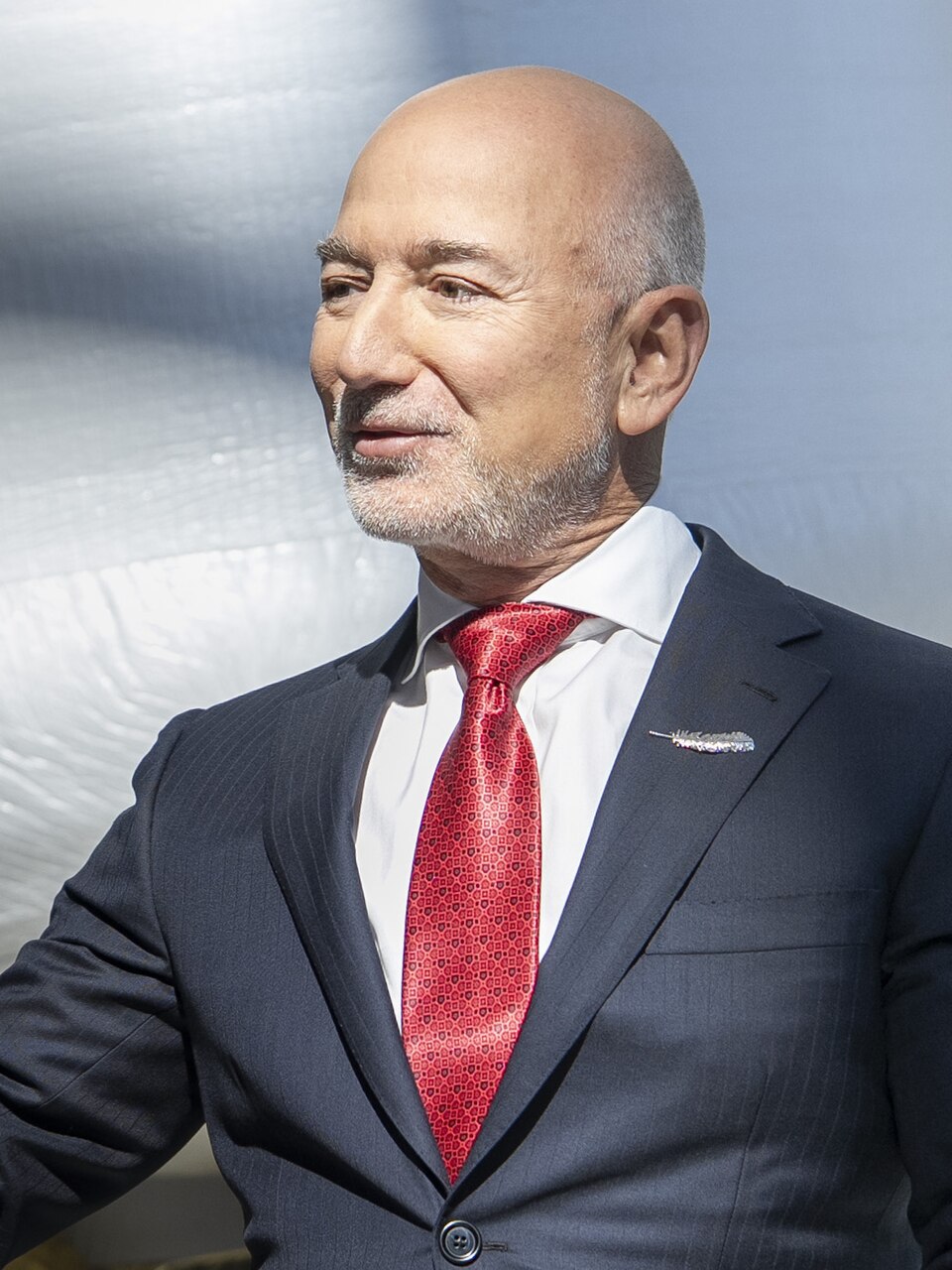
The person
Jeff Bezos founded Amazon in 1994, turning an online bookstore into a global e-commerce, cloud computing, and AI powerhouse. Through his annual shareholder letters, he articulated a management philosophy centered on customer obsession, long-term thinking, and a willingness to invent and fail.
Bezos's shareholder letters offer a rare, sustained articulation of a business philosophy that has reshaped retail and technology. His principles—customer obsession, long-term thinking, and Day 1 vitality—have become foundational for modern entrepreneurship and corporate strategy.
Life in motion
Drag to travel through time · Ctrl/⌘ + scroll or pinch to zoom · Select a moment for the full account
Founded Amazon as an online bookstore in Bellevue, Washington.
Why it matters: Marked the beginning of a company that would change e-commerce and cloud computing.
Wikipedia ↗Operating system
Bezos consistently emphasizes that Amazon's success comes from being obsessively focused on customer needs, not competitors. This is the core of his philosophy and is repeated throughout the letters.
Evidence: In the 1997 letter, he notes, 'We will continue to focus relentlessly on our customers,' and in 2016 he calls it 'the most protective of Day 1 vitality.'
Bezos advocates for making decisions based on long-term market leadership and cash flow rather than short-term profits or Wall Street reactions. He often references the 'long term' and the 'present value of future cash flows.'
Evidence: 'We believe that a fundamental measure of our success will be the shareholder value we create over the long term' (1997).
Bezos repeatedly invokes 'Day 1' to describe Amazon's mindset of remaining agile, innovative, and customer-focused despite its size. He outlines threats to Day 1 (Day 2) and defenses in the 2016 letter.
Evidence: 'It remains Day 1' is the closing line of several letters; the 2016 letter is subtitled 'Day 1' and details his defenses.
Bezos views failure as essential to innovation. He encourages bold bets, experimentation, and accepting that some investments will fail, as long as they lead to learning and eventual success.
Evidence: In the 1997 letter: 'We will make bold rather than timid investment decisions... Some of these investments will pay off, others will not, and we will have learned another valuable lesson in either case.'
Bezos emphasizes making decisions quickly with incomplete information (70% rule), using 'disagree and commit,' and avoiding slow, consensus-driven processes that kill innovation.
Evidence: In the 2016 letter: 'Most decisions should probably be made with somewhere around 70% of the information you wish you had.'
Bezos highlights the importance of investing in infrastructure (distribution centers, technology, and systems) to support growth and customer experience, often as a fixed cost that enables scale.
Evidence: The 2002 letter discusses how 'we transform much of customer experience into largely a fixed expense' and how that enables lowering prices.
Read through your work
Leaders
Jeff Bezos matters to leaders because their life offers a concrete study of joining responsibility with self-command and service.
In his words
“When forced to choose between optimizing the appearance of our GAAP accounting and maximizing the present value of future cash flows, we'll take the cash flows.”
“We will make bold rather than timid investment decisions where we see a sufficient probability of gaining market leadership advantages. Some of these investments will pay off, others will not, and we will have learned another valuable lesson in either case.”
“We are working to build something important, something that matters to our customers, something that we can all tell our grandchildren about.”
“Customers are always beautifully, wonderfully dissatisfied, even when they report being happy and business is great.”
Put into practice
Bezos consistently argues that a customer-obsessed approach is more effective than a competitor-focused one. It leads to innovation and loyalty.
Make decisions based on long-term market leadership and cash flow, not short-term profits or stock price.
Bezos believes that failures are inevitable and necessary for innovation. The key is to fail early and iterate.
Despite growing large, Amazon strives to maintain the agility and customer focus of a startup. Avoid the complacency of 'Day 2.'
Don't wait for perfect information; move quickly and correct course if needed.
When consensus is impossible, allow teams to proceed with different opinions, as long as they commit to the chosen path.
Read with judgment
Jeff Bezos joined Customer Obsession, Long-Term Thinking, Day 1 Mentality with a life that made those principles consequential rather than merely theoretical.
Jeff Bezos's ideals must be studied alongside the consequences, relationships, and institutional pressures visible in Joy Covey's connection to their life.
Learning from Jeff Bezos requires examining failures, blind spots, and outcomes as seriously as admired ideas. Greatness is evidence for study, not immunity from criticism.
Jeff Bezos remains relevant wherever people face responsibility, uncertainty, competing incentives, and the challenge of turning principles into conduct.
Begin with Jeff Bezos' Amazon Shareholder Letters (1997-2017), compare it with reliable reference sources, then test Focus on Customers, Not Competitors in a real decision.
Start with Jeff Bezos' Amazon Shareholder Letters (1997-2017). Read for the central ideas, then compare those ideas with the timeline and relationships on this page.
The human network
CFO
Joy Covey was Amazon's CFO in the early days, and Bezos credits her with a profound impact on the company's culture. Her long-term thinking and boldness influenced Amazon's financial strategies and culture.
Third-party seller
Wendell Morris founded YogaRat, a small business that benefited from Amazon's marketplace and FBA. Exemplifies how Amazon's platform empowers entrepreneurs, aligning with Bezos's vision of enabling small businesses.
Third-party seller
Thanny Schuck of Action Sports LLC used Amazon's Fulfillment by Amazon, praising it as 'the best employee I have ever had.' Illustrates the success of FBA and Amazon's impact on independent sellers.
Continue the inquiry
Both revolutionized retail with a customer-centric focus and operational excellence, though Bezos moved online.
customer obsession · scale · logistics
Both were visionary leaders who created products customers didn't know they needed, like the iPod and Prime.
innovation · customer focus · reinventing industries
Both Bezos and Musk are founder-CEOs known for bold bets, long-term thinking, and willingness to fail, though in different industries.
long-termism · bold investments · risk-taking
Source shelf
text
Jeff Bezos
reference
Wikipedia contributors
View source →reference
Wikidata contributors
View source →Source basis: This profile draws on Jeff Bezos' Amazon Shareholder Letters (1997-2017), Jeff Bezos — Wikipedia, Jeff Bezos — Wikidata. Source-backed claims and quotations retain provenance where available.
Direct answers
Jeff Bezos founded Amazon in 1994, turning an online bookstore into a global e-commerce, cloud computing, and AI powerhouse. Through his annual shareholder letters, he articulated a management philosophy centered on customer obsession, long-term thinking, and a willingness to invent and fail.
Bezos's shareholder letters offer a rare, sustained articulation of a business philosophy that has reshaped retail and technology. His principles—customer obsession, long-term thinking, and Day 1 vitality—have become foundational for modern entrepreneurship and corporate strategy.
Bezos consistently argues that a customer-obsessed approach is more effective than a competitor-focused one. It leads to innovation and loyalty.
The core ideas highlighted by this profile are Customer Obsession, Long-Term Thinking, Day 1 Mentality, Invention and Failure.
Jeff Bezos joined Customer Obsession, Long-Term Thinking, Day 1 Mentality with a life that made those principles consequential rather than merely theoretical.
Joy Covey was Amazon's CFO in the early days, and Bezos credits her with a profound impact on the company's culture. Her long-term thinking and boldness influenced Amazon's financial strategies and culture.
Start with Jeff Bezos' Amazon Shareholder Letters (1997-2017), Jeff Bezos — Wikipedia, Jeff Bezos — Wikidata, then compare primary texts with reliable historical reference sources.