Business & Entrepreneurship · 1763–1848 AD

John Jacob Astor

Founder of the Astor fortune: fur trader, real estate visionary, and patron of culture

The defining question

How can disciplined foresight and a long-term vision transform raw ambition into lasting wealth and cultural impact?

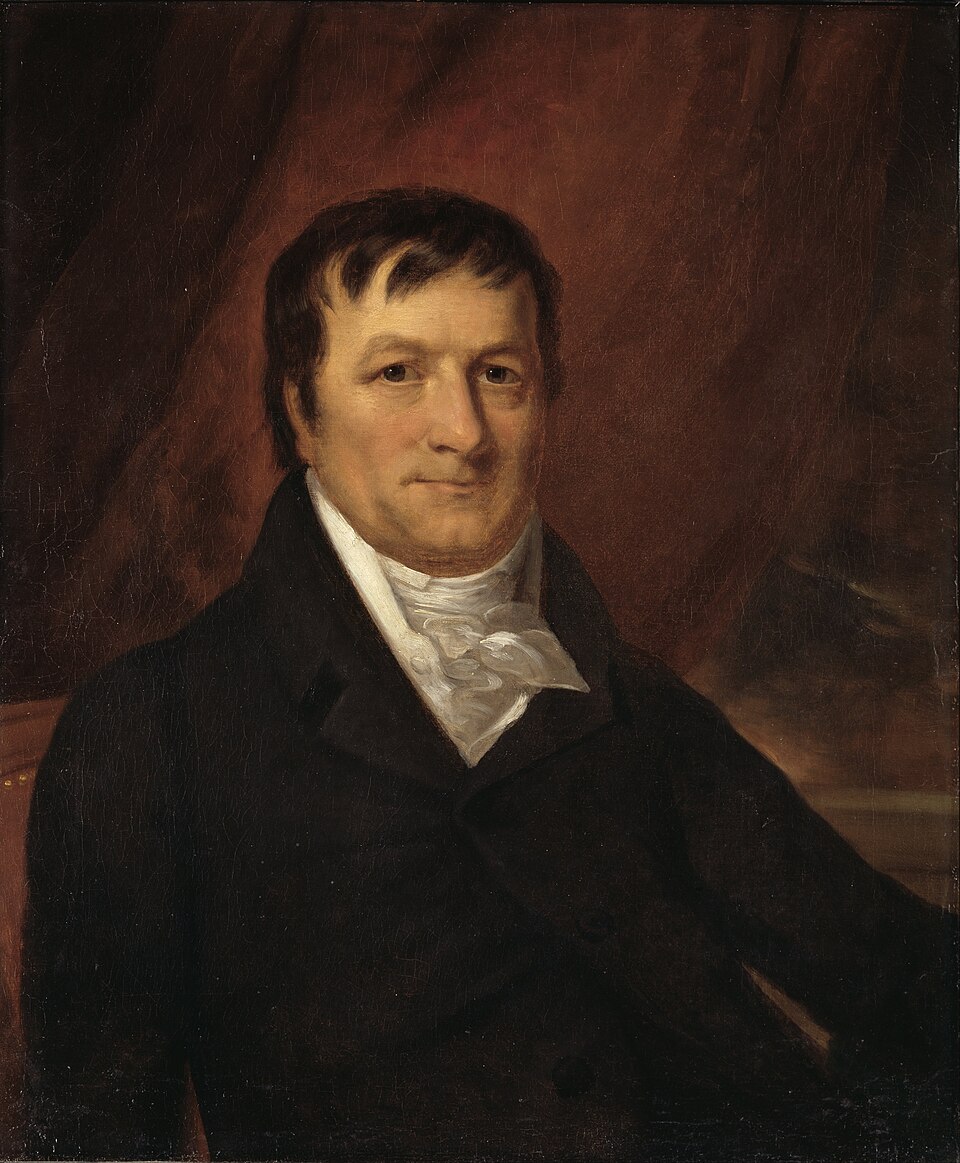
Portrait of John Jacob Astor
John Wesley Jarvis · Public Domain

The person

A life under examination

Who he was

Born in Waldorf, Germany, in 1763, John Jacob Astor emigrated to America in 1784 and became the first American multimillionaire. Starting as a fur trader, he built a global fur empire and invested heavily in New York real estate, foreseeing the city's growth. He also funded the Astor Library, a precursor to the New York Public Library, and supported writers like Washington Irving and Fitz-Greene Halleck.

Why he matters

Astor's life illustrates the power of foresight, disciplined habits, and strategic investment. He transformed the American fur trade, predicted the rise of Western cities, and set a precedent for combining business acumen with philanthropy. His legacy shaped New York City and American commerce.

Life in motion

Timeline

21 sourced moments across the life of John Jacob Astor

Drag to travel through time · Ctrl/⌘ + scroll or pinch to zoom · Select a moment for the full account

1788

Opened Fur Goods Shop in New York

After working at his brother's butcher shop, began buying raw hides from Native Americans, preparing them, and reselling in London. Opened his own fur goods shop in New York and served as agent for his uncle's musical instrument business.

Why it matters: Entry into the fur trade, which became the foundation of his wealth.

Wikipedia

Operating system

Core themes

01

Habit and Industry

Astor's success was rooted in regular habits, early rising, and hard work. He believed wealth was a result of habit, not luck.

Evidence: Hubbard quotes Astor: 'The man who makes it the habit of his life to go to bed at nine o'clock, usually gets rich and is always reliable... Wealth is a result of habit.'

02

Foresight and Prophecy

Astor had a remarkable ability to anticipate future developments, such as the growth of cities, the Erie Canal, and the importance of the Pacific Northwest.

Evidence: The text describes his predictions about Buffalo, Rochester, Duluth, Chicago, and the Falls of St. Anthony, which were later validated.

03

Self-Education and Learning

Lacking formal education, Astor compensated with self-study and practical experience. He supported libraries and valued knowledge.

Evidence: He left $400,000 for the Astor Library because he 'realized his lack of book advantages.'

04

Ethical Business Conduct

Astor was honest in dealings, paying and making others pay. He avoided gambling, viewing it as unproductive.

Evidence: Described as 'uniquely honorable and upright' with 'his word was his bond.'

05

Strategic Risk-Taking

He took calculated risks, such as investing in the Astoria venture, but did not speculate recklessly.

Evidence: The Astoria venture lost a million dollars, but he remained calm, saying 'The plan was right, but my men were weak.'

06

Cultural Patronage

Astor supported arts and literature, hiring Fitz-Greene Halleck, befriending Washington Irving, and funding the Astor Library.

Evidence: He was exceptional in his 'combined love of money and love of books.'

Read through your work

Key takeaways for...

Leaders

Lead with Vision, Adapt with Humility

Astor's leadership style combined visionary foresight with pragmatic adaptability. He set ambitious goals, like controlling the fur trade and expanding to the Pacific, but also changed course when needed, moving from furs to real estate. He was decisive, once commanding a ship's captain with explicit instructions. He also maintained a reputation for honesty, which built trust with partners and politicians. His failure with Astoria taught him to choose people wisely, and he learned to delegate. However, his leadership was autocratic: he didn't tolerate dissent, as seen in the Astoria venture's collapse. Leaders can learn from his ability to align long-term vision with daily habits, and his recognition that 'men were weak' can be a lesson in team building.

  1. 01Create a clear, long-term vision that guides daily actions. Astor's plan for the Northwest was consistent even when execution failed. Leaders should articulate a compelling 'north star.'
  2. 02Build a reliable team; Astor's failure at Astoria was due to weak men. Find people who share your vision and are competent.
  3. 03Adapt to changing conditions without abandoning your core values. Astor exited fur when it declined, but kept his ethical business conduct.
  4. 04Develop a personal brand of integrity, as Astor's word was his bond. This builds reputation capital that pays dividends.

In his words

Useful quotations

The man who makes it the habit of his life to go to bed at nine o'clock, usually gets rich and is always reliable. Of course, going to bed does not make him rich--I merely mean that such a man will in all probability be up early in the morning and do a big day's work, so his weary bones put him to bed early. Rogues do their work at night. Honest men work by day. It's all a matter of habit, and good habits in America make any man rich. Wealth is a result of habit.
John Jacob AstorGo to passage
The plan was right, but my men were weak, that is all. The gateway to China will be from the northwest. My plans were correct. Time will vindicate my reasoning.
John Jacob AstorGo to passage
Nopody vould know I vas a Cherman--aind't it?
John Jacob AstorGo to passage
I move in here for sentimental reasons--I have a small and indirect claim on the place.
John Jacob AstorGo to passage

Put into practice

Lessons worth keeping

Develop Consistent Habits

Astor's regular sleep and work schedule contributed to his productivity and reliability.

Try it: Adopt a daily routine that prioritizes early rising and focused work for long-term success.

Think Long-Term

Astor invested in real estate with a futuristic outlook, holding properties for decades.

Try it: Focus on investments and decisions that compound over time rather than seeking quick gains.

Learn Continuously

Despite limited formal education, Astor educated himself in real estate law, geography, and languages.

Try it: Engage in lifelong learning and self-improvement to gain competitive advantages.

Maintain Ethical Standards

Astor was known for honesty and paying debts, which built trust.

Try it: Practice integrity in business to earn long-term respect and reliability.

Avoid Speculation

Astor distinguished between productive business and unproductive gambling.

Try it: Avoid speculative ventures and focus on value creation rather than wealth transference.

Embrace Failure

His Astoria venture failed but he accepted it without despair, seeing it as a lesson.

Try it: View failures as opportunities to learn and maintain confidence in your vision.

Read with judgment

Greatness, contradiction, and use

What made them great

Astor's greatness lay in his disciplined habits, long-term vision, and strategic risk-taking. He rose from immigrant poverty to become America's first multimillionaire by mastering the fur trade and then pivoting to New York real estate at precisely the right moment. His foresight was prophetic: he predicted the growth of cities like Chicago and Duluth, and the importance of the Pacific Northwest. He combined self-education with practical experience, compensating for his lack of formal schooling by intense study of real estate law, geography, and languages. His ethical conduct—his word was his bond—built lasting trust in an era of sharp dealing. He distinguished between productive enterprise and gambling, avoiding speculative ventures while embracing calculated risks like the Astoria expedition, which failed but demonstrated his willingness to think continentally. His greatness was not merely in accumulating wealth but in setting a template for how disciplined foresight and patience could create lasting economic and cultural impact.

The central contradiction

Astor's central contradiction was his combination of ruthless business practices with genuine cultural patronage and ethical personal conduct. He built a fur trade monopoly by driving out competitors, used his political connections to secure protectionist laws, and famously profited from the opium trade with China. Yet he was personally honest, hated gambling as unproductive, and funded libraries and supported writers like Washington Irving. He was a devout church member with no belief in revealed religion, viewing the church as a 'good police system.' He held land unused to await appreciation, a practice later criticized by economists like Henry George, all while priding himself on productive business. This tension between his ruthless accumulative instinct and his refined cultural aspirations reveals a man who could compartmentalize his values, pursuing wealth with an iron will while indulging in literary and musical dreams he never fulfilled.

Lessons from failure

Astor's shadow side included his willingness to engage in morally questionable trades, particularly opium, and his monopolistic practices that crushed smaller competitors. His Astoria venture failed, losing a million dollars, yet he remained stoic, blaming weak men rather than his plan. His real estate practices, holding land vacant for appreciation, arguably contributed to urban sprawl and economic inequality, a critique later articulated by Henry George. He also exploited legal quirks, such as the confiscation of Tory property, to acquire valuable Manhattan land. His lack of formal education was a source of personal regret, which he addressed through philanthropy. While he supported culture, he rarely took public stands on controversial issues, preferring to stay behind the scenes. His legacy includes the fortune that created the Astor family, but also a model of capitalism that prioritized profit over social welfare in ways that still resonate today.

Modern relevance

Astor's life offers a blueprint for modern entrepreneurs and investors. His emphasis on habit, long-term thinking, and strategic risk is timeless. In a world of short-termism, Astor's patience—holding land for decades—offers a counter-narrative. His self-education is a model for lifelong learning in an era of rapid change. His distinction between productive enterprise and gambling speaks to today's speculative markets, reminding us that wealth built on value creation is more sustainable than zero-sum trading. His philanthropy, supporting libraries and writers, highlights the role of wealthy individuals in cultural patronage, though it also raises questions about the ethics of accumulating vast fortunes. His failures, like Astoria, teach resilience and the importance of learning from setbacks. Moreover, his immigrant story is a testament to the American Dream, but the controversies around his business methods underscore the tensions between ambition and ethics in capitalism.

How to learn from them

To learn from Astor, one must study both his successes and his contradictions. First, adopt the habit of early rising and disciplined work, as he did, to increase productivity. Second, cultivate long-term vision: invest in assets and skills that compound over time, and avoid chasing quick gains. Third, engage in continuous self-education, targeting knowledge gaps that give you a competitive edge. Fourth, maintain ethical standards in dealings, as Astor's reputation for honesty built trust essential for his empire. Fifth, learn to embrace failure: when Astor's Astoria venture collapsed, he did not despair but remained confident in his plan. Sixth, be aware of the ethical trade-offs in your business: Astor's opium trade and land speculation are cautionary tales. Finally, consider philanthropy as a way to give back, but ensure it is not merely a salve for questionable practices. Astor's life invites you to balance ambition with reflection.

Best entry point

The best entry point to Astor is the biography by Elbert Hubbard (source 143), which offers a vivid, if hagiographic, portrayal. Hubbard's narrative captures Astor's habits, foresight, and character, and includes his famous quote on wealth as a result of habit. For a more factual overview, the Wikipedia article (source 144) provides a chronological account of his life, including his involvement in the opium trade and his real estate career. For those interested in his philanthropic legacy, the details of the Astor Library bequest are available in the timeline. To understand his impact on New York City, one could explore the history of the Astor Estate. Hubbard also includes anecdotes that reveal Astor's personality, such as his supposed comment about not looking German, which humanizes him. For a deeper dive, Washington Irving's 'Astoria' is a contemporary account of his western venture.

The human network

Key relationships

mentor

Robert Bowne

Quaker fur merchant who employed Astor and taught him the trade. Provided crucial apprenticeship and financial support.

friend and protégé

Washington Irving

Astor financed Irving's travels and loaned him money; Irving wrote 'Astoria.' Cultural patronage and literary legacy.

employee

Fitz-Greene Halleck

Poet served as Astor's private secretary, hired on basis of literary friendship. Astor supported literary talent.

son

William B. Astor

Son who inherited and managed fortune, continuing family legacy. Succession and continuity.

Continue the inquiry

Related greats

Alexander Turney Stewart

A contemporary merchant prince who also built a fortune in New York, but Astor differed in his belief in cause-and-effect over luck.

business success · real estate · retail

George Washington

Astor acquired property once owned by Washington's aide; Washington's confiscation of the confiscation of the Morris estate was a legal issue Astor exploited.

real estate · American history

Thomas Jefferson

Astor met with Jefferson to promote his plan for western expansion; Jefferson responded with interest, showing their shared vision for the nation.

western expansion · nation-building

John Clark

Astor's success might be compared to that of other self-made men of his era, though not directly related.

immigrant success · commerce

Source shelf

Recommended sources

reference

John Jacob Astor — Wikipedia

Wikipedia contributors

View source →

Source basis: The evidence for this analysis is drawn primarily from Elbert Hubbard's biography of John Jacob Astor (source 143), which provides detailed anecdotes, quotes, and insights into his character and business methods. The Wikipedia article (source 144) offers a comprehensive timeline and factual details, including his involvement in the opium trade and his real estate acquisitions. The source catalog also references Wikidata (source 145), but no specific excerpts were used from it. The quotes from Astor are from Hubbard's preface, including his famous 'Wealth is a result of habit' and his reflections on the Astoria failure. The themes and lessons are derived from Hubbard's narrative, which emphasizes habit, foresight, self-education, ethical conduct, strategic risk-taking, and cultural patronage. While Hubbard's account is admiring, it does not shy away from noting Astor's anti-speculation stance and his willingness to engage in monopolistic practices. The timeline from Wikipedia provides factual anchors, such as his birth, marriage, founding of the American Fur Company, and his death. The relationships section highlights his mentors, friends, and family, which are drawn from both sources.

Direct answers

Frequently asked questions about John Jacob Astor

What were John Jacob Astor's key habits that contributed to his success?

Astor attributed his wealth to regular habits, specifically going to bed at nine o'clock and rising early to do a full day's work. He believed that such habits made a man reliable and wealthy, as they promoted productivity and honesty. He also avoided gambling, viewing it as unproductive and a mere transfer of wealth, unlike real business which creates value.

How did Astor's foresight manifest in his business decisions?

Astor had a remarkable ability to predict future developments. He bought land in what would become Chicago, Buffalo, and other cities before they prospered, and he foresaw the importance of the Pacific Northwest as a gateway to China. He also invested in New York real estate at low prices, holding properties for decades until they appreciated enormously.

What was Astor's stance on gambling and speculation?

Astor hated gambling and viewed it as a waste of time and energy because it merely transferred wealth instead of producing it. He distinguished between productive business and speculation. While he avoided speculative ventures, he did invest in land, which some considered speculative, but he saw it as legitimate, long-term investment.

How did Astor educate himself despite his lack of formal schooling?

Astor lacked formal education but compensated through self-study and practical experience. He learned real estate law, geography, and multiple languages, which helped him in his international trade. He also recognized the value of books and later funded the Astor Library, partly because he 'realized his lack of book advantages.'

What was the significance of the Astor Library?

The Astor Library was a bequest of $400,000 in Astor's will to create a public library. It was a precursor to the New York Public Library and reflected Astor's belief in self-education and learning. He funded it because he understood the importance of knowledge, even though he had limited formal education himself.

What were Astor's ethical business practices?

Astor was known for being 'uniquely honorable and upright,' with his word as his bond. He paid his debts and was honest in dealings. He avoided gambling and speculative ventures, focusing on production and trade. However, his ethics were selective; he engaged in the opium trade and used his political influence to create monopolies.

What was the outcome of the Astoria venture and what did Astor learn from it?

The Astoria venture, an attempt to establish a fur trading post in the Pacific Northwest, failed and lost about a million dollars. Astor remained calm and stated, 'The plan was right, but my men were weak.' He saw it as a learning experience and maintained confidence in his strategic vision for the region.

How did Astor's relationships with writers like Irving and Halleck impact his legacy?

Astor supported writers financially and culturally. He loaned money to Washington Irving and financed his travels, and Irving later wrote 'Astoria.' He also employed poet Fitz-Greene Halleck as his private secretary. This patronage enhanced his reputation as a supporter of the arts and created a literary legacy.
