


.jpg)
1813
Started work on Waterloo Bridge
Placed under resident engineer Mr. Hollingsworth of Waterloo Bridge, supervising foundation work.
Why it matters: Early practical training in civil engineering.
Wikipedia ↗Scientist & Inventor · 1794–1874 AD
Civil Engineer and Inheritor of a Legendary Legacy
The defining question
How can an engineer honor a legendary family legacy while forging an independent path and advancing the profession through innovation and international practice?
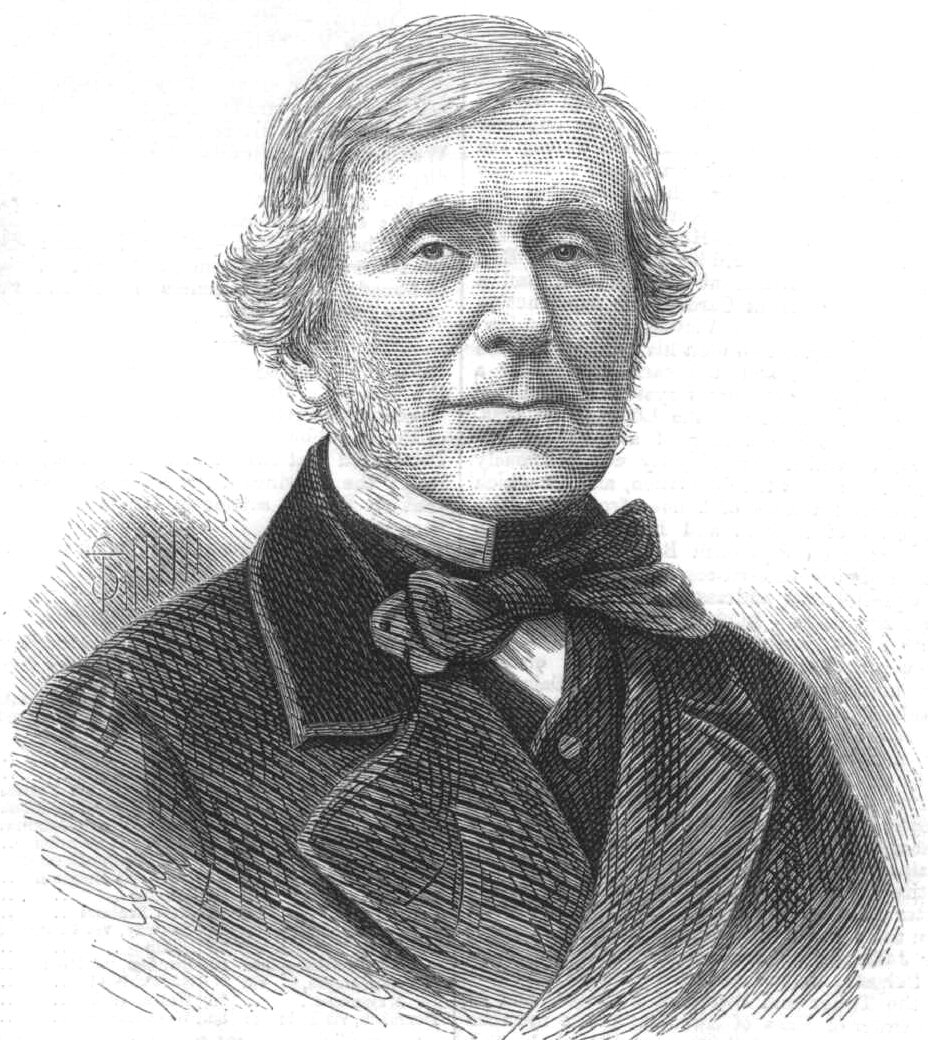
The person
Sir John Rennie the Younger (1794–1874) was a prominent British civil engineer. Born into the illustrious engineering family of John Rennie Sr., he was educated at Dr. Burney's school and trained under his father. He worked on major projects including London Bridge, Plymouth Breakwater, and various harbors and railways. He traveled extensively, surveying for railways in Portugal, Sweden, and other countries. He served as President of the Institution of Civil Engineers and was knighted. His autobiography, written in 1867, provides insights into his professional life and the engineering world of the 19th century.
Sir John Rennie the Younger was a key figure in 19th-century civil engineering, bridging the era of his father's pioneering work and the rapid expansion of railways and public works. His autobiography offers a comprehensive view of engineering practice, hydraulics, and infrastructure development during a transformative period. His reflections on innovation, the challenges of new technologies, and international engineering projects provide valuable insights into the profession and its history.
Life in motion
Drag to travel through time · Ctrl/⌘ + scroll or pinch to zoom · Select a moment for the full account
Placed under resident engineer Mr. Hollingsworth of Waterloo Bridge, supervising foundation work.
Why it matters: Early practical training in civil engineering.
Wikipedia ↗Operating system
Rennie's early education at Greenlaw's and Burney's schools emphasized classics but lacked practical science, a deficiency he later addressed through hands-on training. His encounters with figures like Shelley and Everest shaped his early worldview.
Evidence: His detailed descriptions of his schooldays, his admiration for Shelley's eccentricities, and his later emphasis on practical training over university education.
Carrying on his father's engineering firm and completing major projects like London Bridge and Sheerness Dockyard, while establishing his own reputation.
Evidence: References to working with his father, managing projects after his death, and completing iconic structures.
Rennie's extensive travels across Europe, Asia Minor, and North Africa for surveys and projects, expanding his engineering knowledge and cultural understanding.
Evidence: Detailed accounts of journeys through Greece, Turkey, Egypt, Portugal, and other countries, often in challenging conditions.
Rennie's openness to innovations like locomotives and steamships, and his historical analysis of their development, reflecting his engagement with technological change.
Evidence: His account of seeing Blenkinsop's locomotive and his history of the steam engine's evolution, including Trevithick's contributions.
Rennie's involvement in professional societies, his presidency of the Institution of Civil Engineers, and his views on engineering education and practice.
Evidence: Mentions of the Smeatonian Society, his presidency, and his advice on education and practice in later chapters.
Rennie's resilience in overcoming physical dangers, difficult conditions, and professional challenges, demonstrating the importance of perseverance.
Evidence: His encounters with Kurdish robbers, difficult travel conditions, and his advice on the need for perseverance in introducing new inventions.
Read through your work
Leaders
John Rennie the Younger matters to leaders because their life offers a concrete study of joining responsibility with self-command and service.
In his words
“Nothing is more difficult than to introduce a new invention, however plausible it may appear at first sight.”
“We become by habit so wedded to our old ways that we are apt to regard anything new with indifference.”
“I never grumbled; I took the people as I found them; they were generally very civil, and did everything in their power to make us as comfortable as possible.”
“I think I hit him somewhere, for he uttered a loud cry, and instantly took to flight with his companion.”
“From Ovar we continued near the shore through a forest of pines for several miles; these pines would furnish excellent sleepers for the railway at a very moderate cost.”
“It was singular and melancholy to remark the ruins of the three most celebrated of the Churches of the world before me, namely, those of the ancient Greeks, Romans, and Christians, dominated over by the Mahometan mosque.”
“The principal building is the hippodrome, which was tolerably perfect, and I took some pains to measure it accurately, which occupied me about two hours.”
“The poor fellow seemed to be much fatigued, and no wonder, as travelling for two miles in such hot weather over a dusty road in such an uncomfortable costume must have been very severe work.”
“The Aga was a fine-looking man, about forty, surrounded by his divan and a number of well-armed Tartars and guards.”
Put into practice
Rennie emphasized practical training over purely academic education, learning by doing in his father's office and on-site.
Rennie's successful international projects show the importance of adapting to local conditions, cultures, and resources.
Rennie's persistence in pursuing projects despite dangers and difficulties, and his historical examples of inventors who struggled, underline the need for determination.
Rennie learned from his father and carried on his legacy, showing the importance of mentorship and building on prior work.
His extensive travels expanded his knowledge and skills, demonstrating the value of exposure to different ideas and practices.
Rennie recognized the potential of railways and steam power early on, showing the importance of staying open to new technologies.
Read with judgment
John Rennie the Younger joined Education and Formative Influences, Engineering Legacy and Family Business, Travel and International Engineering with a life that made those principles consequential rather than merely theoretical.
John Rennie the Younger's ideals must be studied alongside the consequences, relationships, and institutional pressures visible in George Stephenson's connection to their life.
Learning from John Rennie the Younger requires examining failures, blind spots, and outcomes as seriously as admired ideas. Greatness is evidence for study, not immunity from criticism.
John Rennie the Younger remains relevant wherever people face responsibility, uncertainty, competing incentives, and the challenge of turning principles into conduct.
Begin with Autobiography of Sir John Rennie, F.R.S., Past President of the Institute of Civil Engineers, compare it with reliable reference sources, then test The Value of Practical Experience in a real decision.
Start with Autobiography of Sir John Rennie, F.R.S., Past President of the Institute of Civil Engineers. Read for the central ideas, then compare those ideas with the timeline and relationships on this page.
The human network
Contemporary and professional peer
Mentioned in his historical account of railways; both were key figures in railway development. Shows his network and shared field.
Colleague
Mentioned in context of various projects. Collaborated in the engineering world.
Historical figure of interest
Mentioned as Watt's assistant who built a model locomotive. Part of the steam engine history he chronicled.
Historical figure of interest
Discussed Watt's steam engine innovations and his impact. Shows his knowledge of engineering history.
Continue the inquiry
Another pioneering civil engineer; Rennie mentions him and built on his legacy.
Civil engineering · Hydraulics · Professional institutions
Contemporary engineer who worked on similar projects; Rennie mentions him.
Bridges · Roads · Canals
Key figure in railway development; Rennie chronicled his work and shared the railway era.
Railways · Locomotives
Inventor of the high-pressure locomotive; Rennie acknowledged his contributions and struggles.
Innovation · Locomotives · Perseverance
Improved the steam engine; Rennie discussed his inventions and their impact.
Steam engines · Innovation
Source shelf
link
Sir John Rennie
View source →reference
Wikipedia contributors
View source →reference
Wikidata contributors
View source →Source basis: This profile draws on Autobiography of Sir John Rennie, F.R.S., Past President of the Institute of Civil Engineers, John Rennie the Younger — Wikipedia, John Rennie the Younger — Wikidata. Source-backed claims and quotations retain provenance where available.
Direct answers
Sir John Rennie the Younger (1794–1874) was a prominent British civil engineer. Born into the illustrious engineering family of John Rennie Sr., he was educated at Dr. Burney's school and trained under his father. He worked on major projects including London Bridge, Plymouth Breakwater, and various harbors and railways. He traveled extensively, surveying for railways in Portugal, Sweden, and other countries. He served as President of the Institution of Civil Engineers and was knighted. His autobiography, written in 1867, provides insights into his professional life and the engineering world of the 19th century.
Sir John Rennie the Younger was a key figure in 19th-century civil engineering, bridging the era of his father's pioneering work and the rapid expansion of railways and public works. His autobiography offers a comprehensive view of engineering practice, hydraulics, and infrastructure development during a transformative period. His reflections on innovation, the challenges of new technologies, and international engineering projects provide valuable insights into the profession and its history.
Rennie emphasized practical training over purely academic education, learning by doing in his father's office and on-site.
The core ideas highlighted by this profile are Education and Formative Influences, Engineering Legacy and Family Business, Travel and International Engineering, Innovation and Adoption of New Technologies.
John Rennie the Younger joined Education and Formative Influences, Engineering Legacy and Family Business, Travel and International Engineering with a life that made those principles consequential rather than merely theoretical.
Mentioned in his historical account of railways; both were key figures in railway development. Shows his network and shared field.
Start with Autobiography of Sir John Rennie, F.R.S., Past President of the Institute of Civil Engineers, John Rennie the Younger — Wikipedia, John Rennie the Younger — Wikidata, then compare primary texts with reliable historical reference sources.