Activist & Reformer · 1784–1885 AD

Moses Montefiore

Victorian philanthropist and champion of Jewish rights

The defining question

How can one leverage privilege and influence to serve one's community and humanity?

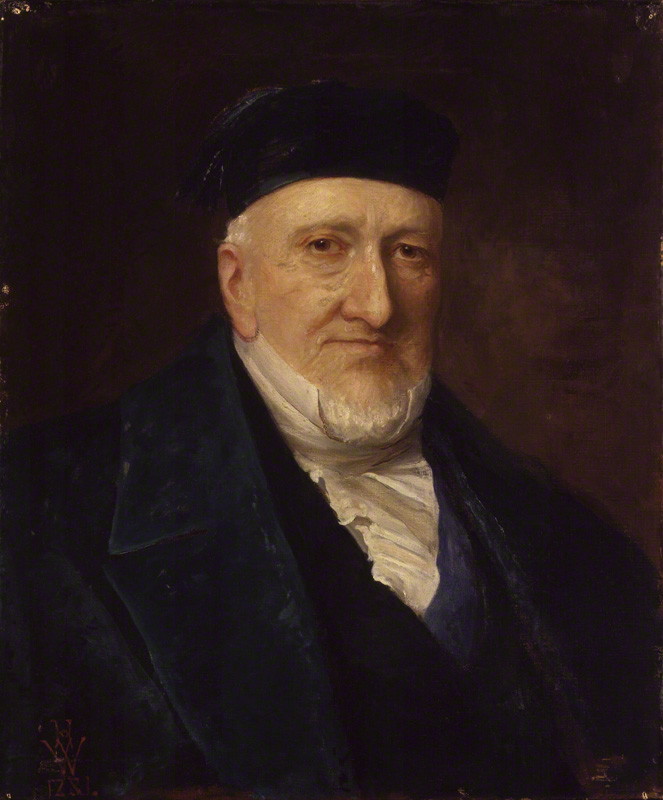
Portrait of Moses Montefiore
Henry Weigall · Public Domain

The person

A life under examination

Who he was

Moses Montefiore was an Italian-born British financier, activist, and philanthropist. He became a successful stockbroker in London, co-founding Montefiore & Company with his brother. He married Judith Cohen, niece of Nathan Mayer Rothschild, and became closely involved in the Rothschild financial network. Montefiore was a prominent leader of the British Jewish community, serving as president of the Board of Deputies of British Jews for many years. He undertook numerous philanthropic missions to the Middle East, Africa, Europe, and Russia, advocating for Jewish rights and well-being. He was knighted in 1837 and made a baronet in 1846, the first British Jew to be so honored. He is best known for his intervention in the Damascus blood libel case in 1840 and his efforts to support Jewish communities in Palestine.

Why he matters

Sir Moses Montefiore mattered because he combined immense financial and social influence with a deep commitment to Jewish rights and philanthropy. He used his wealth and connections to advocate on behalf of oppressed Jews worldwide, most famously in the Damascus affair, and he worked tirelessly to improve the living conditions of Jews in the Holy Land, sponsoring agricultural settlements and medical care. His longevity and energy made him a symbol of Jewish resilience and civic engagement, and his legacy shaped modern Jewish philanthropy and communal leadership.

Life in motion

Timeline

15 sourced moments across the life of Moses Montefiore

Drag to travel through time · Ctrl/⌘ + scroll or pinch to zoom · Select a moment for the full account

1824

Co-founded Alliance Assurance Company

Montefiore was among the founding consortium of the Alliance Assurance Company, later merged with Sun Insurance.

Why it matters: Demonstrated his business acumen and innovation in the insurance sector.

Wikipedia

Operating system

Core themes

01

Philanthropy and Charitable Action

Montefiore's life was marked by extensive charitable giving and practical acts of relief. He and his wife Judith gave generously to Jewish communities in London, Jerusalem, and elsewhere, and he personally funded synagogues, hospitals, and printing presses.

Evidence: In the source, after a shipwreck escape, Montefiore gives £600 in charity, including £500 for the poor of Jerusalem. He also sent a printing press and Torah scroll to Jerusalem, and made a donation of £200 for the repair of the Spanish and Portuguese synagogue.

02

Advocacy for Jewish Rights

Montefiore worked through legal and diplomatic channels to advance Jewish civil rights, both in Britain and internationally. He engaged with political leaders, petitioned parliaments, and used his personal connections to lobby for Jewish emancipation and the protection of Jewish communities.

Evidence: He presented petitions to Parliament on behalf of Jews (Chapter XV), was elected president of the London Committee of Deputies of British Jews, and took a leading role in the campaign for Jewish emancipation. He also corresponded with ministers and presented petitions to foreign rulers.

03

Intervention in Blood Libels

Montefiore personally intervened in cases where Jews were falsely accused of using blood in religious rituals, most notably the Damascus affair of 1840. He traveled to Egypt to secure the release of imprisoned Jews and obtained a firman from the Ottoman Sultan condemning the blood libel.

Evidence: The source details his mission to the East, his interview with the Pasha of Egypt, and his audience with the Sultan, which resulted in a firman. He also sent a printing press to Israel Drucker in Jerusalem, which was later the subject of a blood libel accusation.

04

Travel and Diplomatic Missions

Montefiore undertook numerous long and dangerous journeys to support Jewish causes, visiting Palestine, Egypt, Turkey, Russia, and other countries. His travel diaries record encounters with rulers and his efforts to address the needs of local Jewish communities.

Evidence: The source describes his journeys to the Holy Land, his visits to Safed and Tiberias, his mission to Damascus and Constantinople in 1840, and his later mission to Russia. He corresponded with ambassadors and ministers, such as Rechid Pasha and Boghoz Bey.

05

Religious Faith and Devotion

Montefiore's actions were grounded in his devout Jewish faith. He frequently attended synagogue, gave thanks to God, and saw his philanthropy as a religious obligation. His diary entries often include expressions of gratitude to the Almighty.

Evidence: After his shipwreck escape, he attended synagogue and rendered thanks to God. His motto was 'think and thank,' and he often praised God in his diary, such as on the occasion of the Queen's escape from an assassination attempt.

06

Family and Personal Relationships

Montefiore was deeply devoted to his wife Judith and his extended family. They worked together as partners in philanthropy, and he was closely connected to the Rothschild family through marriage. His diaries record visits to relatives and his grief at the deaths of loved ones.

Evidence: The source notes his grief at the death of his aunt and of his friend N. M. Rothschild, whom he called a 'kind friend' and 'good friend.' He and Judith worked jointly, and she shared his charitable endeavors. They also visited family members upon their return from travels.

Read through your work

Key takeaways for...

Leaders

Leading with purpose and humanity

Montefiore's leadership spanned communal, national, and international arenas. He led the Board of Deputies for decades and took on solo missions when needed, demonstrating the value of vision and persistence. His style was consultative—he worked with rabbis, diplomats, and politicians—yet he was willing to act decisively. His leadership was rooted in service, not self-aggrandizement.

  1. 01Lead by serving: his role was to represent and empower his community, not to accumulate personal power.
  2. 02Balance long-term strategy with short-term crises: he managed both a communal institution and emergency missions.
  3. 03Use your position to influence others: he leveraged his baronetcy to open doors.
  4. 04Delegate and collaborate: he relied on trusted advisors like Dr. Loewe.
  5. 05Stay focused on the mission, not on personal benefits: he declined opportunities for personal enrichment from his status.

In his words

Useful quotations

Oh! may this mournful sight remind me of the nothingness of this world's grandeur, and may I daily become more prepared for a blessed Eternity! He was a good friend to me and my dear Judith in our early life. Peace to his memory.
Diaries of Sir Moses and Lady Montefiore, Volume 1 (of 2)Go to passage
I remained at the burial ground above an hour after the mourners had left, and saw the grave of my kind and truly lamented friend arched over, filled up, and a large slab of Yorkshire stone placed upon it. Thus have I witnessed all that was mortal of my dear friend consigned to the earth; his spirit the Almighty, in His great mercy, has taken to a better world, there to enjoy in glorious eternity the reward of his charitable actions.
Diaries of Sir Moses and Lady Montefiore, Volume 1 (of 2)Go to passage
I am confidently convinced that my brethren in Russia and Poland understand and appreciate the benevolent intentions of His Imperial Majesty; that they feel assured that the Emperor's sole object is to improve their condition, and that they are impressed with the conviction that their truest wisdom will be to acquiesce cheerfully in the measures designed for their welfare by their powerful and enlightened Sovereign, and to adopt with alacrity the course which, in his paternal care, His Majesty…
Diaries of Sir Moses and Lady Montefiore, Volume 1 (of 2)Go to passage
If my dear Judith consents to our again visiting the Holy Land, I should be glad to obtain the company of the Doctor on our pilgrimage.
Diaries of Sir Moses and Lady Montefiore, Volume 1 (of 2)Go to passage

Put into practice

Lessons worth keeping

Personal Faith as a Motivator

Montefiore's religious beliefs drove his philanthropy and resilience. He frequently acknowledged God in his diaries and credited divine protection for his safety and success.

Try it: Individual values and beliefs can sustain long-term commitment to a cause, even in the face of setbacks.

Using Influence for Others

Montefiore leveraged his personal connections with royalty, politicians, and wealthy elites to advocate for marginalized groups.

Try it: Networking and influence can be used to advance social justice causes, provided they are exercised ethically and persistently.

The Power of Persistent Diplomacy

In the Damascus affair, Montefiore persisted through multiple audiences and negotiations to achieve the release of imprisoned Jews and a firman from the Sultan.

Try it: Change often requires repeated, sometimes patient, diplomatic efforts, even when early attempts fail.

Combining Financial and Humanitarian Goals

Montefiore used his financial acumen and resources to support projects like joint stock banks and land cultivation in Palestine, seeking to improve Jewish livelihoods while maintaining sustainability.

Try it: Economic development initiatives can address root causes of poverty, but they require careful planning and collaboration.

The Importance of Partnership

Montefiore's wife Judith was an essential partner in his philanthropic work; they made decisions together and shared risks.

Try it: Successful advocacy often thrives with a strong support network or collaborative partner.

Documenting and Reflecting

Montefiore kept detailed diaries and corresponded extensively, creating a record that both held him accountable and preserved insights for future generations.

Try it: Systematic documentation can enhance the impact and legacy of one's work, as well as provide valuable lessons for others.

Read with judgment

Greatness, contradiction, and use

What made them great

Moses Montefiore's greatness lay in his ability to translate financial and social capital into concrete humanitarian action over an extraordinarily long life. He was not an intellectual or a revolutionary; he was a doer. His partnership with Judith, his connections with the Rothschilds and British political elite, and his persistent diplomatic efforts in cases like the Damascus blood libel allowed him to effect real change. He used his wealth to fund hospitals, synagogues, agricultural settlements, and printing presses, demonstrating a practical philanthropy that addressed immediate needs and long-term self-sufficiency. His greatness was not in originality but in execution—showing that a committed individual with resources and determination can influence rulers and improve the lives of marginalized people.

The central contradiction

Montefiore's life embodied a central contradiction: he was a loyal subject of monarchies while advocating for Jewish rights, often assuming that benevolent sovereigns could be persuaded to improve conditions. He sought imperial favor and accepted honors like knighthood and a baronetcy, believing that influence within the establishment would benefit his community. Yet the same establishment often tolerated or instigated persecution, as seen in the Damascus affair. He navigated this by maintaining respect for authority while appealing to humanity and justice, working within systems he sought to reform. This tension highlights the limits of elite advocacy—his successes were real but dependent on the goodwill of those in power.

Lessons from failure

Despite his achievements, Montefiore's reliance on diplomatic persuasion had inherent limitations. His 1848 letter to Count Kisseleff, expressing confidence in the Tsar's benevolent intentions, appears naive given the oppressive policies towards Russian Jews. He sometimes conflated hoped-for reforms with actual outcomes, reflecting a trust in authority that could be misplaced. Additionally, his philanthropic model emphasized charity and economic development but did not challenge the structural inequalities that made Jews vulnerable. His missions, while dramatic, were often temporary palliatives rather than systemic solutions. Furthermore, his long presidency of the Board of Deputies, while significant, was also an example of a centralized leadership that could crowd out other voices within the community.

Modern relevance

Montefiore's life offers a template for modern philanthropists and advocates: the use of elite networks, strategic charity, and persistent diplomacy to advance human rights. His approach to economic empowerment, such as funding agricultural training in Jaffa, aligns with contemporary ideas of sustainable development. The tension he embodied—whether to work within power structures or defy them—remains central to social justice today. His failures caution against over-reliance on benevolent leaders, suggesting that structural change requires broader movements and institutional reforms. Yet his legacy demonstrates that personal commitment, faith-driven action, and strategic use of privilege can still create meaningful impact.

How to learn from them

We can learn from Montefiore by adopting his principles of persistence, partnership, and documentation. His diaries show a man who reflected on his actions, learned from setbacks, and kept careful records—a practice that enhances accountability and preserves lessons. For modern advocates, his example suggests the importance of combining advocacy with tangible aid: he didn't just protest, he funded hospitals and villages. Moreover, his partnership with Judith reminds us that sustainable activism often thrives with a committed collaborator. However, we must also learn from his blind spots: instead of trusting rulers, we should build institutions that hold power accountable, and instead of top-down philanthropy, we should empower communities to lead their own development.

Best entry point

The best entry point to Montefiore's life is the Damascus affair of 1840, as narrated in his diaries. This episode encapsulates his modus operandi: a crisis requiring immediate action, the use of personal influence with foreign leaders, and the combination of diplomatic pressure with concrete aid. It demonstrates his courage and persistence, as well as the complexities of international Jewish politics. Reading about his journey to Egypt and Turkey, his interviews with rulers, and the eventual firman offers a vivid glimpse into his character and the challenges he faced. From there, one can explore his other missions and his long-term projects in Palestine.

The human network

Key relationships

Friend and business associate

N. M. Rothschild

Montefiore had a close personal and professional relationship with Nathan Mayer Rothschild, whose wife was his wife's aunt. They signed the contract for a loan of £15,000,000 together. Rothschild's death in 1836 deeply affected Montefiore, and this connection linked him to the influential Rothschild banking family.

Political mentor and advocate

Sir Robert Peel

Peel, as Prime Minister, supported Montefiore's causes and recommended him for the baronetcy. Peel's support illustrates Montefiore's access to and standing with the British political elite.

Diplomatic contact

Boghoz Bey

Boghoz Bey was the Minister of Finance in Egypt; Montefiore corresponded with him regarding land purchase and banks in Syria. This relationship was part of his efforts to establish economic projects for Jews in the East.

Diplomatic contact

Rechid Pasha

Rechid Pasha was the Ottoman Ambassador to Paris and later Grand Vizier; Montefiore discussed the firman with him. His interactions with Ottoman officials were crucial for obtaining the Sultan's firman in 1840.

Continue the inquiry

Related greats

Judith Montefiore

His wife and lifelong partner in philanthropy and travel.

Philanthropy · Faith

N. M. Rothschild

Friend and business associate, connected through family.

Finance · Philanthropy

Sir Robert Peel

British Prime Minister who supported his causes and recommended him for honors.

Politics · Jewish rights

Sir David Salomons

Fellow Jewish civic leader and contemporary, who succeeded Montefiore in various communal roles.

Jewish rights · Public service

Adolphe Crémieux

Jewish French lawyer and politician who accompanied Montefiore on the Damascus mission.

Jewish rights · Advocacy

Source shelf

Recommended sources

link

Diaries of Sir Moses and Lady Montefiore, Volume 1 (of 2)

Sir Moses Montefiore

View source →

reference

Moses Montefiore — Wikipedia

Wikipedia contributors

View source →

Source basis: This analysis is primarily based on Montefiore's own diaries (Volume 1), which provide first-hand accounts of his missions, relationships, and daily life. These are supplemented by contextual information from Wikipedia and Wikidata entries that offer biographical details and a broader historical framework. The diaries, covering his life from the 1830s to the 1850s, are especially valuable for understanding his thinking and actions. The Wikipedia source adds a summary of his early life, career, and later achievements, helping to place him in the context of Jewish history and British society.

Direct answers

Frequently asked questions about Moses Montefiore

What was Moses Montefiore's most significant achievement?

Montefiore is most famous for his intervention in the Damascus blood libel of 1840. After French consuls and Ottoman authorities falsely accused Jews of ritual murder, Montefiore traveled to Egypt and then to Constantinople, where he secured a firman from the Ottoman Sultan that publicly condemned the blood libel and affirmed the protection of Jewish communities. This was a landmark in international advocacy, showcasing how combined diplomatic pressure and personal influence could combat antisemitic persecution.

How did Montefiore use his wealth for philanthropy?

Montefiore systematically allocated his fortune to practical relief and development. He funded hospitals, synagogues, and schools in the Holy Land and beyond. Notably, he purchased an orchard near Jaffa for agricultural training and built Mishkenot Sha'ananim, the first Jewish settlement outside Jerusalem's Old City. He also sent printing presses and Torah scrolls to communities in need. His philanthropy was guided by his religious faith, viewing charitable action as a divine duty.

What was the role of his wife Judith in his work?

Judith Montefiore was an equal partner in her husband's enterprise. They made joint decisions on travel and charitable projects, and she accompanied him on his missions, including to the Holy Land and Russia. Her death in 1862 profoundly affected him, and he founded Judith Lady Montefiore College in her memory. Their diaries were kept jointly, reflecting a shared life and purpose.

Did Montefiore ever encounter opposition or failure?

Yes, despite his successes, Montefiore's methods had limits. In Russia, despite his meeting with the Tsar, the condition of Jewish subjects did not improve significantly. His letters sometimes expressed unwarranted optimism about rulers' intentions, as seen in his 1848 communication to Count Kisseleff. Additionally, some of his economic ventures in Palestine, like his plan to establish banks, were not fully realized. His reliance on authorities meant his influence was dependent on their goodwill.

What is Montefiore's lasting legacy in modern times?

Montefiore's legacy persists in the institutions he founded, such as the Montefiore Synagogue and the agricultural projects in Israel, which contributed to the later success of the Yishuv. His model of philanthropy and advocacy inspired later Jewish leaders and organizations. Today, he is remembered as a pioneer of modern Jewish intercession and communal development, and his life raises questions about the effectiveness of elite advocacy versus grassroots action.

How did Montefiore reconcile his Jewish identity with British establishment life?

Montefiore successfully balanced his religious upbringing with his loyalty to the British crown. He was a devout Jew who observed tradition, yet he accepted honors like knighthood and baronetcy, and participated in civic ceremonies. He saw no conflict, viewing his integration as a means to better advocate for Jewish rights. His motto 'think and thank' encapsulated his gratitude to God and his nation.

Why did Montefiore make multiple visits to Palestine?

Montefiore felt a strong historical and religious connection to the Holy Land. His first visit in 1827 sparked his commitment to improving Jewish life there. He recognized the Jewish community was impoverished and vulnerable, so he sought to provide relief and promote self-sufficiency through agriculture and economic development. His projects laid groundwork for future Zionist settlement, although he did not advocate for a Jewish state.
