


.jpg)
1831
Founded The Herald of Freedom
Started a weekly newspaper in Bethel, Connecticut.
Why it matters: Early career as publisher; first major business venture.
Wikipedia ↗Business & Entrepreneurship · 1810–1891 AD
The Showman Who Made America Wonder
The defining question
How can one turn spectacle into a legitimate and lasting business while navigating fires, financial ruin, and public skepticism?
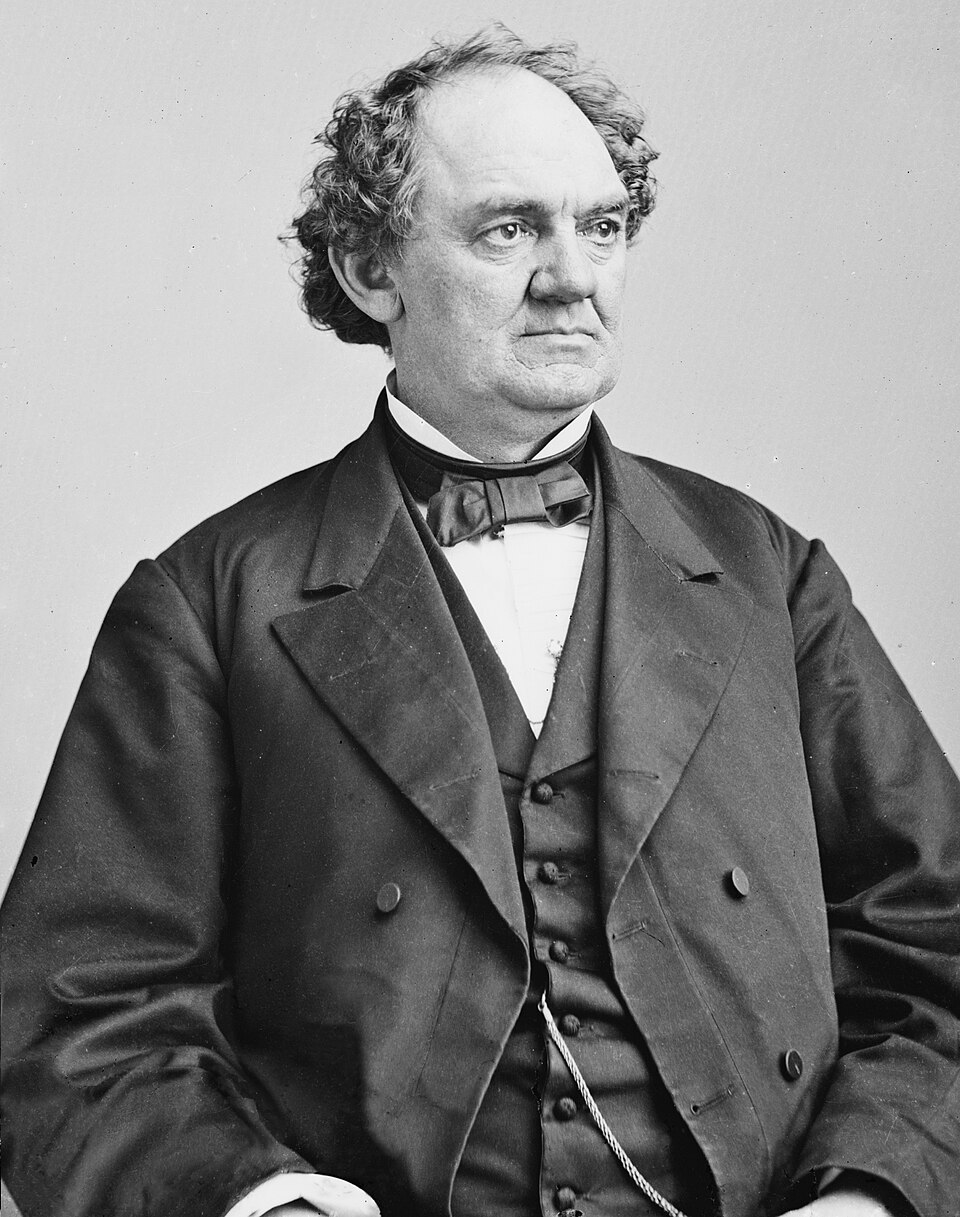
The person
Phineas Taylor Barnum (1810-1891) rose from a Connecticut farm boy to become the world's most famous showman. He created the American Museum, discovered General Tom Thumb, promoted Jenny Lind's American tour, and founded the circus that bears his name. A master of publicity and a shrewd businessman, he also served as a legislator and mayor, and rebuilt his fortune after financial ruin.
Barnum shaped modern entertainment and advertising. His shows brought wonder to millions, and his methods—sensation, curiosity, and mass marketing—became the template for the entertainment industry and public relations.
Life in motion
Drag to travel through time · Ctrl/⌘ + scroll or pinch to zoom · Select a moment for the full account
Started a weekly newspaper in Bethel, Connecticut.
Why it matters: Early career as publisher; first major business venture.
Wikipedia ↗Operating system
Barnum's genius lay in presenting curiosities and entertainments with flair, drawing crowds through spectacle and publicity.
Evidence: His museum featured giants, dwarfs, white whales, and live Indians; his discovery and promotion of Tom Thumb and Jenny Lind concerts.
After financial ruin from the Jerome Clock Company, Barnum paid off debts and rebuilt his career, demonstrating remarkable resilience.
Evidence: The chapter 'The Wheat and the Chaff' details his refusal of benefits and his determination to pay debts.
Barnum was a pioneer of advertising, using hyperbole, news events, and 'humbug' to attract attention.
Evidence: His use of Drummond light, baby shows, and buffalo hunts; his promotion of Jenny Lind through advance publicity and ticket auctions.
He gave generously to Bridgeport, including founding Seaside Park and supporting local institutions.
Evidence: The funeral tributes mention his devotion to Bridgeport; he also financed the Museum's rebuilding after fires.
Barnum celebrated American enterprise and innovation, bringing wonders to the masses.
Evidence: His museum and circus showcased novelties, and he used technology like railroads and telegraphs for promotion.
He faced accusations of fraud and deceit, yet he maintained his integrity in business dealings.
Evidence: His defense against charges of 'ill-gotten gains' and the story of the fake Waterloo relics.
Barnum's philosophy of entertainment centered on the concept of 'humbug'—a mix of exaggeration, curiosity, and clever marketing that drew crowds and made the seemingly impossible seem real.
Evidence: Barnum embraced the title 'Prince of Humbugs,' and his autobiography popularized it. His hoaxes like the Fejee Mermaid and his outrageous advertising campaigns were intentional and calculated to attract attention.
Barnum was a pioneer in using newspapers, posters, and sensational claims to create public interest. He understood the power of free publicity and often generated news through stunts and controversy.
Evidence: His advertisements for Tom Thumb and Jenny Lind were elaborate, promising extraordinary experiences. He also cultivated relationships with the press, ensuring constant coverage.
Barnum treated entertainment as a serious business, with careful attention to pricing, location, and audience psychology. He diversified his attractions and invested in infrastructure to maximize profits.
Evidence: His management of Jenny Lind's tour was not just a cultural event but a financial triumph, with receipts at times exceeding expectations and ticket auctions generating headlines.
Barnum was a devout Universalist who wrestled with the morality of his deceptions. He sought to reconcile his Christian faith with his showman's instinct, often justifying his methods as harmless and educational.
Evidence: His interest in Judas, his fear of damnation, and his belief in Universalism's promise of universal salvation show his internal conflict. He also included moral lectures and temperance pledges in his ventures.
Beyond entertainment, Barnum invested heavily in real estate and urban development, particularly in Bridgeport, Connecticut. He aimed to create model communities with affordable housing and moral regulations.
Evidence: He developed East Bridgeport, offering low-interest loans and building 'nice dwellings' with temperance clauses. He took pride in the growth and prosperity of the city.
Barnum engaged in politics as a Democrat then Republican, advocating for abolition and serving in the Connecticut legislature. He used his fame to influence public opinion and policy.
Evidence: He supported Lincoln, sent substitutes to fight in the Civil War, and accepted a legislative seat to vote for the Fourteenth Amendment. He fought railroad monopolies.
Barnum understood the power of celebrity and managed his own persona as carefully as his attractions. He cultivated an image that was both admired and criticized, and he often responded to critics in the press.
Evidence: His autobiography and public appearances shaped his legend. He was seen as a typical American, with Thayer calling him a quintessential figure of the era.
Barnum repeatedly faced devastating setbacks, including multiple fires and financial ruin, yet he consistently bounced back with renewed energy and determination.
Evidence: After the 1865 fire, he said, 'I am like the singer who was hissed on the stage; "Hiss away," said he, "I am used to it."' He rebuilt his museum and show within months, declaring, 'I repeat that I see nothing to prevent our exhibiting the largest and best show on this earth, three months from to-day; all that is required are energy, pluck, courage, and a liberal outlay of money.'
Barnum mastered the use of sensation, curiosity, and controversy to attract public attention and drive ticket sales.
Evidence: He used his own name and reputation to promote his shows, and he reveled in the attention his exhibits generated, as seen in the story of the orangutan escaping into James Gordon Bennett's office and the chaos at the Museum fire, which drew a crowd of 40,000.
Barnum insisted that his exhibitions were 'elevating and unobjectionable,' suitable for families and even 'a refined Christian mother' with children.
Evidence: In his 1865 speech after the fire, he stated, 'For many years it has been my pleasure to provide a class of instructive and amusing entertainments, to which a refined Christian mother can take her children with satisfaction.'
Barnum was a shrewd businessman who innovated in marketing, pricing, and showmanship to maximize profits and public engagement.
Evidence: He negotiated contracts for exhibits like the Faber Talking Machine for $20,000, and he used his agents to import animals and curiosities from Europe, saying, 'All that is required are energy, pluck, courage, and a liberal outlay of money.'
Barnum's travels across Europe and America exposed him to different customs and opportunities, which he incorporated into his shows.
Evidence: He describes customs and red-tape in Germany, and his experiences with local practices like the 'custom of the country' in Belgium, showing his adaptability and worldly perspective.
Barnum was not averse to manufacturing 'relics' or exhibiting curiosities that were not entirely what they seemed, blending entertainment with a wink at the audience.
Evidence: He confessed: 'Several months subsequent to our visit to Waterloo, I was in Birmingham, and there made the acquaintance of a firm who manufactured to order, and sent to Waterloo, barrels of "relics" every year. At Waterloo these "relics" are planted, and in due time dug up, and sold at large prices as precious remembrances of the great battle.'
Barnum's relentless optimism and refusal to accept defeat were central to his success.
Evidence: When his managers were despondent after a fire, he cheered them: 'If the skies had fallen we should have caught larks; but as the skies did not fall, let us be content with what is still left us.' He also proclaimed, 'the word "can't" is not in my dictionary.'
Read through your work
Leaders
Barnum was a leader who inspired loyalty because he shared his vision and credited his team. After the 1865 fire, he rallied his manager with optimism: 'the word can't is not in my dictionary.' He paid his debts to preserve his honor, and he gave back to his community. Leaders can learn from his ability to motivate during crisis and maintain a public trust even after failures.
In his words
“Ladies and gentlemen: Mr. Booth has often appeared on the stage in a state of inebriety, and I was simply giving you a truthful representation of him on such occasions. I beg to be permitted to proceed with my imitations.”
“and she asked Barnum to read it. He glanced at the title, and at once estimating the character of the publication, promptly declined to devote any portion of his valuable time to its perusal.”
“the smaller the number, the surer are we to arrive at correct conclusions. Now, therefore, is just the time to decide; and I move that the gentleman's resolutions be considered.”
“She added much more good advice, to all of which I promised to be calm and reasonable, and not to allow my pride to prevent me from speaking to my brothers and sisters when I returned home.”
“But one thing is needful; and Mary hath chosen that good part which shall not be taken away from her.”
“Come, Barnum, I'll make you another proposition; I'll bet you hadn't got a whole shirt on your back.”
“That is a foolish bet to make; I am sure my shirt is whole because it is nearly new; but I don't like to bet on such a subject.”
“From Washington the show went to Philadelphia and appeared at the Walnut Street Theatre. The audiences were small and it was evident that something must be done to arouse public interest.”
“I think it very singular that you permit that rascal to march your streets in open day. It wouldn't be allowed in Rhode Island, and I suppose that is the reason the scoundrel has come down this way.”
“old chap, you can't walk any further; we know you, and as we always make gentlemen ride in these parts, you may just prepare to straddle that rail!”
Put into practice
After losing his fortune, Barnum didn't give up; he paid his debts and rebuilt.
Barnum mastered generating buzz through announcements, stunts, and press coverage.
He understood what would draw crowds and tailored shows to public taste.
Barnum's interests included museums, lectures, real estate, and politics.
Despite criticisms, he was known as honest and generous.
He invested in Bridgeport's growth and amenities.
Barnum knew that a compelling narrative could transform an ordinary object or person into something extraordinary. He made sure his attractions came with tales that captivated the audience.
Barnum courted controversy to stay in the public eye. He understood that even negative attention could boost attendance, as long as it didn't permanently damage his reputation.
Barnum had an intuitive grasp of what the public wanted: novelty, surprise, humor, and a touch of the exotic. He tailored his attractions to these desires.
Read with judgment
Barnum's greatness lay in his industrial-scale synthesis of curiosity, spectacle, and business acumen. He transformed the chaotic trade of exhibiting oddities into a systematic enterprise by mastering the dynamics of public attention. His early success with Joice Heth and Tom Thumb demonstrated his ability to spot latent public fascination and package it with narrative and hype. At the American Museum, he crafted a diverse, ever-changing array of attractions—from whales to baby shows—that appealed to a broad audience, using novel publicity tactics like the Drummond light and mass newspaper advertising. His later promotion of Jenny Lind showed he could elevate 'high culture' to mass phenomenon through careful marketing and pricing strategies. Barnum did not discover these markets; he created them by combining relentless promotion with a genuine understanding of what would entertain and instruct the public.
Barnum's career was a constant negotiation between artful deception and earnest integrity. He freely manufactured 'relics' at Waterloo and exhibited hoaxes like the Fejee Mermaid, yet he adamantly insisted his shows were moral and educational, suitable for a 'refined Christian mother.' He resented accusations of ill-gotten gains, claiming his fortune was 'honestly worked for,' while his autobiography boasted of humbug. This tension was productive: his willingness to blur the line between reality and spectacle created the very wonder that audiences paid for, but it also left him open to charges of fraud. He embraced the title 'Prince of Humbugs' yet devoted himself to civic philanthropy and temperance. The contradiction was not hypocrisy but a deliberate strategy: he believed that entertainment's value lay in the experience, not the literal truth, and that harmless deception could be morally uplifting.
Barnum's most significant failure was his financial ruin from the Jerome Clock Company, where his overconfidence and negligence allowed blank-dated notes to accumulate to over half a million dollars. His reputation suffered as creditors and the public questioned his business ethics. More fundamentally, his career was built on exploitation: Joice Heth was an elderly enslaved woman exhibited as a curiosity, and he profited from the bodies and stories of marginalized individuals without regard for their dignity. His hoaxes, such as the Fejee Mermaid, were grounded in deception, and his self-promotion often overshadowed the real contributions of the performers he managed. While he rebuilt his fortune and reputation, the shadow side reveals a system that commodified human curiosity, often at the expense of truth and individual welfare.
Barnum's techniques prefigure modern marketing, viral content, and celebrity culture. His understanding that the public, as the London Times noted, 'loves the fashion and will follow it,' is now foundational for social media influencers and brand strategists. He showed that calculated controversy can generate engagement, as seen in his handling of Jenny Lind's tour and his reaction to museum fires. His model of providing 'money's worth ten times told' remains a benchmark for customer value and loyalty. However, his legacy also warns about the dangers of misinformation and spectacle overriding truth. In an era of clickbait and fake news, Barnum's methods are both a playbook and a cautionary tale, forcing us to consider the ethics of attention economy.
To learn from Barnum, adopt his customer-centric lens: understand what your audience desires and deliver an experience that exceeds expectations. Practice strategic storytelling—wrap your product in a compelling narrative that elevates its perceived value. Embrace resilience: when faced with setbacks, use his mantra 'the word can't is not in my dictionary.' But avoid his ethical lapses by committing to transparency and respect for all stakeholders. His life demonstrates the power of diversification, calculated risk, and relentless optimism, but also the importance of maintaining integrity in the face of temptation to deceive for short-term gain.
The best entry point into Barnum's life is his own autobiography, *Struggles and Triumphs*, as it gives his self-justified perspective and rich detail on his methods. For a more critical view, Werner's *Barnum* offers an analytical take that reveals the contradictions. A focused reading of the chapters on the Jenny Lind tour and the 1865 fire provide concrete examples of his brilliance in marketing and recovery.
The human network
impresario
Promoted and managed her American tour. Showcased his marketing genius.
performer
Exhibited Nutt as another dwarf attraction. Example of his competitive showmanship.
business associate
President of the Jerome Clock Company whose failure ruined Barnum financially. Represented a major setback and lesson.
friend
A clergyman who wrote a tribute after his death. Shows his personal side.
Father
Philo Barnum was P. T. Barnum's father, a farmer and storekeeper in Bethel, Connecticut, who supported the family. Family upbringing shaped Barnum's early life and values.
Wife
Charity Hallett was Barnum's first wife, whom he married in 1829. They had several children, including Caroline, Helen, and Pauline. Supported Barnum through his ventures and endured his long absences.
Business Partner / Protégé
Known as General Tom Thumb, Stratton was a little person Barnum discovered and managed, making him a world-famous celebrity. Their collaboration made both fortunes and exemplified Barnum's ability to turn a person into a sensation.
Business Partner
Barnum contracted the Swedish opera singer for a concert tour of the United States in 1850-1852, which was a massive success despite philosophical differences. The tour brought high culture to America and boosted Barnum's reputation as an impresario.
Competitor
Haydon was an English painter whose exhibition was overshadowed by Tom Thumb's, contributing to his suicide. Illustrates the competitive and often brutal nature of the entertainment business.
Contemporary / Admirer
Mark Twain, an American author, discussed the nature of autobiography in a way that Werner applies to Barnum. Twain's ideas illuminate the challenges of interpreting Barnum's self-representation.
Wife
Charity was Barnum's wife; they married in 1829 and had children. She accompanied him on some tours. Family support was crucial for his work.
Professional / Promoter
Barnum promoted Jenny Lind's American tour in 1850, paying her $1,000 per night for 150 performances, which was a financial success for both. This tour established Barnum's credibility in promoting high culture and drew unprecedented crowds.
Professional / Media Interaction
Bennett was the editor of the New York Herald, and there are anecdotes of Barnum's interactions with him, including a monkey visiting his office. Illustrates Barnum's relationships with the press and his ability to generate newspaper coverage.
Continue the inquiry
Target person
Her exhibition launched Barnum's career as a showman, and the controversy over her authenticity parallels Barnum's later reputation for humbug.
Publicity · Controversy · Showmanship
Bailey's later partnership with Barnum in the circus created the 'Greatest Show on Earth,' and he continued Barnum's legacy after his death.
Circus · Entertainment Industry · Innovation
Tom Thumb was Barnum's most famous discovery and collaborator, and his fame was built on Barnum's promotional genius.
Publicity · Showmanship · Global Touring
Barnum's promotion of Jenny Lind set a precedent for celebrity endorsement and high-culture marketing, and she was a significant professional partner.
High Culture · Publicity · Financial Enterprise
Source shelf
link
Benton, Joel, 1832-1911
View source →link
M. R. Werner
View source →reference
Wikipedia contributors
View source →reference
Wikidata contributors
View source →link
P. T. Barnum
View source →Source basis: The supplied evidence draws from two biographies (Benton, Werner) and Barnum's own autobiography, offering a multi-faceted view. Benton's work is a contemporary account, emphasizing his resilience and philanthropy. Werner's analysis, written in the 1920s, critiques Barnum's self-presentation and explores the psychological tensions. Barnum's autobiography itself is both a primary source and a promotional artifact, revealing his strategies and justifications. Quotes from the London Times and testimonials from friends provide external validation and critique. Together, these sources allow for a nuanced interpretation that distinguishes fact from persona, success from failure.
Direct answers
Barnum straddled the line. He openly admitted to manufacturing relics and exhibiting hoaxes like the Fejee Mermaid, yet he insisted his shows were moral and educational. He saw 'humbug' as a tool to attract attention, not as malicious deception. His autobiography and the testimonies of contemporaries, such as the London Times, suggest he was a master of exaggeration and clever marketing, but he always delivered on his promise of wonder and entertainment. The mature view is that he was an ethical showman within his own context, but his methods would be considered problematic today.
Barnum's success stemmed from his deep understanding of public psychology. He knew that people crave novelty, curiosity, and a touch of the extraordinary. He used aggressive publicity, sensational advertising, and staged stunts to create buzz. He also priced his attractions to be accessible to a broad audience and constantly refreshed his offerings. Most importantly, he provided 'their money's worth ten times told,' ensuring that visitors felt they had received a good deal, which generated word-of-mouth and repeat visits.
After the Jerome Clock Company failure, Barnum was deeply in debt but refused to declare bankruptcy. He sold assets, resumed lecturing, and famously accepted a benefit from friends, though he later used the proceeds to pay his creditors. He went back to his museum and show business, eventually earning enough to pay off every debt. This experience taught him resilience and stricter financial management. It also shaped his later business practices, such as diversified revenue streams and avoiding overextending credit.
Barnum was a devout Universalist who believed in God's universal love. He saw his entertainments as morally uplifting, providing families with 'instructive and amusing entertainments.' He avoided offensive content and often included temperance pledges in his ventures. He justified his deceptions as harmless amusements that did not corrupt but rather delighted and educated. However, his critics saw hypocrisy in profiting from hoaxes while claiming moral high ground. His actions and writings suggest a genuine belief in the innate good of wholesome entertainment.
Barnum pioneered many techniques now standard in advertising: using hyperbole, creating news events, leveraging celebrity endorsements (like Jenny Lind), and exploiting free press coverage. He understood that controversy and curiosity could drive attention. His strategy of making the show itself as interesting as the attractions (as with the museum fire) is a forerunner of experiential marketing. He also used mass media such as newspapers and handbills extensively, and he recognized the power of a strong personal brand.
From a modern perspective, exhibiting Tom Thumb as a curiosity raises ethical concerns about exploitation of a person with dwarfism. However, Barnum gave Charles Stratton (Tom Thumb) fame, wealth, and international travel, and they remained partners until Stratton's death. Stratton negotiated his own contracts and became a wealthy man. The relationship was mutual: Barnum provided a platform, and Stratton willingly performed. Nevertheless, he was objectified as a spectacle, which could be seen as dehumanizing. This tension reflects the era's attitudes and Barnum's lack of sensitivity to dignity.
Barnum served in the Connecticut legislature as a Republican and was instrumental in passing the Thirteenth Amendment abolishing slavery. He later became mayor of Bridgeport, where he focused on improving water supply, law enforcement, and transportation. His political career was tied to his civic pride and desire to improve his community. He used his fame to advocate for causes like abolition and temperance, but he also faced criticism for profiting from shows that some considered degrading.