Business & Entrepreneurship · 1791–1883 AD

Peter Cooper

Inventor, Industrialist, and Philanthropist

The defining question

How can one person's inventive genius and entrepreneurial success be channeled to advance the public good?

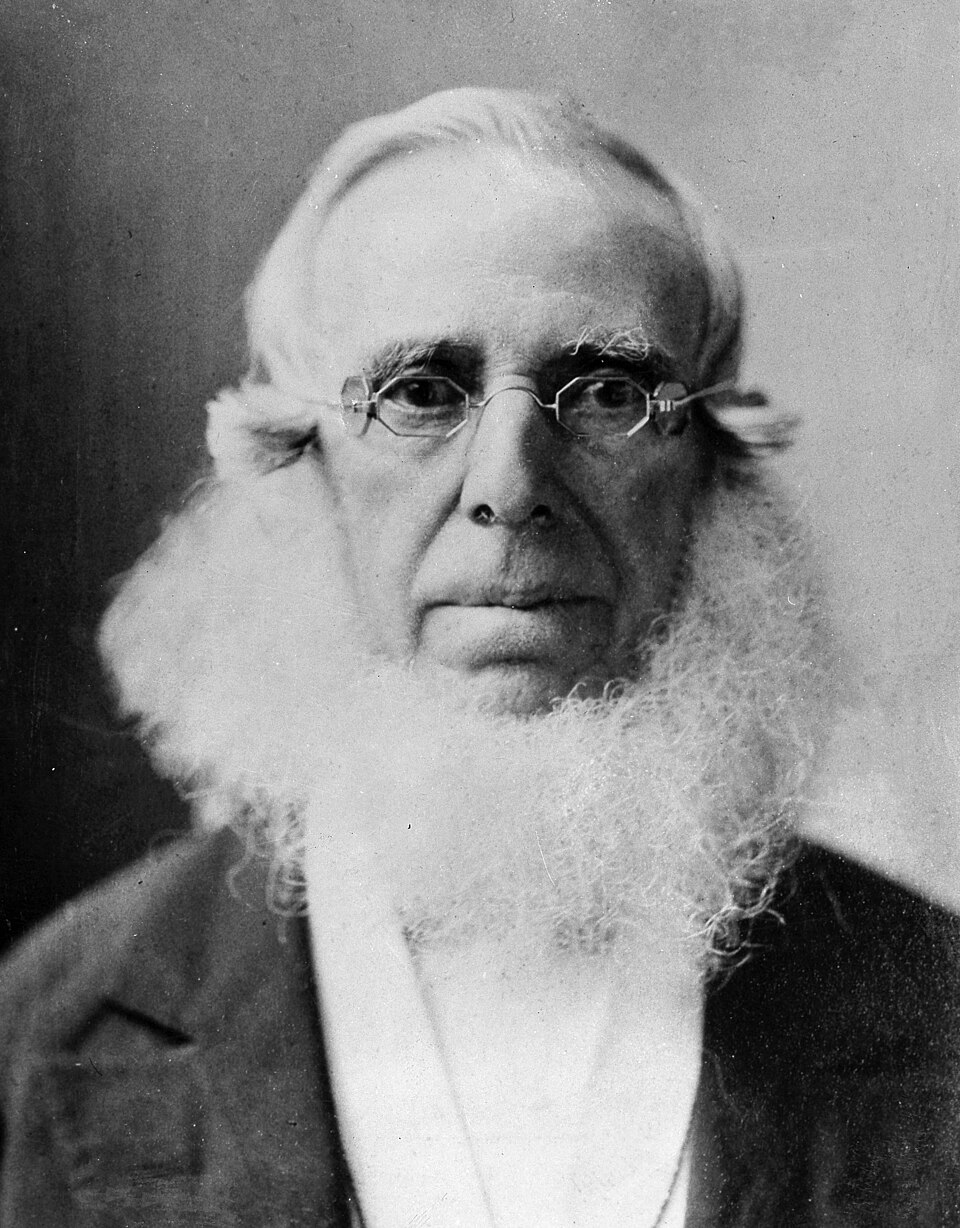
Portrait of Peter Cooper
Brown Brothers · Public Domain

The person

A life under examination

Who he was

Peter Cooper was a self-made American inventor, manufacturer, and philanthropist. He built the first American steam locomotive, the Tom Thumb, and later founded the Cooper Union for the Advancement of Science and Art in New York City, a free educational institution. He also played a crucial role in the development of the iron industry and the transatlantic telegraph cable.

Why he matters

Peter Cooper exemplified the American spirit of innovation and philanthropy. His practical inventions, such as the Tom Thumb locomotive, helped transform transportation and industry. His founding of the Cooper Union provided free education to generations of Americans, championing the idea that knowledge should be accessible to all. His life and work reflect the transformative era of 19th-century America and the power of self-education and public service.

Life in motion

Timeline

15 sourced moments across the life of Peter Cooper

Drag to travel through time · Ctrl/⌘ + scroll or pinch to zoom · Select a moment for the full account

1821

Purchased a glue factory

Cooper bought a glue factory on Sunfish Pond in Manhattan for $2,000, which became a successful business and provided capital for future ventures.

Why it matters: First major business success; funding for later industrial enterprises.

Wikipedia

Operating system

Core themes

01

Invention and Innovation

Peter Cooper was a prolific inventor who constantly sought to create new machines and improve existing ones. His most notable invention was the Tom Thumb, the first steam locomotive built in America, which demonstrated the feasibility of steam power for railroads. He also invented a washing machine, a rocking chair, and a process for manufacturing glue, among other things. His inventive spirit was characterized by a desire to do something that had never been done before.

Evidence: The source describes how Cooper was 'always planning and contriving' and never satisfied unless he was doing something difficult. It also details his inventions, including the Tom Thumb locomotive and a method to propel canal boats using water power.

02

Philanthrophy and Education

Cooper's most enduring legacy is the Cooper Union for the Advancement of Science and Art, which he founded to provide free education to working-class people. He believed that education was key to personal and societal progress, and he dedicated significant resources to making it accessible, including free reading rooms, lectures, and schools of design, particularly for women.

Evidence: The source includes quotes from Cooper's charter letter for the Cooper Union, in which he expresses his desire to 'open the volume of nature by the light of truth' and to provide education to 'the female portion of the community'.

03

Self-Made Success

Cooper's life story is a classic American success story. He started with little formal education and worked his way up through various trades, including hatter, grocer, and iron manufacturer. He believed in hard work, frugality, and perseverance, and he used his success to benefit others.

Evidence: The source notes that Cooper worked in many occupations before finding his niche, and that he spent thirty years getting a start and another thirty years accumulating means for his philanthropic work.

04

Civic Duty and Public Service

Cooper was deeply involved in the civic life of New York City. He served as an alderman and was instrumental in developing the city's water supply system. He also advocated for public education and civil service reform. He believed that with success came a responsibility to contribute to the community.

Evidence: The source describes his work on the water committee, his advocacy for the Croton aqueduct, and his formation of a police and fire service, as well as his later political activities.

05

Patriotism and National Unity

Cooper was a passionate patriot who believed in the promise of America. He supported the Union during the Civil War and promoted internal improvements that would bind the nation together. His investment in the Atlantic cable was motivated by a desire to connect the United States with Europe, symbolically bridging the gap between the Old World and the New.

Evidence: The source recounts his efforts during the Civil War to support the Union, and his financial backing of the transatlantic cable, which he saw as a means to unify the country and improve communication with the world.

06

Religious Faith and Moral Optimism

Cooper's philanthropy was deeply rooted in his religious faith and a belief in human progress. He saw the hand of God in nature and was optimistic about humanity's ability to improve itself. He believed in the inherent goodness of people and the power of education to uplift society.

Evidence: The source quotes Cooper's letter for the Cooper Union, where he speaks of unveiling 'the laws and methods of Deity' and expresses his trust in the 'progress of man to a better social condition.'

Read through your work

Key takeaways for...

Leaders

Leading with Vision and Service

Cooper was a leader in business and civic life. He didn't just manage; he inspired with a vision of common good. He built the Cooper Union, advocated for social causes, and served as an example of principled leadership. His style was personal and engaged.

  1. 01Lead by example: Cooper didn't just give money; he gave time and himself. He was involved in projects, not just a funder.
  2. 02Prepare for setbacks: Cooper's political loss and cable failures were tests of his leadership. He remained composed and persistent.
  3. 03Champion long-term goals over short-term gains: He invested in education and infrastructure, which appreciated over time.
  4. 04Be approachable and live among your people: Cooper was known by thousands. He didn't isolate himself from those he led.

In his words

Useful quotations

I was always planning and contriving, and was never satisfied unless I was doing something difficult--something that had never been done before, if possible.
Peter CooperGo to passage
While I have always recognized that the object of business is to make money in an honorable manner, I have endeavored to remember that the object of life is to do good.
Peter CooperGo to passage
I have always given a friendly welcome to new ideas, and I have endeavored not to feel too old to learn; and thus, though I stand here with the snows of so many winters upon my head, my faith in human nature, my belief in the progress of man to a better social condition, and especially my trust in the ability of men to establish and maintain self-government, are as fresh and as young as when I began to travel the path of life.
Peter CooperGo to passage
In order to better the condition of women and to widen the sphere of female employment, I have provided seven rooms to be forever devoted to a female school of design, and I desire the trustees to appropriate out of the rents of the building fifteen hundred dollars annually towards meeting the expenses of said school.
Peter CooperGo to passage
It is my desire, and I hereby ordain, that a strict conformity to rules deliberately formed by a vote of the majority of the students, and approved by the trustees, shall forever be an indispensable requisite for continuing to enjoy the benefits of this institution.
Peter CooperGo to passage
If we required a stronger stimulus to urge us to perform our duty, we have only to turn our thoughts back to that fearful day when the armies of rebellion had entered Pennsylvania with the intent to subjugate the North to their domination. Had they been successful, they would have gloried in making us pay for the loss of their slaves and the expenses of their war.
Peter CooperGo to passage
When I was born, New York contained 27,000 inhabitants. The upper limits of the city were at Chambers Street. Not a single free school, either by day or night, existed. General Washington had just entered upon his first term as President of the United States, the whole annual expenditures of which did not exceed $2,500,000, being about sixty cents per head of the population.
Peter CooperGo to passage
Sometimes I think my first plan was the best!
Peter CooperGo to passage
Not only do I think of my wife during my waking moments; she often comes to me in my dreams, sometimes once a week, sometimes once in two weeks, and sometimes at longer intervals. It is one of the greatest pleasures of my life that I can believe that she has been, and is now, my guardian angel, and it is one of my happiest hopes that I shall see that this our world is but the bud of a being that is to ripen and bear its choicest fruits in another and a better.
Peter CooperGo to passage

Put into practice

Lessons worth keeping

Embrace a 'Try Anything' Attitude

Cooper's willingness to attempt the difficult and the unprecedented, even if it meant failure, allowed him to make breakthroughs in multiple fields. He was not afraid to fail; he saw it as part of the process.

Try it: Encourage innovation by fostering a culture where calculated risks are accepted and failures are seen as learning opportunities.

Education as a Lifelong Pursuit

Cooper never stopped learning, even as an old man he welcomed new ideas. He believed that education was not just for the young but a continuous process throughout life.

Try it: Promote lifelong learning in the workplace and society, offering opportunities for people to continually upgrade their skills and knowledge.

Use Wealth for the Greater Good

Cooper saw his wealth not as an end in itself but as a means to help others. He believed that the purpose of earning money was to be able to do good for society.

Try it: Encourage philanthropy and social responsibility among business leaders, emphasizing the impact of giving back to the community.

Invest in Education to Break Cycles of Poverty

Cooper recognized that lack of education was a key barrier to social mobility. By providing free education to the working class, he aimed to give them the tools to improve their lives.

Try it: Invest in educational programs and scholarships that provide opportunities for disadvantaged groups, recognizing that education is a powerful tool for social change.

Civic Engagement is a Duty

Cooper did not shy away from public service; he saw it as his responsibility to use his skills and resources for the improvement of his city and country. He worked on water supply, public safety, and national politics.

Try it: Encourage citizens, especially successful ones, to participate in local government and civic organizations to help solve communal problems.

Perseverance Through Failure

Cooper's attempts to build a canal boat propulsion system and the initial failures of the Atlantic cable did not deter him. He believed in the underlying principles and kept pushing forward.

Try it: In the face of setbacks, maintain confidence in your core vision, analyze the causes of failure, and persist with refined strategies.

Read with judgment

Greatness, contradiction, and use

What made them great

Peter Cooper's greatness lay in his ability to fuse inventive curiosity with a moral commitment to public good. He was not a solitary genius but a practical tinkerer who turned ideas into working machines—like the Tom Thumb locomotive, which proved steam power viable on American rails. Yet his most significant invention was institutional: Cooper Union, a free school that democratized knowledge. He believed that prosperity carried a civic duty, and he acted on that belief by funding education, supporting the transatlantic cable, and advocating for civic improvements. His greatness is not in any single achievement but in the coherence of his life's work, where business success was not an end but a means to uplift others.

The central contradiction

Cooper was both a self-made capitalist and a radical egalitarian. He profited from industry while funding free education; he was a patriotic Unionist who also sought to protect Native American rights. His business ventures were often risky, yet he reinvested his gains in public works. He championed self-government while using his wealth to shape institutions. This tension reflects his belief that individual success and social progress were intertwined, but it also reveals a paradox: the very wealth he amassed through competition was used to mitigate its inequalities.

Lessons from failure

Cooper's failures are instructive. His attempt to build a canal boat propelled by water power was abandoned due to practical constraints, showing that even his inventive confidence had limits. His presidential run in 1876 was a resounding failure, garnering under one percent of the vote, revealing a disconnect between his utopian vision and political reality. Moreover, his philanthropic focus on education, while transformative, did not address structural inequalities like labor exploitation in his own factories. He was optimistic to a fault, and his failures highlight the gap between noble intentions and systemic change.

Modern relevance

Cooper's life is a blueprint for modern philanthropy and innovation. In an era of extreme inequality, his insistence that the wealthy have a moral obligation to society is piercing. His creation of a free institution like Cooper Union offers a model for accessible education in a time of student debt crises. His blend of hands-on invention and institutional building resonates with contemporary efforts to merge technology with social impact. His failures also remind us that grand visions must be tempered with political acumen and structural awareness.

How to learn from them

To learn from Cooper, one must adopt his habit of constant experimentation and his commitment to lifelong learning. He was never too old to embrace new ideas, as his 1874 speech shows. Emulate his practice of using business profits to fund public goods, but also learn from his political miscalculations: study the context, build coalitions, and be prepared for setbacks. Most importantly, follow his example of giving not just money but personal involvement—he was known and loved because he engaged directly with his beneficiaries.

Best entry point

The best entry point is the 1874 speech quoted in Chapter IX of Raymond's biography, where Cooper articulates his youthful optimism at age 83. This speech encapsulates his philosophy: welcoming new ideas, trusting human progress, and believing in self-government. It is a concise and powerful introduction to his worldview.

The human network

Key relationships

Son-in-law and business partner

Abram S. Hewitt

Hewitt married Cooper's daughter Sarah, and became a partner in the iron business, helping to expand the Trenton works and introducing the open-hearth steel process. Hewitt and Cooper's son Edward took over management of business enterprises, allowing Cooper to pursue his philanthropic interests.

Son and business partner

Edward Cooper

Edward, one of Cooper's sons, managed the family's business interests alongside Hewitt. Edward ensured the continued prosperity of the iron works and supported his father's projects.

Continue the inquiry

Related greats

Benjamin Franklin

Like Cooper, Franklin was a self-made inventor and philanthropist who founded an educational institution (the University of Pennsylvania). They shared a belief in the importance of practical knowledge and public service.

Invention · Education · Public service

George Washington

Cooper was born during Washington's presidency and later compared his own lifetime to Washington's era. Washington was a model of civic virtue that Cooper admired.

Patriotism · Civic duty

Abraham Lincoln

Cooper supported Lincoln during the Civil War and helped organize a mass meeting at the Cooper Union that boosted Lincoln's political career. Both were self-educated and believed in the American dream.

Civil War · Patriotism · Self-made success

Samuel F. B. Morse

Morse and Cooper were friends and collaborators; Cooper supported Morse's telegraph experiments and financed the Atlantic cable, which extended Morse's telegraphy across the ocean.

Invention · Telegraph

Andrew Carnegie

Carnegie, a later steel magnate and philanthropist, followed a similar path of industrial success and philanthropy, building libraries and supporting education. Both believed that the wealthy had a moral obligation to give back.

Philanthropy · Industry

Source shelf

Recommended sources

link

Peter Cooper

Raymond, Rossiter W. (Rossiter Worthington), 1840-1918

View source →

Source basis: This analysis relies primarily on Rossiter W. Raymond's biography (source 150), which draws on Cooper's own reminiscences and speeches. Wikipedia and Wikidata provide timeline and contextual details, but the core interpretations and quotes come from Raymond's firsthand account, which carries a tone of affectionate respect but also notes his failures and contradictions.

Direct answers

Frequently asked questions about Peter Cooper

What was Peter Cooper's most significant invention?

While Cooper invented many things, his most significant invention was the Tom Thumb, the first steam locomotive built in America. It was not the most commercially successful, but it proved the viability of steam power for railroads, which transformed transportation and industry. However, his most enduring creation was the Cooper Union, an institution that continues to provide free education.

Why did Peter Cooper found the Cooper Union?

Cooper founded the Cooper Union in 1859 to provide free education in science and art to working-class people, including women. He believed that education was key to personal improvement and social progress. The institution offered free courses, a reading room, and lectures, making knowledge accessible to those who could not afford traditional schooling.

Was Peter Cooper a successful businessman?

Yes, Cooper was very successful. He started with a glue factory and expanded into iron production, becoming a wealthy manufacturer. He supplied iron rails to railroads and innovated iron production using anthracite coal. His business acumen allowed him to fund his philanthropic projects.

What were Peter Cooper's political views?

Cooper was a Democrat early on, then became a Republican during the Civil War. He supported Lincoln and the Union. Later, he ran for president on the Greenback Party ticket, advocating for paper currency and financial reform. He also advocated for Native American rights and education.

How did Peter Cooper contribute to the transatlantic cable?

Cooper was one of the financiers and organizers of the New York, Newfoundland and London Telegraph Company, which aimed to lay a telegraph cable across the Atlantic. He helped secure funding and support, and though the first cable failed, the project eventually succeeded, dramatically improving global communication.

What was Peter Cooper's relationship with Abraham Lincoln?

Cooper supported Lincoln and hosted him at the Cooper Union in 1860, where Lincoln gave a famous speech that boosted his presidential campaign. Cooper was present at that event and admired Lincoln's leadership during the Civil War.

Was Peter Cooper a self-made man?

Yes, Cooper had little formal education and worked various jobs in his youth. He started his own business with a small investment and grew it through hard work and innovation. He is often cited as an example of the American dream.

What failures did Peter Cooper experience?

Cooper failed in his attempt to power canal boats with a water-driven engine, and his 1876 presidential campaign was unsuccessful. He also faced financial risks in the telegraph cable project. These failures show that his optimism sometimes outran practical constraints.
