


.jpg)
June 29, 2007
Introduces iPhone
The first iPhone is released, a multi-touch smartphone with a mobile browser, redefining the smartphone.
Why it matters: Created a platform that transformed communication and mobile computing.
Wikipedia ↗Business & Entrepreneurship · 1955–2011 AD
Co-founder of Apple, visionary leader who transformed technology and storytelling
The defining question
How can we make something wonderful that enriches human experience and expresses our deep appreciation to humanity?
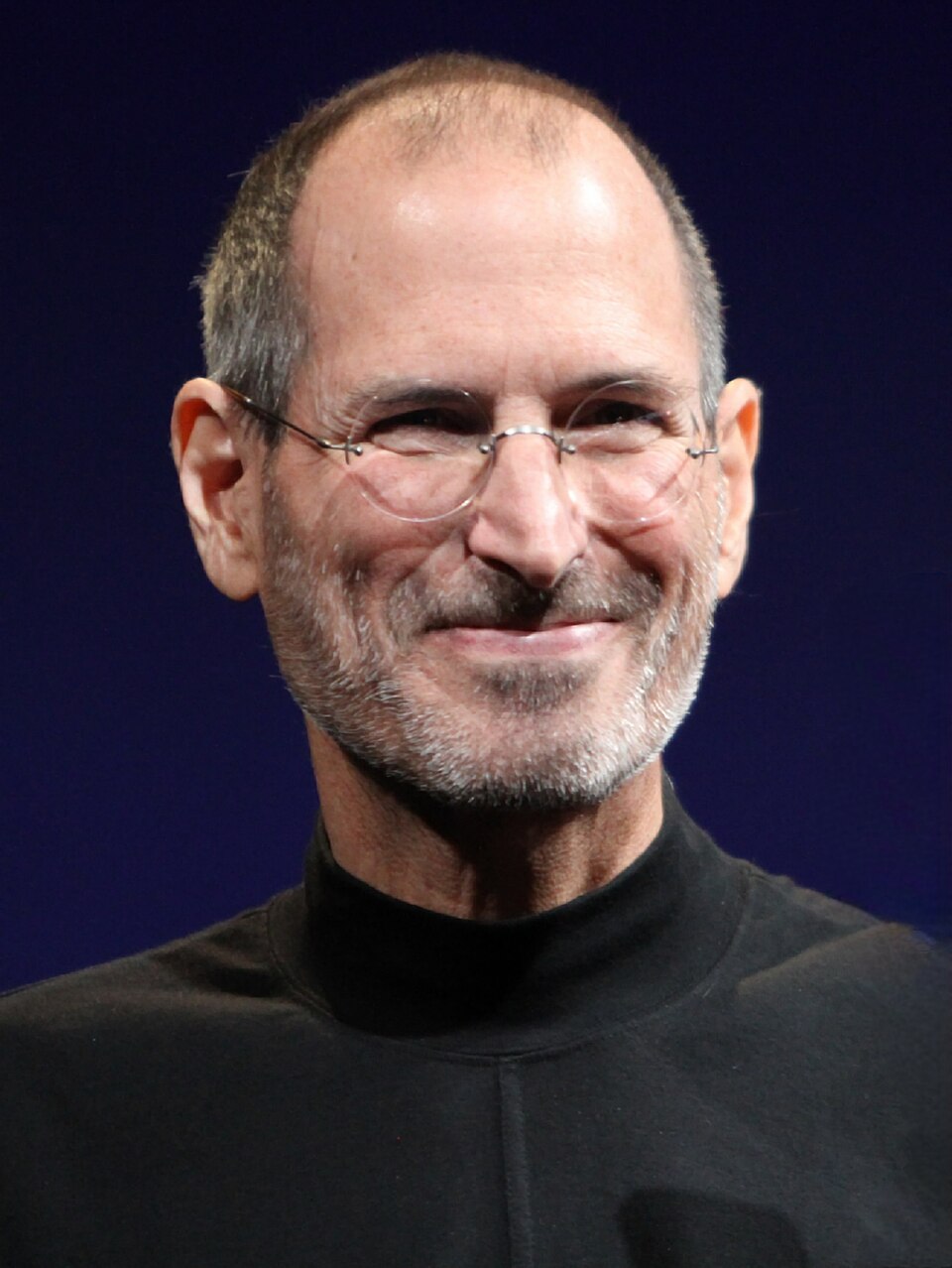
The person
Steve Jobs co-founded Apple in 1976, was ousted in 1985, then founded NeXT and Pixar. He returned to Apple in 1997, leading it to create iconic products like the iMac, iPod, iPhone, and iPad. Known for his relentless pursuit of excellence, he believed in making products that enrich people's lives.
Steve Jobs reshaped multiple industries—personal computing, animated films, music, and mobile communications—by insisting on the marriage of technology and the arts. His emphasis on intuition, simplicity, and human-centered design continues to influence how products are made and how we perceive innovation.
Life in motion
Drag to travel through time · Ctrl/⌘ + scroll or pinch to zoom · Select a moment for the full account
The first iPhone is released, a multi-touch smartphone with a mobile browser, redefining the smartphone.
Why it matters: Created a platform that transformed communication and mobile computing.
Wikipedia ↗Operating system
Steve often spoke about the importance of trusting your inner voice and following your heart, even when it leads you off the beaten path.
Evidence: In his 2005 Stanford address, he said: 'You have to trust that the dots will somehow connect in your future.'
He believed that simplicity is the ultimate sophistication, and that focus means saying no to good ideas to make room for great ones.
Evidence: In 1997 he cut 70% of Apple's product roadmap, saying 'I couldn’t even figure out the damn product line after a few weeks.'
He saw technology as a tool to express creativity and enhance human experience, not just as a functional device.
Evidence: In his 1983 Aspen speech, he said: 'What we are doing is making tools that amplify human capability.'
He viewed failures as necessary steps toward success, learning from setbacks like his ouster from Apple.
Evidence: In a 1996 interview with Terry Gross, he said: 'One of the things I always tried to coach myself on was not being afraid to fail.'
He emphasized that work should be driven by a larger purpose, not just profit.
Evidence: In 1997, he said: 'We believe that people with passion can change the world for the better.'
He aimed to create products that leave a lasting impact, to 'make something wonderful and put it out there.'
Evidence: In a 2007 speech, he said: 'One of the ways that I believe people express their appreciation to the rest of humanity is to make something wonderful and put it out there.'
Read through your work
Leaders
Leaders can draw from Jobs's transformational leadership, which turned a near-bankrupt Apple into the world's most valuable company. His return in 1997 was marked by radical simplification and a clear vision: 'Think Different.' He built a culture of excellence, demanding the best from his team, but also inspired them with a purpose larger than profits. He made tough decisions, like killing the Newton and cutting 70% of products, to focus on the future. His 'management by values' emphasized hiring people who share your vision and giving them autonomy. He was not afraid to challenge the status quo, and he communicated his vision in ways that mobilized action.
In his words
“Stay hungry. Stay foolish.”
“We believe that people with passion can change the world for the better.”
“You appear, have a chance to blaze in the sky, then you disappear.”
Put into practice
Trust that your experiences, even seemingly unrelated ones, will connect in the future to form a meaningful path.
To achieve greatness, you must ruthlessly eliminate distractions and concentrate on a few key priorities.
Failures are not setbacks but learning experiences that build character and lead to eventual success.
Hire people who share your vision and values, not just skills, and then give them autonomy.
Simplify products and processes by focusing on the essential, removing clutter and complexity.
Aim to create something that has a lasting impact and expresses appreciation to humanity.
Read with judgment
Steve Jobs' greatness lay in his ability to fuse technology and liberal arts into products that were both functional and emotionally resonant. He didn't just build computers; he built tools that amplified human capability, as he said in his 1983 Aspen speech. This vision, paired with a ruthless focus on simplicity and excellence, allowed him to revolutionize multiple industries—personal computing, animation, music, and mobile phones. His return to Apple in 1997 demonstrated his capacity to cut through clutter, eliminating 70% of the product roadmap to concentrate on a few gems, leading to iconic products like the iMac and iPhone. His greatness was not just in ideation but in execution, driven by an unyielding passion to make a dent in the universe.
Steve Jobs was a man of stark contradictions: a visionary who preached intuition and following your heart, yet he was notoriously demanding and controlling, often fostering a culture of fear. He championed the power of failure, having been ousted from Apple, yet he struggled with vulnerability and could be brutally harsh on others' work. He valued human-centered design, but his perfectionism sometimes led to delays and overwork. His Zen Buddhism-inspired minimalism contrasted with his intense, often volatile temperament. This tension between his idealistic philosophy and his autocratic behavior made him both inspiring and polarizing, suggesting that greatness often comes with a shadow side of imperfection.
Jobs' shadow side was his infamous management style, marked by tantrums, arrogance, and an insensitivity that alienated colleagues and employees. His early failure at Apple was partly due to his inability to work within a corporate structure, leading to his ouster in 1985. He could be dismissive of others' contributions, as seen in his conflicts with Andy Grove and even partners like Wozniak, who later criticized his lack of technical contribution. His single-minded focus sometimes led to tunnel vision, ignoring market feedback as with the original Macintosh's high price and limited software. Furthermore, his health struggles were exacerbated by his initial refusal to undergo surgery for his pancreatic tumor, reflecting a stubbornness that may have shortened his life.
Today, Steve Jobs' philosophy is more relevant than ever as we navigate a world saturated with technology. His emphasis on the intersection of technology and liberal arts resonates in the growing field of design thinking and user experience. His call to 'stay hungry, stay foolish' encourages a mindset of continuous curiosity and risk-taking, vital in a rapidly changing job market. His focus on simplicity as the ultimate sophistication challenges the tendency toward feature creep in software and hardware. Moreover, his belief that people with passion can change the world for the better inspires entrepreneurs to build companies with purpose, not just profit. His legacy is a blueprint for creating products that are not only functional but also meaningful.
To learn from Steve Jobs, one must adopt a holistic approach: embrace your intuition but ground it in rigorous execution. Practice focus by ruthlessly eliminating non-essentials, as he did with Apple's product line. Cultivate a deep appreciation for the arts and design, regardless of your field, to enrich your work with creativity. Accept failure as a stepping stone, but learn from it quickly, as he did after his ouster. Build teams with shared values and give them autonomy to thrive. Most importantly, aim to make a dent in the universe by creating something wonderful that expresses your deep appreciation to humanity. These principles, applied consistently, can lead to transformative innovation.
The best entry point to Steve Jobs' world is his 2005 Stanford commencement address, where he shares three stories: connecting the dots, love and loss, and death. It encapsulates his philosophy: follow your intuition, find what you love, and remember your mortality to stay focused on what truly matters. This speech is accessible, personal, and profound, offering a concise overview of his core beliefs. From there, delve into his book 'Make Something Wonderful' for a deeper look into his emails, speeches, and interviews, which reveal his evolving thinking and management style. For historical context, the Wikipedia article provides a factual timeline, enriching the understanding of his journey.
The human network
Co-founder
Wozniak and Jobs co-founded Apple, combining Wozniak's technical genius with Jobs's vision. Their partnership created the first Apple computers and the personal computer industry.
Spouse
Laurene was Steve's wife and was instrumental in the creation of the Steve Jobs Archive, where 'Make Something Wonderful' is published. She continues to preserve his legacy and support social impact initiatives.
Mentor/Peer
Grove, CEO of Intel, was a mentor and friend; their email exchanges show a mutual exchange of advice and occasional conflict. Grove's guidance influenced Jobs' business decisions, as seen in the Intel-Pixar exchange.
Colleague
Tevanian was a key figure at NeXT and later Apple, and they corresponded about the state of Apple during the turnaround. Their exchanges show Jobs' collaborative and sometimes confrontational management style.
Collaborator
Lasseter was the creative force behind Pixar's films, and Jobs enabled his vision; they worked together at Pixar for over a decade. Together they revolutionized animated filmmaking.
Continue the inquiry
Both revolutionized their respective industries through visionary product development and mass appeal, transforming personal transportation and personal computing.
Innovation · Automation · Transforming everyday life
Both were masters of combining technology and storytelling to create magical experiences, with Jobs building on Disney's legacy in animation through Pixar.
Creativity · Innovation · Animation
Both were prolific inventors and entrepreneurs who insisted on practical, marketable innovations, holding numerous patents and creating companies that shaped modern life.
Inventive spirit · Entrepreneurship · Persistence
Both are visionary tech entrepreneurs known for their demanding leadership and ambitious, world-changing products, from Tesla to SpaceX.
Visionary leadership · Disruption · Future-oriented thinking
Source shelf
link
Steve Jobs
View source →reference
Wikipedia contributors
View source →reference
Wikidata contributors
View source →Source basis: This analysis is grounded in three primary sources: Steve Jobs' own words in 'Make Something Wonderful' (Source 201), which includes speeches, emails, and interview excerpts; the Wikipedia article for factual biographical details and timeline (Source 205); and Wikidata for structured data (Source 206). The quotes used are from Source 201, with medium confidence, as they are compiled from archival material. The themes and lessons are drawn directly from Jobs' speeches and emails, providing a comprehensive view of his philosophy without reliance on secondary interpretations.
Direct answers
Steve Jobs's biggest failure was his ouster from Apple in 1985, following a power struggle with CEO John Sculley. It came from his inability to work within a corporate structure and his abrasive management style. However, he turned this failure into an opportunity, founding NeXT and acquiring Pixar, which ultimately led to his return and Apple's resurgence. This failure taught him the value of failure itself, as he later said, 'You never achieve what you want without falling on your face a few times.'
Jobs emphasized simplicity because he believed it was the ultimate sophistication. He saw complexity as a barrier to user experience and innovation. In his 1997 speech, he cut 70% of Apple's product line to focus on a few gems, stating he couldn't even figure out the product line himself. This focus allowed Apple to create intuitive, elegant products like the iPhone, which revolutionized the smartphone industry. Simplicity was not just about design but about making technology accessible and enriching human experience.
In his 2005 Stanford commencement address, Jobs used the phrase 'Stay hungry, stay foolish' to encourage graduates to maintain a sense of curiosity and a willingness to take risks, even when it might seem naive. It was borrowed from the Whole Earth Catalog, a counterculture publication. For Jobs, it meant never settling for the status quo, trusting your intuition, and pursuing your passions with a beginner's mindset, which he believed was essential for personal and professional fulfillment.
Jobs viewed failure as a necessary step toward success. After being ousted from Apple, he founded NeXT and Pixar, both of which succeeded, with Pixar revolutionizing animation. He said, 'One of the things I always tried to coach myself on was not being afraid to fail.' He believed that failures build character and provide valuable lessons. This mindset allowed him to take bold risks, like the iPhone, even when initial reception was uncertain.
Jobs saw technology as a tool to amplify human capability and creativity, not just a functional device. In his 1983 Aspen speech, he said, 'What we are doing is making tools that amplify human capability.' He believed the best products were at the intersection of technology and liberal arts, where design, aesthetics, and user experience are as important as engineering. This philosophy led to products like the Macintosh, which pioneered graphical user interfaces, and the iPod, which merged hardware with music culture.
Jobs believed that focus was about saying no to good ideas to make room for great ones. In 1997, he cut 70% of Apple's product roadmap to concentrate on the 30% that were gems. He argued that too many products dilutes quality and confuses customers. By narrowing focus, his team could channel resources into a few exceptional products, leading to breakthroughs like the iMac and iPhone. This principle is crucial for leaders and creators to avoid mediocrity.