



1910
Lionel Giles translation published
Lionel Giles published an annotated English translation of The Art of War.
Why it matters: Became the standard English version and influenced Western understanding.
Wikipedia ↗Military Leader · 544–496 BC
Ancient Chinese Military Strategist and Author of 'The Art of War'
The defining question
How can one achieve victory with the least cost, using intelligence, deception, and adaptability?
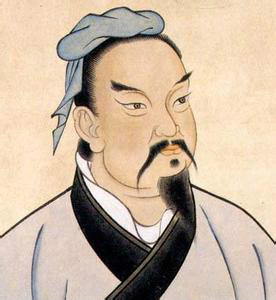
The person
Sun Tzu (Sunzi) was an ancient Chinese military general, strategist, and philosopher, traditionally believed to have been active in the 6th century BC. He is best known for his influential military treatise, 'The Art of War', which has shaped Eastern and Western military thought for centuries. His work emphasizes strategy, intelligence, deception, and adaptability, and has been applied beyond warfare to business, politics, and everyday conflict.
Sun Tzu's 'The Art of War' remains a foundational text on strategy, applicable beyond warfare to business, politics, and everyday conflict. His principles on intelligence, deception, and adaptability continue to inform leaders globally. His teachings have transcended millennia, influencing military doctrine, corporate strategy, and personal development.
Life in motion
Drag to travel through time · Ctrl/⌘ + scroll or pinch to zoom · Select a moment for the full account
Lionel Giles published an annotated English translation of The Art of War.
Why it matters: Became the standard English version and influenced Western understanding.
Wikipedia ↗Operating system
Sun Tzu emphasizes that strategy, not brute force, determines victory. The highest form of generalship is to outthink the opponent.
Evidence: 'All warfare is based on deception.' (Ch. 1) 'To fight and conquer in all your battles is not supreme excellence; supreme excellence consists in breaking the enemy's resistance without fighting.' (Ch. 3)
Knowing oneself, the enemy, and the environment is essential. He advocates extensive intelligence and reconnaissance.
Evidence: 'If you know the enemy and know yourself, you need not fear the result of a hundred battles.' (Ch. 3) 'The whole secret lies in confusing the enemy, so that he cannot fathom our real intent.' (Ch. 7)
Feigning weakness, attacking unexpected points, and creating false appearances are fundamental tactics.
Evidence: 'When able to attack, we must seem unable; when using our forces, we must seem inactive; when we are near, we must make the enemy believe we are far; when far, we must make him believe we are near.' (Ch. 1)
Rigid plans fail; commanders must adapt to changing conditions on the ground.
Evidence: 'Just as water retains no constant shape, so in warfare there are no constant conditions.' (Ch. 6) 'He who can modify his tactics in relation to his opponent and thereby succeed in winning, may be called a heaven-born captain.' (Ch. 6)
A general must be wise, humane, strict, and maintain order. Proper rewards and punishments are crucial.
Evidence: 'The general must be the first in the toils and fatigues of the army.' (Ch. 10) 'Regard your soldiers as your children, and they will follow you into the deepest valleys; look upon them as your own beloved sons, and they will stand by you even unto death.' (Ch. 10) However, if too indulgent, they become like 'spoilt children.'
Victory often depends on choosing advantageous ground and controlling the battlefield.
Evidence: 'All armies prefer high ground to low and sunny places to dark.' (Ch. 11) 'Study the ground and take advantage of it.' (Ch. 10)
Prolonged war drains resources. Victory should be swift, and the army should be nimble.
Evidence: 'There is no instance of a country having benefited from prolonged warfare.' (Ch. 2) 'Speed is the essence of war.' (Ch. 11)
Sun Tzu emphasizes the importance of careful planning and assessment before engaging in conflict. The 'five factors' and 'seven considerations' provide a framework for evaluating the situation and determining the likelihood of success.
Evidence: In Chapter I, Sun Tzu outlines the five constant factors: Moral Law, Heaven, Earth, The Commander, and Method and discipline. He states: 'These five heads should be familiar to every general: he who knows them will be victorious; he who knows them not will fail.'
Sun Tzu stresses the need to adapt tactics based on circumstances, terrain, and the enemy's actions. He emphasizes fluidity and flexibility, likening the army to water, which takes the shape of the ground it flows over.
Evidence: In Chapter VI, he writes: 'Water shapes its course according to the ground over which it flows; the soldier works out his victory in relation to the foe whom he is facing. Therefore, just as water retains no constant shape, so in warfare there are no constant conditions.'
Sun Tzu highlights the critical role of intelligence in warfare, advocating the extensive use of spies to know the enemy's plans and weaknesses. He devotes an entire chapter to the types of spies and their proper employment.
Evidence: In Chapter XIII, he states: 'What enables the wise sovereign and the good general to strike and conquer, and achieve things beyond the reach of ordinary men, is foreknowledge.' He further explains the five classes of spies: local, inward, converted, doomed, and surviving.
Sun Tzu stresses the importance of winning without excessive cost, advocating for strategies that achieve victory with minimal loss of life and resources. He warns against prolonged warfare.
Evidence: In Chapter II, he says: 'There is no instance of a country having benefited from prolonged warfare. It is only one who is thoroughly acquainted with the evils of war that can thoroughly understand the profitable way of carrying it on.'
Read through your work
Leaders
Sun Tzu matters to leaders because their life offers a concrete study of joining responsibility with self-command and service.
In his words
“If you know the enemy and know yourself, you need not fear the result of a hundred battles.”
“The consummate leader cultivates the moral law, and strictly adheres to method and discipline; thus it is in his power to control success.”
Put into practice
Thorough self-assessment and understanding of the opponent are prerequisites for success. Ignorance invites defeat.
The ideal victory is achieved through strategy, diplomacy, or psychological dominance, not direct confrontation.
Create misdirection to control perceptions and actions of opponents.
Rigid adherence to plans leads to failure. Adjust tactics based on real-time feedback.
Prolonged conflict exhausts resources. Quick, decisive action prevents attrition.
Leaders must balance strictness and compassion to earn loyalty and maintain order.
Focus efforts on where the opponent is vulnerable, not where they are strong.
Sun Tzu teaches that before any engagement, one must thoroughly assess the situation using the 'five factors' and 'seven considerations'.
Deception is a key tool to mislead opponents and create advantages. However, it must be used with integrity and within ethical bounds.
Read with judgment
Sun Tzu joined Supreme importance of strategy, Knowledge as key to victory, Deception and surprise with a life that made those principles consequential rather than merely theoretical.
Sun Tzu's ideals must be studied alongside the consequences, relationships, and institutional pressures visible in Lionel Giles's connection to their life.
Learning from Sun Tzu requires examining failures, blind spots, and outcomes as seriously as admired ideas. Greatness is evidence for study, not immunity from criticism.
Sun Tzu remains relevant wherever people face responsibility, uncertainty, competing incentives, and the challenge of turning principles into conduct.
Begin with The Art of War, compare it with reliable reference sources, then test Know thy enemy and thyself in a real decision.
Start with The Art of War. Read for the central ideas, then compare those ideas with the timeline and relationships on this page.
The human network
Translator
Lionel Giles translated The Art of War into English in 1910, providing extensive notes. His translation introduced Sun Tzu to the English-speaking world and remains influential.
Editor
Sun Hsing-yen, a Qing dynasty scholar, compiled a critical edition of 'The Art of War' that became the basis for many modern translations. His edition helped standardize the text.
Contemporary Strategist
Ssu-ma Jang-chu was a military strategist believed to have written a work on war, possibly contemporary with Sun Tzu. His work provides a comparison for military thought of that period.
Continue the inquiry
Mao studied Sun Tzu and applied principles of deception and guerrilla warfare. Comparison: Mao adapted Sun Tzu's ideas to revolutionary war.
Deception · Adaptability · Knowledge of enemy
Clausewitz's 'On War' is a Western counterpart. Comparison: Clausewitz emphasizes friction and policy; Sun Tzu emphasizes deception and minimal conflict.
Strategy · War and policy · Leadership
Machiavelli's 'The Prince' discusses strategy and realism. Comparison: Both value pragmatism, but Machiavelli focuses on political power while Sun Tzu focuses on military.
Deception · Pragmatism · Leadership
MacArthur read Sun Tzu and referenced him. Comparison: MacArthur's island-hopping campaign exemplifies indirect approach akin to Sun Tzu's teachings.
Strategy · Surprise · Terrain
Both wrote influential works on strategy and power. Machiavelli's 'The Prince' parallels Sun Tzu's teachings on deception and statecraft, though from a different cultural and historical perspective.
Deception · Leadership · Power
Clausewitz's 'On War' is a Western military classic that contrasts with Sun Tzu's approach, emphasizing moral force and friction, while both stress the importance of strategy.
Strategy · War · Command
Napoleon is often cited as a military commander who exemplified principles akin to Sun Tzu, such as rapid movement and surprise.
Speed · Surprise · Tactics
Lao Tzu, a contemporary perhaps, wrote the Tao Te Ching, which shares philosophical themes of non-action and adaptability, influencing Sun Tzu's thought.
Naturalness · Flexibility
Source shelf
link
Sunzi (Sun Tzu)
View source →reference
Wikipedia contributors
View source →reference
Wikidata contributors
View source →Source basis: This profile draws on The Art of War, Sun Tzu — Wikipedia, Sun Tzu — Wikidata. Source-backed claims and quotations retain provenance where available.
Direct answers
Sun Tzu (Sunzi) was an ancient Chinese military general, strategist, and philosopher, traditionally believed to have been active in the 6th century BC. He is best known for his influential military treatise, 'The Art of War', which has shaped Eastern and Western military thought for centuries. His work emphasizes strategy, intelligence, deception, and adaptability, and has been applied beyond warfare to business, politics, and everyday conflict.
Sun Tzu's 'The Art of War' remains a foundational text on strategy, applicable beyond warfare to business, politics, and everyday conflict. His principles on intelligence, deception, and adaptability continue to inform leaders globally. His teachings have transcended millennia, influencing military doctrine, corporate strategy, and personal development.
Thorough self-assessment and understanding of the opponent are prerequisites for success. Ignorance invites defeat.
The core ideas highlighted by this profile are Supreme importance of strategy, Knowledge as key to victory, Deception and surprise, Adaptability and flexibility.
Sun Tzu joined Supreme importance of strategy, Knowledge as key to victory, Deception and surprise with a life that made those principles consequential rather than merely theoretical.
Lionel Giles translated The Art of War into English in 1910, providing extensive notes. His translation introduced Sun Tzu to the English-speaking world and remains influential.
Start with The Art of War, Sun Tzu — Wikipedia, Sun Tzu — Wikidata, then compare primary texts with reliable historical reference sources.