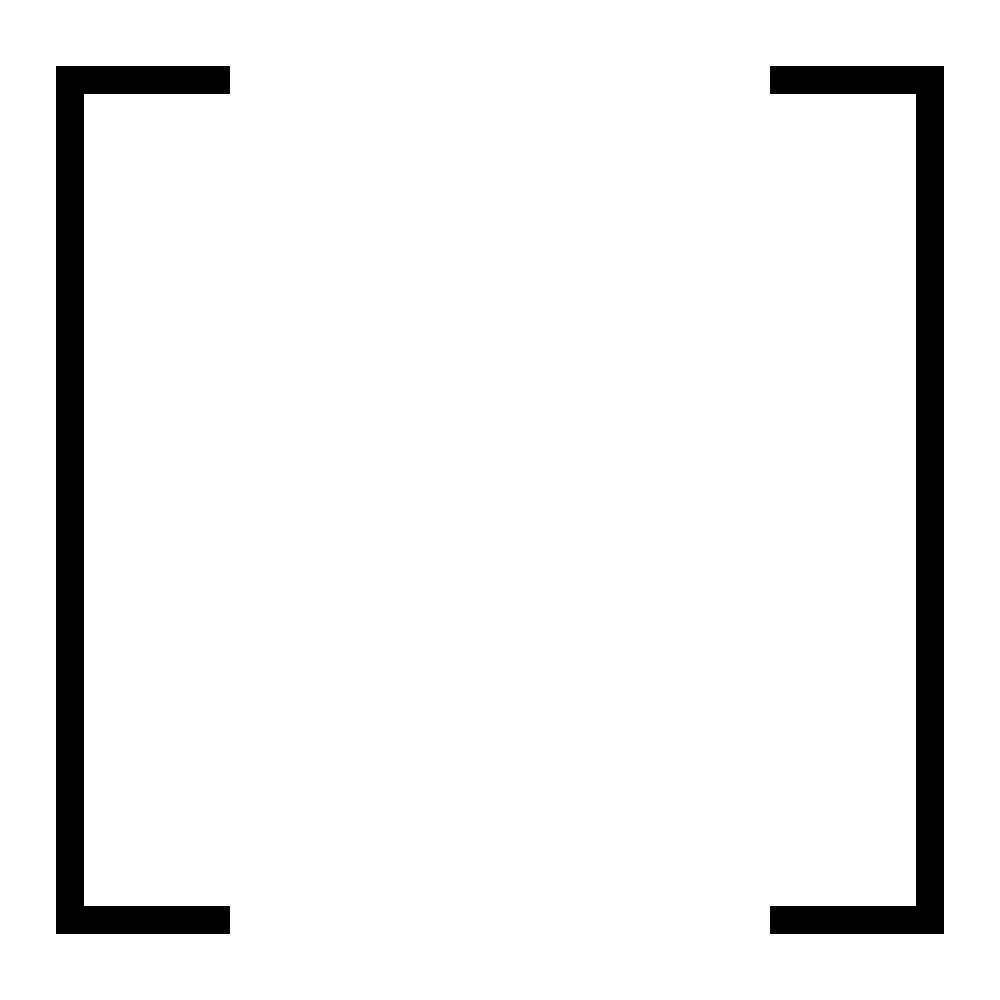
rsection between the several spheres in both layers be formed, there will result a double layer of hexagonal prisms united together by pyramidal bases formed of three rhombs; and the rhombs and the sides of the hexagonal prisms will have every angle identically the same with the best measurements which have been made of the cells of the hive-bee. But I hear from Professor Wyman, who has made numerous careful measurements, that the accuracy of the workmanship of the bee has been greatly exaggerated; so much so, that whatever the typical form of the cell may be, it is rarely, if ever, realised. Hence we may safely conclude that, if we could slightly modify the instincts already possessed by the Melipona, and in themselves not very wonderful, this bee would make a structure as wonderfully perfect as that of the hive-bee. We must suppose the Melipona to have the power of forming her cells truly spherical, and of equal sizes; and this would not be very surprising, seeing that she already does so to a certain extent, and seeing what perfectly cylindrical burrows many insects make in wood, apparently by turning round on a fixed point. We must suppose the Melipona to arrange her cells in level layers, as she already does her cylindrical cells; and we must further suppose, and this is the greatest difficulty, that she can somehow judge accurately at what distance to stand from her fellow-labourers when several are