Scientist & Inventor · 1809–1882 AD

Charles Darwin

Naturalist and author of 'On the Origin of Species'

The defining question

How does the diversity and adaptation of life arise without supernatural intervention?

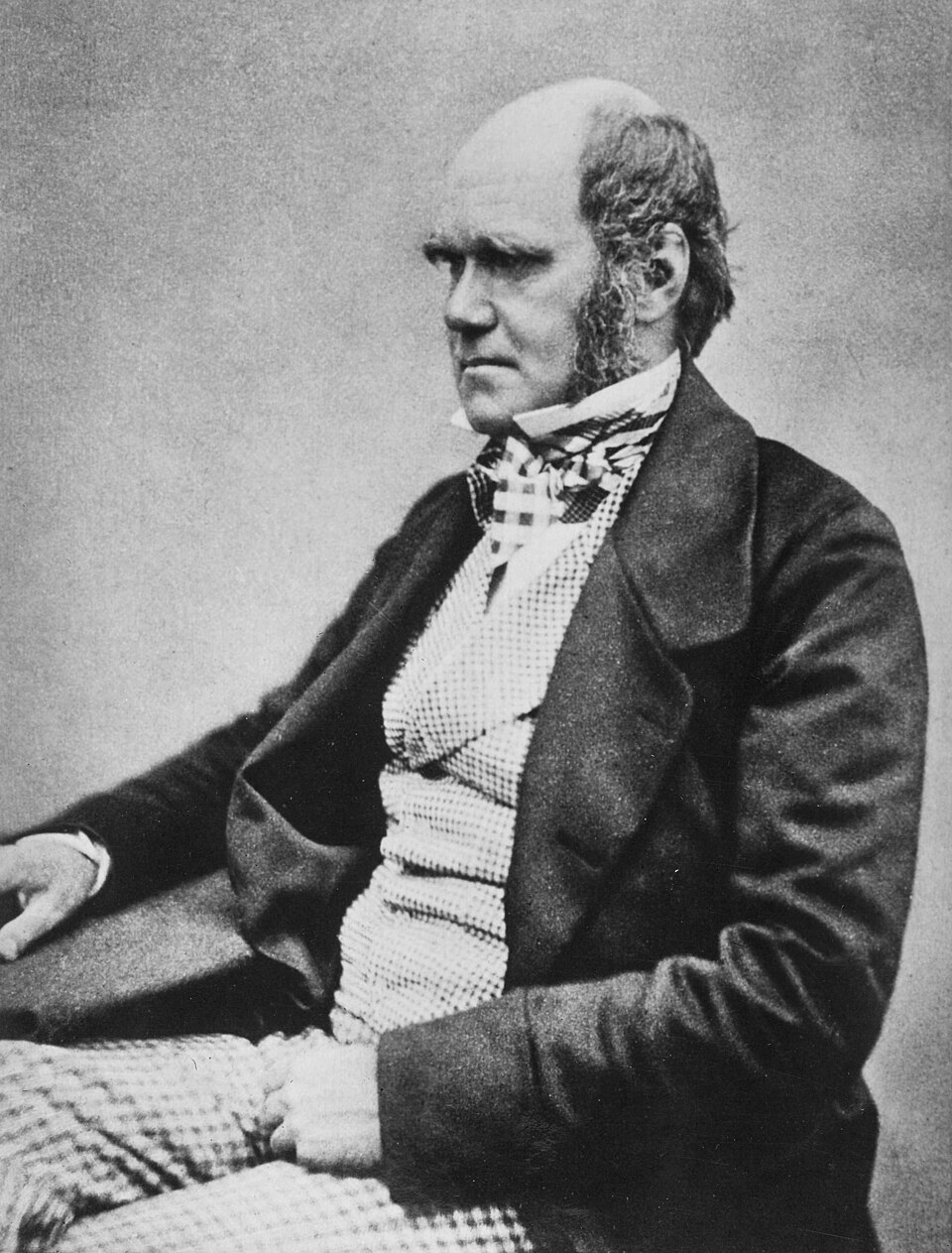
Portrait of Charles Darwin
Charles_Darwin_seated.jpg : Henry Maull (1829–1914) and John Fox (1832–1907) (Maull & Fox) [ 3 ] derivative work: Bea o · Public Domain

The person

A life under examination

Who he was

Charles Darwin (1809-1882) was an English naturalist whose theory of evolution by natural selection revolutionized biology. In 'On the Origin of Species' (1859), he presented a compelling body of evidence that species change over time and that new species arise from common ancestors. His work provided a unifying explanation for the diversity of life and fundamentally altered humanity's understanding of its place in nature.

Why he matters

Darwin's theory of evolution by natural selection is one of the most influential scientific ideas in history. It provided a mechanism for the change of species that was grounded in observable processes, transforming biology and sparking widespread debate. His method of careful observation, experimentation, and synthesis of evidence set a new standard for scientific inquiry.

Life in motion

Timeline

24 sourced moments across the life of Charles Darwin

Drag to travel through time · Ctrl/⌘ + scroll or pinch to zoom · Select a moment for the full account

1831-1836

Voyage of HMS Beagle

Darwin sailed as a self-funded naturalist on HMS Beagle, exploring South America, the Galápagos, and other regions, collecting specimens and making geological observations.

Why it matters: The voyage provided the empirical foundation for his theory of evolution by natural selection.

Wikipedia

Operating system

Core themes

01

Natural Selection

The central mechanism of evolution, where organisms with advantageous traits are more likely to survive and reproduce, leading to the gradual accumulation of favorable variations.

Evidence: Darwin uses the analogy of artificial selection by breeders and applies it to nature: 'But what is done in this latter case "by art, seems to be done with equal efficacy, though more slowly, by nature" (quoting Dr. Wells). He also describes the 'struggle for existence' as a driving force.

02

Descent with Modification

The idea that all organisms share common ancestors and that species change over time, with modifications accumulated through generations.

Evidence: Darwin's tree of life metaphor: 'The affinities of all the beings of the same class have sometimes been represented by a great tree... The green and budding twigs may represent existing species; and those produced during former years may represent the long succession of extinct species.'

03

The Role of Environment

Environmental conditions influence variation and selection, but the organism's nature is more important; changed conditions can directly or indirectly cause variability.

Evidence: Darwin states, 'In all cases there are two factors, the nature of the organism, which is much the most important of the two, and the nature of the conditions.' He also discusses how climate affects fur thickness and color.

04

Gradualism and Deep Time

Evolution occurs through slow, gradual changes over vast periods, as evidenced by the geological record and distribution of species.

Evidence: Darwin relies on geologists like Croll and Lyell to propose that glacial cycles over hundreds of thousands of years have shaped species distributions. He also notes that 'time by itself not causing modification'.

05

Importance of Evidence and Experiment

Darwin's approach combines observation, experimentation (e.g., with bee cells), and synthesis of evidence from diverse fields like geology, paleontology, and biogeography.

Evidence: He describes experiments with wax to test bee cell construction: 'Following the example of Mr. Tegetmeier, I separated two combs, and put between them a long, thick, rectangular strip of wax.'

06

Geological Change and Deep Time

Darwin's observations of rock formations, fossils, and seismic activity reveal a planet in constant transformation over immense timescales, challenging conventional views of Earth's history.

Evidence: In the Pampas, he finds marine shells and fossils of extinct terrestrial mammals, showing the land rose from the sea. At the Andes, he sees granite and sedimentary layers upheaved by ancient forces, leading him to conclude 'all-powerful time can grind down mountains'.

07

Adaptation and Species Distribution

Darwin keenly observes how organisms are uniquely adapted to their environments, such as the marine iguanas of the Galapagos being herbivorous and aquatic, and how species vary across similar ecological niches.

Evidence: He describes marine iguanas with flattened tails and webbed feet for swimming, yet they avoid the water when frightened, an instinct he ties to safety. He also notes the distinct distributions of land iguanas across the islands.

08

Extinction and the Fossil Record

Throughout the voyage, Darwin uncovers fossils of huge extinct creatures like the Toxodon and Mastodon, prompting him to consider the dynamic history of life and the causes of extinction.

Evidence: At St. Fé, he finds mastodon skeletons in cliffs and the osseous armour of a gigantic armadillo-like animal. These discoveries, alongside living armadillos, led him to contemplate species' longevity and extinction.

09

Human Barbarism and Colonial Encounters

Darwin's journal records the harsh realities of slavery, violence, and colonial exploitation he witnessed in South America, reflecting the moral complexities of his era.

Evidence: In Brazil, he describes the treatment of slaves and expresses his abhorrence. In Argentina, he notes Governor Lopez's massacre of forty-eight Indians and sale of children for a few pounds each, a practice he records without overt criticism.

010

The Power of Observation and Method

Darwin's scientific approach involves careful observation, experimentation, and a willingness to question received wisdom, as seen in his studies of animal behavior and geology.

Evidence: He conducts experiments with marine iguanas, throwing them into the water to test their swimming; he opens their stomachs to confirm herbivory. He also uses the work of Lyell's 'Principles of Geology' to interpret the landscape.

011

Nature's Wonder and Aesthetic Appreciation

Amidst scientific detail, Darwin expresses profound aesthetic pleasure in landscapes, from the 'glorious' sunset in the Andes to the 'superb' date-palms, showing a deep emotional connection to nature.

Evidence: He writes of the Andes: 'The setting of the sun was glorious; the valleys being black, whilst the snowy peaks of the Andes yet retained a ruby tint.' He also calls a group of date-palms 'superb.'

Read through your work

Key takeaways for...

Leaders

Leading with evidence, adaptability, and a moral compass

Darwin offers a model for leadership: he was methodical, collaborative, and humble despite his achievements. He built a network of peers (Lyell, Hooker, Huxley) to refine and defend his ideas. He showed, by acknowledging Wallace, that sharing credit can strengthen one’s legacy. In the face of controversy, he didn't retreat but let evidence speak. His moral awareness of colonial injustices suggests that leaders should consider ethical implications.

  1. 01Build a coalition of advisors: Darwin depended on Lyell and Hooker. Surround yourself with people who can critique and defend your ideas.
  2. 02Share credit generously: Darwin co-presented with Wallace, acknowledging his contribution. This built trust and legacies.
  3. 03Let evidence guide decisions: Darwin's theory was based on overwhelming data. Make decisions based on sound information, not assumptions.
  4. 04Embrace humility: Darwin admitted ignorance and changed his mind when necessary. Humility enhances credibility.

In his words

Useful quotations

The affinities of all the beings of the same class have sometimes been represented by a great tree. I believe this simile largely speaks the truth.
On the Origin of SpeciesGo to passage
I have hitherto sometimes spoken as if the variations—so common and multiform with organic beings under domestication, and in a lesser degree with those under nature—were due to chance. This, of course is a wholly incorrect expression, but it serves to acknowledge plainly our ignorance of the cause of each particular variation.
On the Origin of SpeciesGo to passage
From the experiment of the ridge of vermilion wax we can see that, if the bees were to build for themselves a thin wall of wax, they could make their cells of the proper shape, by standing at the proper distance from each other, by excavating at the same rate, and by endeavouring to make equal spherical hollows, but never allowing the spheres to break into each other.
On the Origin of SpeciesGo to passage
Hence we may safely conclude that, if we could slightly modify the instincts already possessed by the Melipona, and in themselves not very wonderful, this bee would make a structure as wonderfully perfect as that of the hive-bee.
On the Origin of SpeciesGo to passage
In all cases there are two factors, the nature of the organism, which is much the most important of the two, and the nature of the conditions.
On the Origin of SpeciesGo to passage
Considering how flexible thin wax is, I do not see that there is any difficulty in the bees, whilst at work on the two sides of a strip of wax, perceiving when they have gnawed the wax away to the proper thinness, and then stopping their work.
On the Origin of SpeciesGo to passage
It is very difficult to decide how far changed conditions, such as of climate, food, &c., have acted in a definite manner. There is reason to believe that in the course of time the effects have been greater than can be proved by clear evidence.
On the Origin of SpeciesGo to passage
It is well in this case to call to mind the vast shingle and sedimentary beds of Patagonia, which, if heaped on the Cordillera, would increase its height by so many thousand feet. When in that country, I wondered how any mountain-chain could have supplied such masses, and not have been utterly obliterated. We must not now reverse the wonder, and doubt whether all-powerful time can grind down mountains—even the gigantic Cordillera—into gravel and mud.
The Voyage of the BeagleGo to passage
Perhaps this singular piece of apparent stupidity may be accounted for by the circumstance that this reptile has no enemy whatever on shore, whereas at sea it must often fall a prey to the numerous sharks. Hence, probably, urged by a fixed and hereditary instinct that the shore is its place of safety, whatever the emergency may be, it there takes refuge.
The Voyage of the BeagleGo to passage
These two species of Amblyrhynchus agree, as I have already stated, in their general structure, and in many of their habits. Neither have that rapid movement, so characteristic of the genera Lacerta and Iguana. They are both herbivorous, although the kind of vegetation on which they feed is so very different.
The Voyage of the BeagleGo to passage

Put into practice

Lessons worth keeping

Observation and Evidence Over Dogma

Darwin amassed a wealth of evidence from diverse fields, challenging prevailing belief in species fixity. He relied on careful observation and experimentation rather than authority.

Try it: In any field, base conclusions on empirical data, not tradition or preconceived notions.

Embrace Gradual Change

Evolution proceeds through small, incremental steps over vast time, not sudden leaps. This patience in processes is key.

Try it: In personal growth or organizational change, expect slow progress; significant results require persistence.

The Power of Analogy

Darwin used the analogy of artificial selection by breeders to illustrate natural selection, making a complex idea accessible.

Try it: Use relatable analogies to communicate complex concepts effectively.

Question Certainty

Darwin admitted ignorance about the causes of variation, using 'chance' as a placeholder. He was willing to say 'we don't know yet.'

Try it: Acknowledge the limits of current knowledge; uncertainty can be a stepping stone for further inquiry.

Test Your Ideas

Darwin didn't just theorize; he conducted experiments (e.g., with bees) to test predictions derived from his theory.

Try it: Don't just speculate; design experiments or tests to validate your hypotheses.

Consider Multiple Factors

Darwin recognized that variations arise from both internal nature and external conditions, emphasizing the organism's role.

Try it: When analyzing outcomes, consider both internal predispositions and external circumstances, not just one.

Observation Leads to Insight

Careful, systematic observation of natural phenomena can yield profound insights that challenge existing beliefs.

Try it: In science, business, or daily life, taking time to observe without preconceptions can reveal hidden patterns.

Question Common Knowledge

Local myths and common explanations are not always correct; evidence-based inquiry often overturns them.

Try it: Critical thinking is essential in an age of misinformation; verify claims through data.

Embrace Interdisciplinarity

Integrating multiple fields—geology, biology, anthropology—can provide a holistic understanding of complex issues.

Try it: Modern problems like climate change require interdisciplinary solutions.

Read with judgment

Greatness, contradiction, and use

What made them great

Darwin’s greatness rests on his unique combination of meticulous observation, radical synthesis, and experimental testing. His five-year voyage on the Beagle (1831–1836) furnished him with a mass of geological and biological evidence, from Patagonian fossils to Galápagos finches and iguanas. He then spent two decades methodically building a case for evolution by natural selection, culminating in On the Origin of Species (1859). Crucially, he did not merely hypothesize; he conducted experiments, such as dissecting marine iguanas and testing how bees build hexagonal cells with wax strips. His willingness to question accepted wisdom—like the idea of species fixity—and to embrace a unifying mechanism grounded in observable processes set a new standard for scientific inquiry. Moreover, his intellectual honesty, demonstrated when he immediately acknowledged Alfred Russel Wallace’s independent discovery and arranged a joint presentation, reveals a man devoted to truth over personal glory.

The central contradiction

Darwin was both a revolutionary and a cautious Victorian gentleman. He amassed overwhelming evidence for evolution, yet he delayed publishing for over two decades, partly due to fear of controversy and religious backlash. He used the word chance to describe variation, while acknowledging that the underlying causes were not yet known. He admitted his ignorance about the mechanisms of heredity—despite his theory relying on it—and even proposed a speculative theory of pangenesis. Furthermore, he benefited from and participated in colonial exploration, yet he was morally repulsed by slavery. His scientific method was revolutionary, but his personal life was conventional, marrying his cousin Emma, attending church, and seeking social acceptance.

Lessons from failure

Darwin’s greatest failure was his inability to provide a mechanism for heredity and variation. He recognized this gap but could not solve it, leading to his erroneous pangenesis hypothesis. Additionally, his theory could not explain the sudden appearance of new species in the fossil record, and he struggled with the problem of the eye’s complexity. He also failed to recognize the importance of Gregor Mendel’s work, which could have provided the missing genetic framework. On a personal level, his reluctance to publish resulted in Wallace nearly beating him to natural selection. His reliance on colonial networks and his descriptions of indigenous peoples, such as noting the massacre of forty-eight Indians without overt condemnation in The Voyage of the Beagle, show a man shaped by his era, even as he abhorred slavery.

Modern relevance

Darwin’s method of integrating multiple lines of evidence—geology, paleontology, biogeography, and experimental biology—is more relevant than ever in an age of specialized research. His emphasis on testing hypotheses through experiment, as with his bee cell studies, mirrors modern scientific rigor. His theory of natural selection remains the cornerstone of biology, now enriched by genetics. Moreover, his insight that ‘the nature of the organism’ is paramount, alongside conditions, anticipates debates on nature versus nurture. His historical context—including the colonial violence he witnessed—reminds us that science is not detached from ethical and social issues. His honesty about ignorance and uncertainty encourages humility in scientific inquiry, and his use of analogies, like the tree of life, offers lessons in communication.

How to learn from them

To learn from Darwin, one must emulate his method: observe without preconceptions, collect diverse evidence, and test hypotheses rigorously. Study his approach to the bee cells—how he designed experiments to test a prediction derived from his theory. Embrace gradualism in your own work, understanding that breakthrough insights often require years of accumulation. Adopt his practice of questioning common knowledge, as he did mockingly when locals told him the mastodon fossils were burrowing animals—he knew from anatomy they were elephants. Read his journals to see how he documented everything, and his Origin to see how he structured a compelling, evidence-based argument. Most importantly, cultivate intellectual honesty: he publicly acknowledged Wallace’s contribution and admitted his own ignorance about variation, showing that scientific advancement is collective and uncertain.

Best entry point

For modern readers, The Voyage of the Beagle is the most accessible and engaging introduction to Darwin’s thought. It reveals his observational brilliance and the foundational experiences that led to his theory. The journal’s vivid descriptions, from the glorious sunset in the Andes to the marine iguanas of the Galápagos, show a naturalist who is both scientist and humanist. One can see the gradual accumulation of evidence—fossils, geological formations, species distributions—that later crystallized into natural selection. Reading the chapter on Chile, where he marvels at the power of deep time to grind down mountains, perhaps provides the best insight into his geological thinking. On the Origin of Species can then be read with this context, making its abstract arguments tangible.

The human network

Key relationships

influencer

Charles Lyell

Lyell's geological principles of uniformitarianism influenced Darwin's thinking on deep time. Provided the temporal framework for natural selection.

grandfather

Erasmus Darwin

Erasmus Darwin had earlier proposed evolutionary ideas. Shows intellectual lineage; Darwin acknowledges his grandfather's anticipations.

Scientific Mentor

Charles Lyell

Darwin dedicated the second edition to Lyell, stating that his 'Principles of Geology' was the chief source of whatever scientific merit his works possess. Lyell's uniformitarianism deeply influenced Darwin's geological thinking.

Continue the inquiry

Related greats

Alfred Russel Wallace

Co-discoverer of natural selection; their independent work led to a joint presentation.

Natural selection · Biogeography

Jean-Baptiste Lamarck

Earlier evolutionary theorist whose mechanism Darwin critiqued and improved upon.

Evolution · Species change

Charles Lyell

Geologist whose uniformitarian principles provided the deep time necessary for evolution.

Deep time · Uniformitarianism

Thomas Henry Huxley

Vigorous public defender of Darwin's theory, nicknamed 'Darwin's Bulldog'.

Evolution advocacy

Alexander von Humboldt

Explorer and naturalist whose travel writings inspired Darwin's voyage.

Exploration · Scientific observation · Nature writing

Gregor Mendel

His work on heredity provided the genetic mechanism missing from Darwin's theory.

Heredity · Biological variation · Genetics

Source shelf

Recommended sources

Source basis: This analysis draws primarily on Darwin’s own writings: On the Origin of Species (Project Gutenberg sixth edition) and The Voyage of the Beagle. These sources provide direct access to his methods, theories, and observations. The Wikipedia article supplies biographical context and timeline, while Wikidata offers structured data. The quotes from Origin illustrate key concepts like the tree of life, the role of chance, and experiments on bees. The Voyage provides evidence of his geological reasoning, observations of adaptations, and encounters with colonial violence. Together, these sources support interpretations of his greatness, contradictions, and shadow side, though we rely on secondary sources for some biographical details, such as his reading of Malthus and his delays in publication.

Direct answers

Frequently asked questions about Charles Darwin

What was Darwin's main method of investigation?

Darwin combined careful observation, experimentation, and synthesis of evidence from diverse fields. On the Beagle he observed fossils, geology, and species distributions. Later, he conducted experiments, such as testing bee cell construction with wax strips. He also integrated insights from geologists like Lyell and paleontological data, building a comprehensive case for natural selection.

Why did Darwin delay publishing his theory for over 20 years?

Darwin delayed publication due to a combination of factors: he wanted to gather exhaustive evidence, feared controversy and religious backlash, and was a cautious perfectionist. He was also dealing with chronic illness and family matters. It was only when Alfred Russel Wallace sent him an independent outline of natural selection that he was prompted to publish, as evidenced in the historical sketch in Origin.

What role did experiments play in Darwin's work?

Experiments were crucial. For example, he tested his hypothesis about bee cell formation by placing wax strips in hives and observing the bees' behavior. He also conducted simple experiments with iguanas, throwing them into the sea to test their swimming ability. This experimental approach distinguished him from many contemporaries and strengthened his arguments.

How did Darwin view 'chance' in evolution?

Darwin used 'chance' to describe variations, but he explicitly clarified that this was an incorrect expression, as he didn't know the causes. He stated: 'This, of course is a wholly incorrect expression, but it serves to acknowledge plainly our ignorance of the cause of each particular variation.' So, he wasn't invoking randomness as a cause, but rather admitting his ignorance.

What is the significance of the tree of life analogy?

The tree of life illustrates common ancestry and descent with modification. Darwin wrote: 'The affinities of all the beings of the same class have sometimes been represented by a great tree. I believe this simile largely speaks the truth.' It visually represents how species diverge from common ancestors, a foundational idea in evolution.

How did Darwin's voyage on the Beagle influence his theories?

The voyage provided the empirical basis for his theories. He observed distinct species in different regions, fossils of extinct species resembling living ones, geological formations indicating deep time, and adaptations like the marine iguanas. These observations, detailed in The Voyage of the Beagle, formed the evidence base he later synthesized in Origin.

What did Darwin learn from his bee experiments?

His experiments with bees demonstrated that complex structures like hexagonal cells could emerge from simple, natural behaviors. He showed that bees excavating circular pits at a proper distance could produce hexagonal cells. This supported his idea that complex instincts and structures can evolve through small, gradual steps, as outlined in Origin.

How did Darwin handle the moral issues he encountered?

Darwin recorded colonial violence and slavery with a moral sensibility. For instance, he described a massacre of Indians and the sale of children in The Voyage of the Beagle, though his tone is often detached. He abhorred slavery, yet his position as a European naturalist complicates his viewpoint. His notes reveal awareness but also distance.
