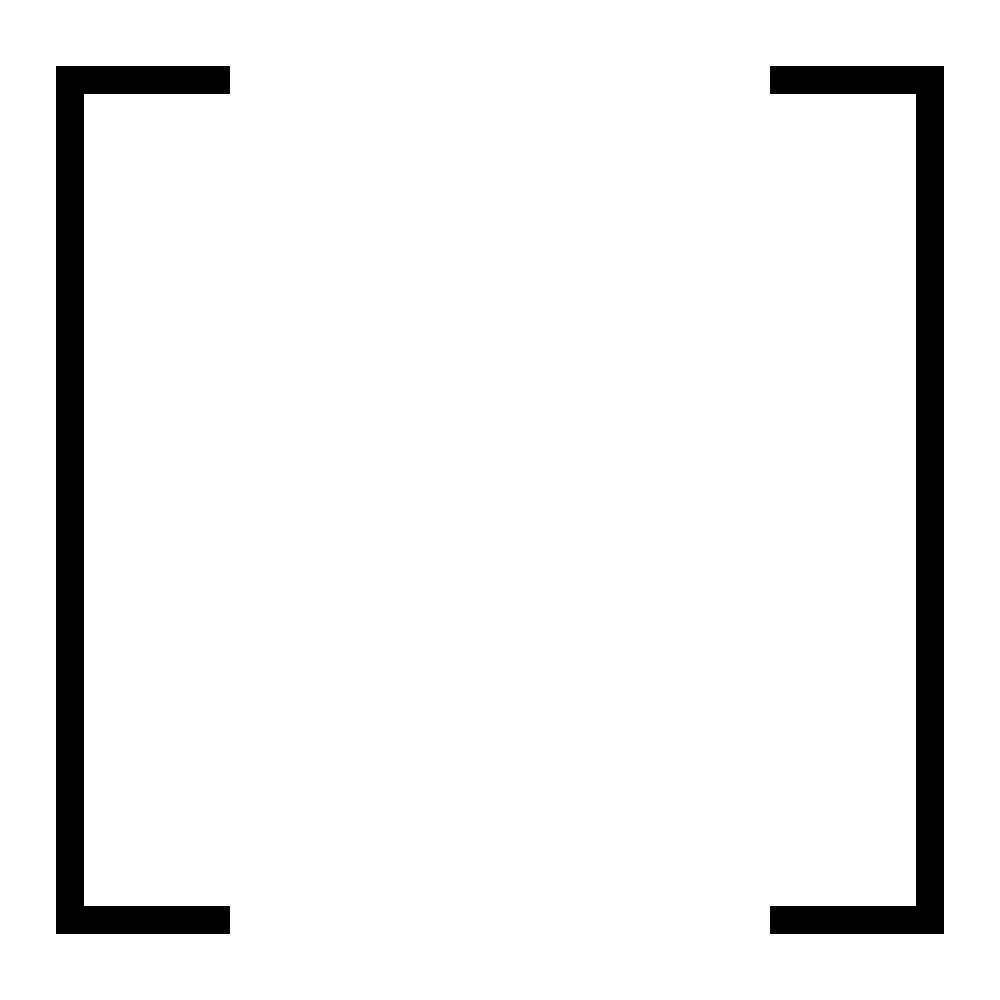
e, exactly along the planes of imaginary intersection between the basins on the opposite side of the ridge of wax. In some parts, only small portions, in other parts, large portions of a rhombic plate were thus left between the opposed basins, but the work, from the unnatural state of things, had not been neatly performed. The bees must have worked at very nearly the same rate in circularly gnawing away and deepening the basins on both sides of the ridge of vermilion wax, in order to have thus succeeded in leaving flat plates between the basins, by stopping work at the planes of intersection. Considering how flexible thin wax is, I do not see that there is any difficulty in the bees, whilst at work on the two sides of a strip of wax, perceiving when they have gnawed the wax away to the proper thinness, and then stopping their work. In ordinary combs it has appeared to me that the bees do not always succeed in working at exactly the same rate from the opposite sides; for I have noticed half-completed rhombs at the base of a just-commenced cell, which were slightly concave on one side, where I suppose that the bees had excavated too quickly, and convex on the opposed side where the bees had worked less quickly. In one well-marked instance, I put the comb back into the hive, and allowed the bees to go on working for a short time, and again examined the cell, and I found that the rhombic plate had been completed, and had be